Rowan Hooper’s Togetherness reframes life as a network of biological relationships. Recent tumour-microenvironment research shows that cancer may follow the same principle at the cellular scale, where malignant cells can reshape surrounding immune populations—and organoid co-cultures are giving researchers new ways to study those interactions.
Life Does Not Live Alone
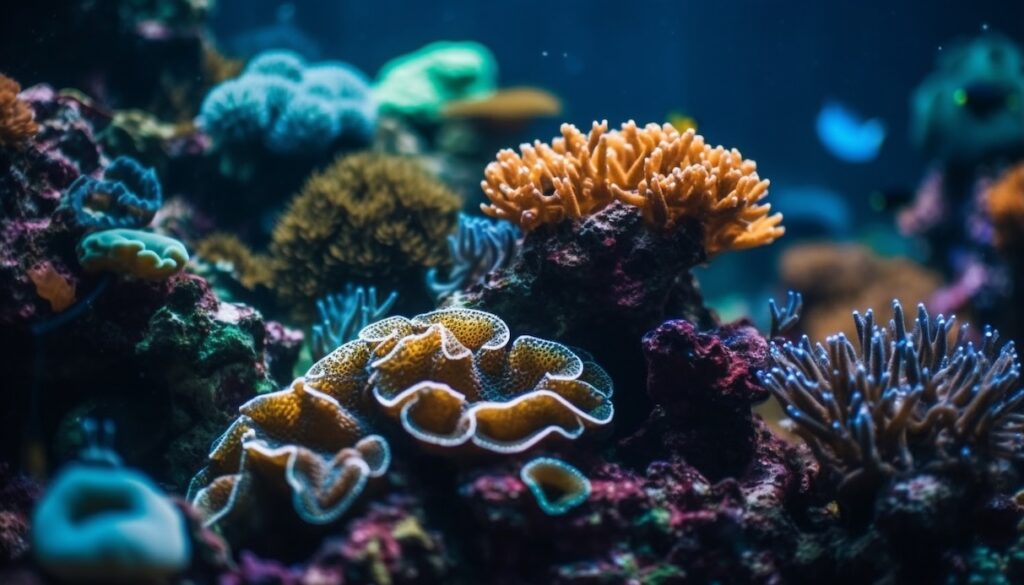
In Togetherness: Symbiosis and the Hidden Story of Life’s Greatest Collaborations, published in June 2026, biologist and science writer Rowan Hooper asks readers to reconsider one of biology’s most familiar narratives. Life is shaped not only by competition between individuals, but by relationships between them. From microorganisms to plants and animals, symbiosis can give living systems abilities that none of their participants possess alone.[1]
It is a compelling way to look at nature. But togetherness does not necessarily mean harmony. Biological relationships can also become opportunistic, exploitative or destructive. Cancer offers an unsettling example.
The Dark Side of Togetherness
A tumour is more than a collection of malignant cells. Cancer cells share their environment with fibroblasts, macrophages, lymphocytes, blood vessels and extracellular structures, exchanging signals that can influence growth, immunity and treatment response.
Recent research illustrates how dependent these behaviours can be on context. In lung cancer models, Ghosh and colleagues identified spatially distinct macrophage niches with opposing functions. Some tissue-resident macrophages produced chemokines that supported lymphocyte recruitment and tumour control, while macrophages occupying other niches helped establish tumour-promoting immune environments.[2]
Where a macrophage lives—and which signals surround it—can help determine what it does.
When Tumours Educate Their Neighbours
An even more striking example comes from a 2026 Nature Communications study of high-grade serous ovarian cancer. Researchers constructed a three-dimensional pentaculture containing malignant cancer cells, fibroblasts, mesothelial cells, adipocytes and monocytes. Within this multicellular environment, monocytes differentiated into macrophages without researchers supplying the external cytokines normally used to artificially polarize them.[3]
Here, Hooper’s idea of togetherness returns in a darker form. His stories show how biological identity and capability can emerge through association—how an organism becomes partly defined by the company it keeps. Tumours appear capable of something similar. Cancer cells do not simply grow beside macrophages; they can help educate their neighbours, reshaping immune-cell behaviour in ways that may support or restrain disease.
From Tumour Cells to Tumour Communities
If important tumour biology resides in these relationships, experimental models increasingly need to capture them.
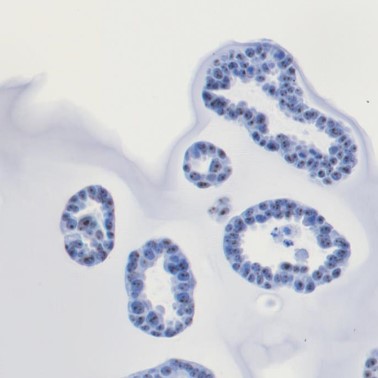
Patient-derived tumour organoids can preserve important characteristics of malignant tissue, but tumour-only cultures inevitably remove much of the immune microenvironment. Recent approaches are therefore reintroducing selected immune and stromal components.
In non-small-cell lung cancer, Podaza and colleagues developed patient-derived tumour organoids together with tumour-infiltrating lymphocytes and macrophages. These systems were used to investigate immune-checkpoint strategies, treatment sequencing and microenvironment-mediated resistance.[4]
Such co-culture models do not reproduce every feature of a living tumour. Their value lies in allowing researchers to introduce specific cellular relationships, observe how those interactions change tumour behaviour and ask which conversations matter most for therapeutic response.
What Makes a Tumour a Tumour?
“Togetherness: Symbiosis and the Hidden Story of Life’s Greatest Collaborations” invites us to question whether the individual is always the most useful unit for understanding biology. Interestingly enough, modern cancer research is confronting the very same question at the cellular scale.
A tumour may begin with malignant cells, but its behaviour emerges within a society of immune cells, fibroblasts and surrounding tissue. As organoid models become increasingly multicellular, researchers are beginning to study not only cancer cells themselves, but the relationships that help make a tumour what it is.
References
- Hooper, R. Togetherness: Symbiosis and the Hidden Story of Life’s Greatest Collaborations. Fern Press, 2026.
https://www.penguin.co.uk/books/459006/togetherness-by-hooper-rowan/9781911717140 - Ghosh, S., Li, X., Rawat, K. et al. “Chemokine-defined macrophage niches establish spatial organization of tumor immunity.” Nature Immunology 27, 715–724 (2026).
https://doi.org/10.1038/s41590-026-02445-2 - Malacrida, B., Elorbany, S., Laforêts, F. et al. “3D pentaculture model unveils malignant cell-driven macrophage polarization in high-grade serous ovarian cancer.” Nature Communications 17, 2451 (2026).
https://doi.org/10.1038/s41467-026-70398-z - Podaza, E. et al. “Tumor immune microenvironment reconstitution in patient-derived organoids enables therapy modeling for NSCLC.” Cell Reports Methods 6, 101339 (2026). https://doi.org/10.1016/j.crmeth.2026.101339
Read more articles on Bio, Art & Science
Notes and Neurons: When a Concert Becomes a Brain Experiment
AI versus Human: Can Machines Learn Like We Do?
The Organoid World Is Meeting in Korea This September
Behind Minnesota’s “Grandparents Happy Hour”: The Neuroscience of Joy
Working on cancer research?
Explore our oncology organoid and co-culture tumor microenvironment solutions