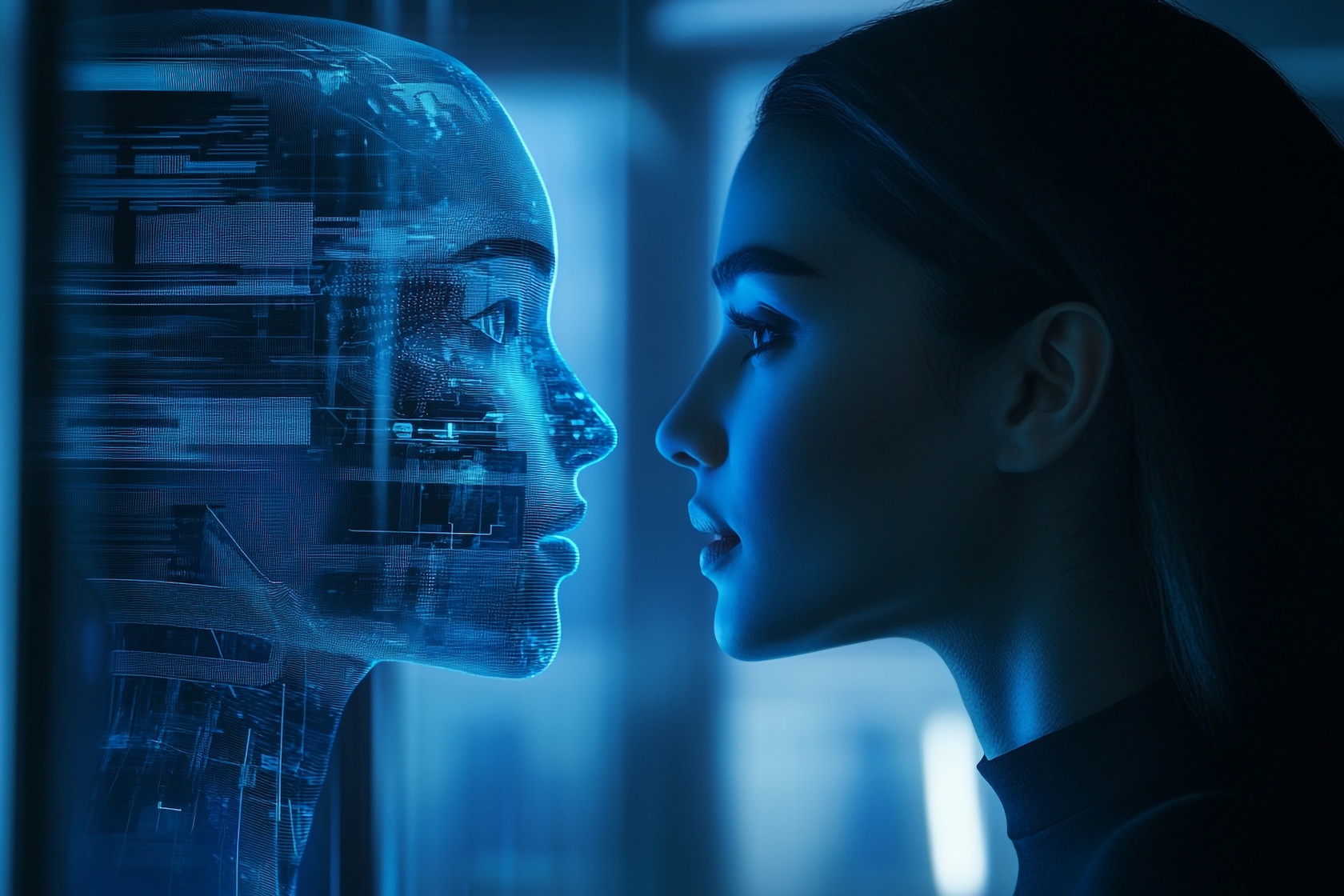
As Artificial Intelligence tools become increasingly capable, one question naturally emerges: are machines beginning to learn the way humans do?
Neuroscience suggests the answer is both yes — and profoundly no.
Learning Isn't Just Processing Information
When people think about intelligence, they often imagine accumulating knowledge. But neuroscience paints a more dynamic picture:
Learning is not simply storing information—it is the continuous reshaping of biological networks.
This process, known as experience-dependent plasticity, allows the brain to adapt throughout life. Memory, perception, language, and decision-making all emerge from this constantly changing architecture rather than from static information alone (Kolb & Gibb, 2011; Kandel et al., 2021).
Large language models also improve through training, but they do so by optimizing mathematical parameters across enormous datasets. Once training ends, their underlying architecture remains largely fixed unless additional training or fine-tuning occurs.
In other words, today’s AI becomes better at prediction. Human brains become different because of experience.
A Baby Doesn't Learn Like a Chatbot
One reason children learn so efficiently is that they are never learning language in isolation.
Every new word arrives alongside movement, touch, emotion, faces, voices, and physical interaction with the world. Developmental psychologists describe this as embodied cognition—the idea that intelligence emerges through the interaction between brain, body, and environment rather than abstract information alone (Smith & Gasser, 2005).
A language model can read millions of books.
A child can spend ten minutes stacking blocks—and fundamentally change how the brain understands gravity, balance, and space.
The scale of data is dramatically different. The richness of experience is even more so.
To understand learning is to understand development
Long before a child speaks a first word, billions of neurons are already migrating, forming connections, strengthening useful circuits, and pruning away others. These early developmental processes establish the architecture that later supports perception, memory, language, and decision-making (Kolb & Gibb, 2011; Kandel et al., 2021).
Understanding how these networks are built has become one of the central challenges of modern neuroscience. It also offers clues to what happens when development goes awry—or when those carefully organized networks gradually deteriorate in neurodegenerative disorders such as Alzheimer’s disease.
Because scientists cannot directly observe these processes in the developing human brain, researchers increasingly turn to brain organoids.
Brain organoids are three-dimensional neural tissues grown from human stem cells that reproduce key stages of early brain development. Rather than serving as miniature brains that capable of thinking, they allow scientists to watch how neurons organize themselves, establish functional connections, and mature over time (Lancaster et al., 2013; Pașca et al., 2022).
Recent advances have enabled researchers to map neuronal maturation with single-cell technologies, identify the molecular programs that guide neural circuit formation, and investigate how developmental abnormalities contribute to neurological disease. By revealing how the brain builds itself, organoids provide an experimental window into one of biology’s most fundamental questions: how learning becomes possible in the first place.
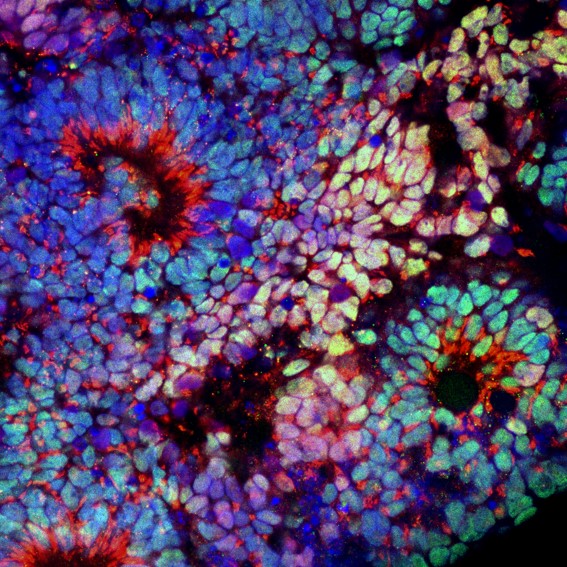
More importantly, organoids remind us that intelligence begins long before complex reasoning appears. Before there is memory, language, or consciousness, there is development—a gradual construction of living neural networks through genetic programs and environmental signals.
That developmental journey has no true equivalent in today’s AI systems.
Intelligence Is More Than Computation
Modern AI demonstrates that remarkable intelligence can emerge from statistical learning alone.
Neuroscience suggests something equally fascinating: biological intelligence emerges from development, adaptation, and lifelong interaction with the physical world.
Rather than asking whether AI will eventually think exactly like humans, perhaps the better question is whether there are multiple paths to intelligence.
One follows silicon and algorithms.
The other begins with a developing brain, shaped by experience long before it ever learns its first word.
References
- Kandel, E. R., Koester, J. D., Mack, S. H., & Siegelbaum, S. A. (2021). Principles of Neural Science (6th ed.). McGraw-Hill.
- Kolb, B., & Gibb, R. (2011). Brain plasticity and behaviour in the developing brain. Journal of the Canadian Academy of Child and Adolescent Psychiatry, 20(4), 265–276.
- Lancaster, M. A., et al. (2013). Cerebral organoids model human brain development and microcephaly. Nature, 501(7467), 373–379. https://doi.org/10.1038/nature12517
Pașca, S. P., et al. (2022). A nomenclature consensus for nervous system organoids and assembloids. Nature, 609(7928), 907–910. https://doi.org/10.1038/s41586-022-05282-7 - Smith, L. B., & Gasser, M. (2005). The development of embodied cognition: Six lessons from babies. Artificial Life, 11(1–2), 13–29.
Read more:
The Organoid World Is Meeting in Korea This September
Behind Minnesota’s “Grandparents Happy Hour”: The Neuroscience of Joy
Nature’s Blueprint: What We Can Learn from Diatoms
Why Every Goal Feels Personal: The Neuroscience Behind the World Cup
When Life Becomes the Canvas: Bioscience Is Transforming the Language of Art