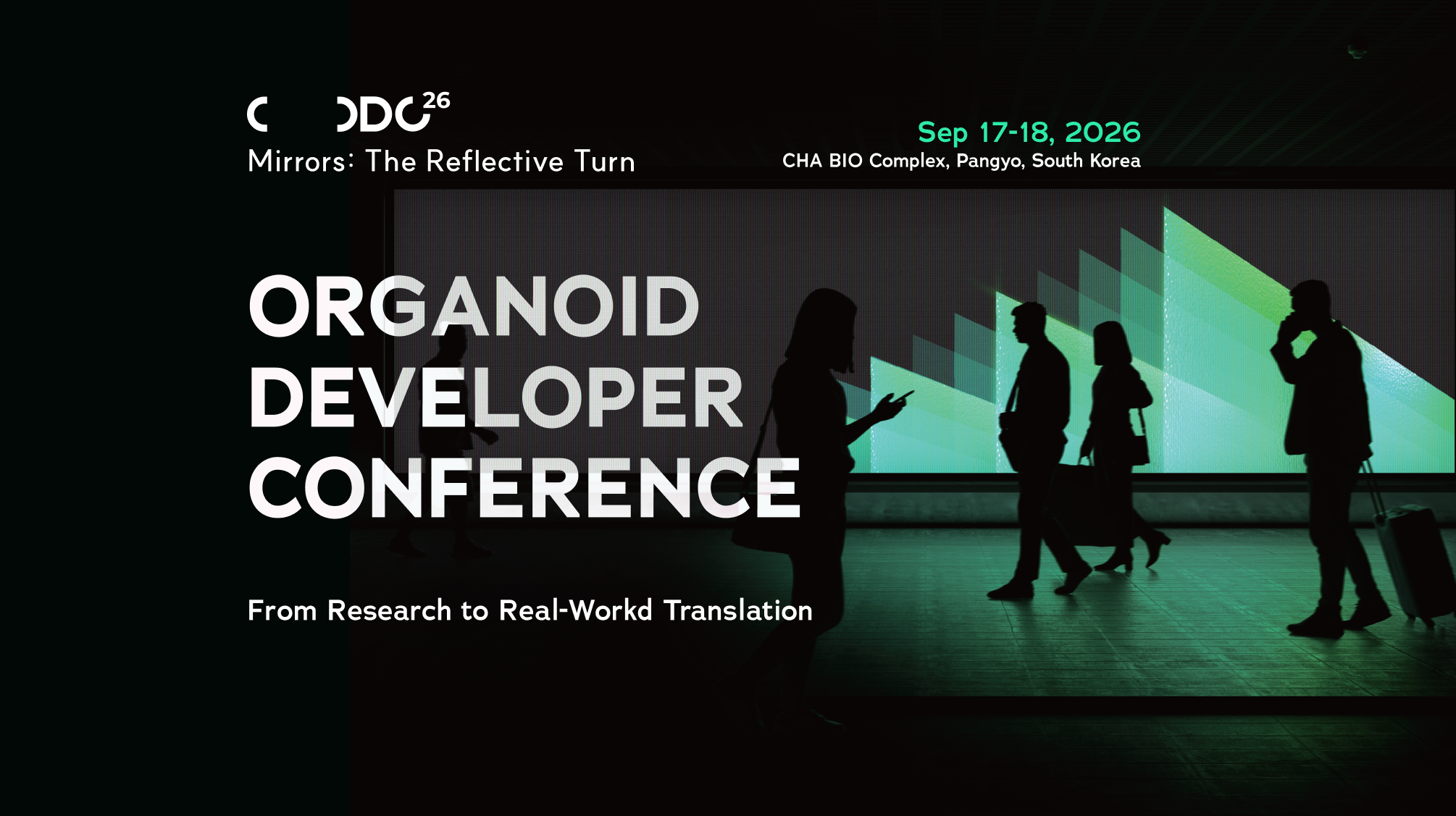
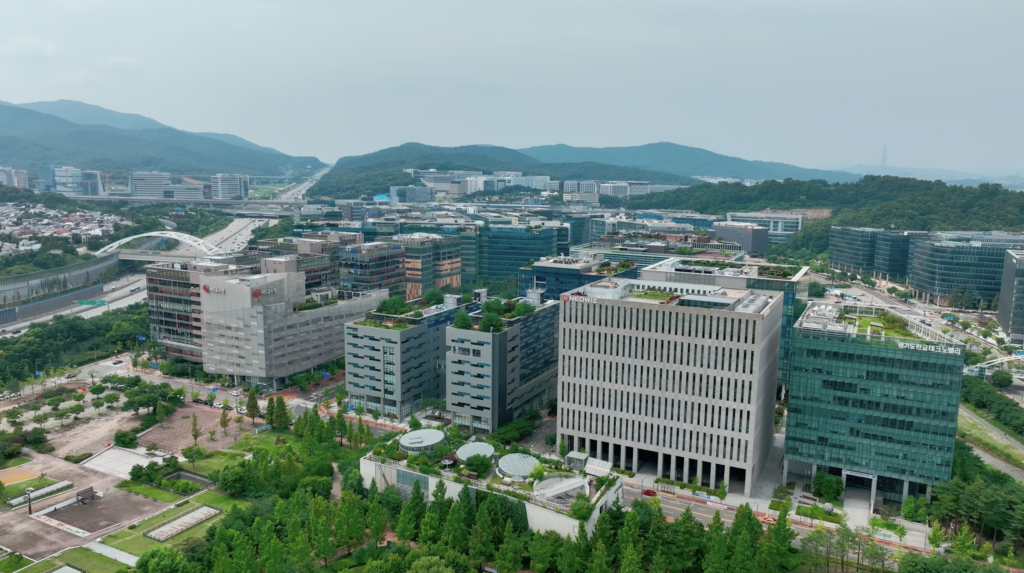
This September, the global organoid community converges in Korea for a conference that has quietly grown from a domestic showcase into one of the field’s most-watched annual gatherings. ODC26: Mirrors will take place September 17–18, 2026, at CHA Biocomplex in Pangyo, Gyeonggi-do (known as Korea’s tech hub), and Lambda Biologics is proud to return as a co-host.
Founded in Korea in 2018, the Organoid Developer Conference (ODC) has grown into a platform connecting more than 1,000 institutions worldwide across research, industry, and regulatory affairs. This year’s edition marks a clear step up in scale and ambition – and it says as much about where organoid science is headed as it does about Korea’s role in getting it there.
From ASEAN to Global
ODC25’s ASEAN edition, held in Bangkok in December 2025 in partnership with Mahidol University and FabCafe Bangkok, proved the model could travel – bringing organoid science into conversation with Southeast Asia’s research and cultural communities. ODC26 builds directly on that momentum, with an upgrade that is more than geographic.
For the first time, ODC has signed an official Memorandum of Understanding with the International MPS Society (iMPSS), the leading global academic body for microphysiological systems. It’s the first structured collaboration between the organoid and MPS fields, and it comes with joint sessions and reciprocal awards baked in. Alongside it, ODC26 has confirmed academic partnerships with the Korean Society for Stem Cell Research (KSSCR), the Korea Research Institute of Bioscience and Biotechnology (KRIBB), Organoids Are Us, the K-Organoid Consortium, and the Korea Biomedicine Industry Association (KoBIA). Taken together, these partnerships are what turn a national conference into the “global” platform ODC26 is positioning itself as – a single framework where standardization, industrialization, and clinical application of next-generation biological models can actually be discussed across borders.
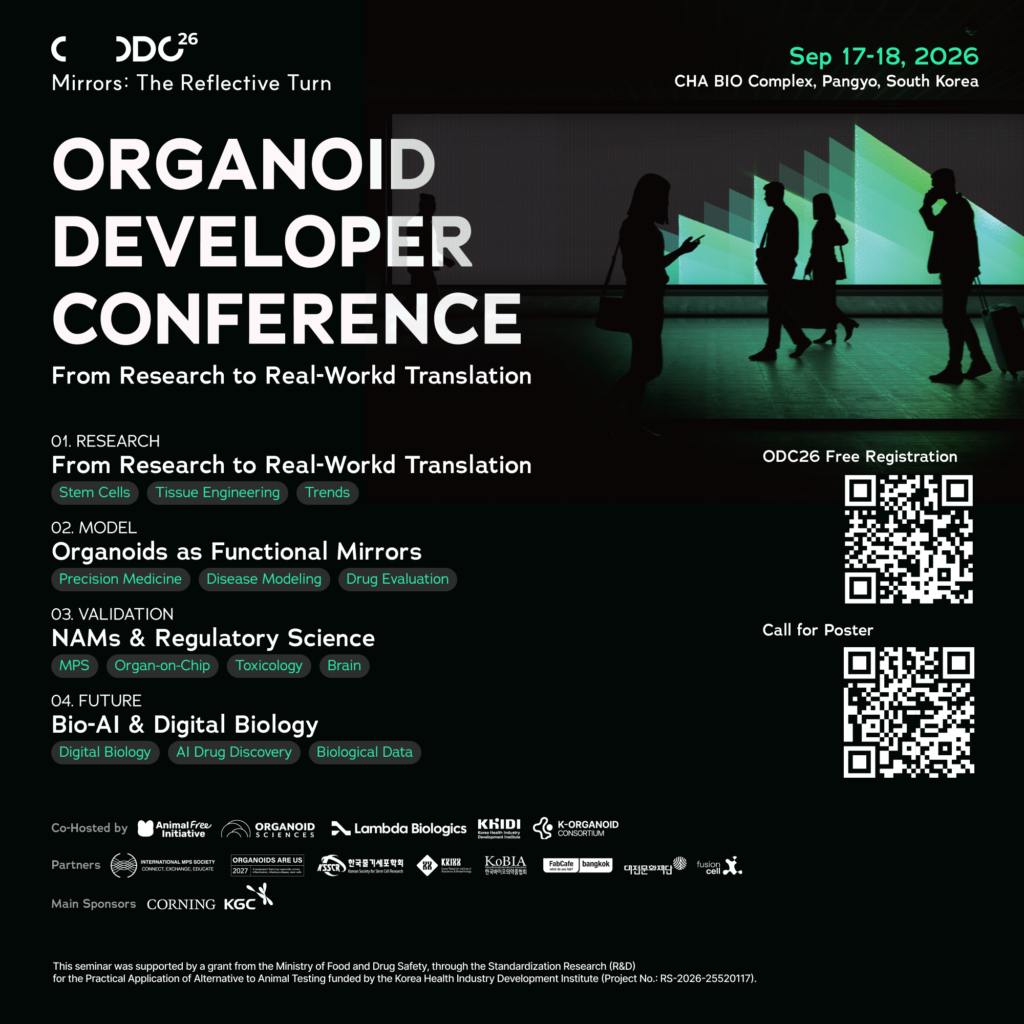
What’s on the Program
ODC26’s theme, “Mirrors: The Reflective Turn,” frames organoids and related next-generation biological models as technologies that don’t just observe human biology from the outside but reveal how the body works from within. Research and industry discourse across the two days centers on core themes:
- Evolution of Organoid Systems and Platforms – the latest developments expanding organoid models into diverse tissue types and more complex, multi-organ systems.
- NAMs and Pathways to Adoption – the commercialization and clinical application of New Approach Methodologies, and what it takes to move them from validation to regulatory acceptance.
- Convergence Technologies – organ-on-chip, artificial organs, and next-generation bioengineering systems that combine with organoid platforms.
- Bio-AI and Data-Driven Life Sciences – AI-powered drug discovery and predictive modeling built on organoid and biological data.
On the ground, this plays out across sessions led by each academic partner: K-Organoid Consortium on organoid trends and regenerative therapeutics; a session on AI-powered biotech spanning quantum machine learning and AI-driven ADC development; KSSCR on organoid immunology and AI foundation models in organoid research; Organoids Are Us on organoid models of cancer and infectious disease; KRIBB on stem cell mechanisms and regenerative applications; and iMPSS leading a session specifically on alternative methods to animal testing – reflection, validation, and application. A closing session on “Creating Therapeutics with Patients” brings patient advocacy directly into the program alongside the science.
Confirmed speakers include Masayo Takahashi (Vision Care Inc.), Thomas Hartung and Lena Smirnova (Johns Hopkins University), Nick Barker (A*STAR / IMBA), Elizabeth Vincan (University of Melbourne), and a strong Korean academic contingent from KAIST, Korea University, POSTECH, and KRIBB. A large-scale poster session, reviewed by ODC’s academic partners, offers researchers a route to Travel, Oral, and Poster Awards, with abstract submissions open through August 15, 2026.
Registration is open now in three tiers – on-site, livestream, and full access (which includes both plus the Day 1 networking dinner) – with details at odc.network.
Why Korea, Why Now
Hosting the organoid world’s biggest annual meeting in Korea isn’t incidental – it reflects a genuine national push behind the technology. MFDS has committed about $33 million through 2028 to develop organoid-based testing technologies, is backing a National Assembly bill to formally recognize organoids as an alternative to animal testing, and is leading an ISO-aligned standardization effort with Sungkyunkwan University [1][2][3]. On the industrial side, the Health Ministry and SME Ministry jointly launched a full-cycle R&D-to-export framework in March 2026, targeting $21 billion in pharmaceutical-bio exports by 2030 [4].
That backdrop is why OrganoidSciences‘ 2025 KOSDAQ listing, Samsung Biologics’ Samsung Organoids service, and KHIDI’s presence among ODC26’s co-hosts read as one connected ecosystem rather than isolated moves. The clearest proof point: in March 2026, OrganoidSciences – our partner behind the ODISEI platform – received IND approval from MFDS for ATORM-C, the world’s first organoid-based regenerative therapy to enter clinical trials, now dosing patients at Asan Medical Center in Seoul [5].
Lambda Biologics at ODC26
Lambda Biologics has been part of the ODC story since 2024, and we’re returning to Pangyo this September as a co-host of ODC26 alongside AFI, OrganoidSciences, and KHIDI. Our partnership with OrganoidSciences – whose ODISEI patient-derived organoid platform underpins Lambda Biologics GmbH’s organoid-based CRO services across Europe and the US – puts us at the intersection of exactly what ODC26 is trying to build: a working bridge between organoid research and the regulatory, clinical, and industrial systems that turn it into real-world, animal-free drug testing capacity.
If you’re building toward animal-free, human-relevant drug discovery, ODC26 is where the people setting the standards for that shift will be in the same room. We’ll see you in Pangyo.
Sources:
- [1] Kim Ji-hye, “Organoid Sciences targets animal-free drug testing with ODISEI platform ahead of IPO”, Korea Biomedical Review, March 7, 2025.
- [2] GPC Gateway, “South Korea aims to use organoids in experiments instead of animals”; see also Humane World for Animals coverage of the K-REACH amendment bill.
- [3] Ministry of Food and Drug Safety, official notice on the launch of the international standardization committee for organoid testing methods, June 16, 2025; see also 약사공론 (KPA News), “식약처, 오가노이드 시험법 국제표준화 본격 착수”.
- [4] Seoul Economic Daily, “Health Ministry, SME Ministry Launch Full-Cycle Support for Bio Ventures”, March 24, 2026.
- [5] Lambda Biologics, “Organoids Enter the Clinic: A Milestone for Regenerative Medicine”, March 27, 2026; IND approval granted March 13, 2026.
FAQs
What is ODC?
ODC (Organoid Developer Conference) is the annual global platform connecting research, industry, and regulatory affairs in the organoid and NAMs fields. Founded in Korea in 2018, it now involves more than 1,000 institutions worldwide.
When and where is ODC26 taking place?
ODC26: Mirrors runs September 17–18, 2026, at CHA Biocomplex, 335 Pangyo-ro, Bundang-gu, Seongnam-si, Gyeonggi-do, South Korea, with on-site and livestream attendance options.
Who is co-hosting ODC26?
ODC26 is co-hosted by Organoid Sciences and the Animal-Free Initiative (AFI), with KHIDI (Korea Health Industry Development Institute) and Lambda Biologics also part of this year’s co-host lineup.
What topics does ODC26 cover?
Sessions span the evolution of organoid systems and platforms, NAMs and their path to regulatory adoption, convergence technologies like organ-on-chip, Bio-AI and data-driven life sciences, and the Animal-Free Initiative’s regulatory and ethical agenda.
Can I attend ODC26 virtually?
Yes. Registration includes on-site, livestream, and full-access tiers, and all registrants get access to the ODC Virtual Space platform.
Lambda Biologics’s Organoid-based Discovery platform for Innovative Screening, Evaluation, and Identification