Faster Clinically Relevant Insights
Patient-derived organoids (PDOs) are 3D cell cultures grown directly from a patient’s tumor tissue. Because they are cultured from tumor biopsies, PDOs preserve the tumor’s genetic fidelity and phenotypic traits better than 2D cell lines. This makes patient-derived tumor organoids a more clinically relevant model for predicting drug efficacy and patient response, while reducing reliance on animal models.
Cultured directly from tumor biopsies, our PDOs ensure the ideal preservation the tumor’s genetic fidelity and phenotypic traits. Bypassing the limitations of 2D cell lines or animal models, Lambda’s PDOs provide highly clinically relevant platforms, enabling more accurate prediction of drug efficacy and patient response.
Our platform offers a fully customizable suite of organoid-based preclinical research services designed to meet your unique needs. This includes integrating donor-matched immune microenvironments, personalized PDOs lineups, and generating high-resolution functional data (HCS, scRNAseq, multi-plex IHC, and more).

Tumor Microenvironment

Tumor Microenvironment

Tumor Microenvironment
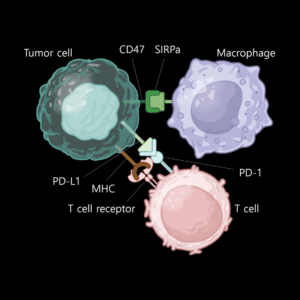
Tumor Microenvironment
Immune checkpoint determine whether cancer cells are killed after TCR-MHC binding


Organoid Service

Organoid Service

Organoid Service

Organoid Service

Organoid Service

Organoid Service

Organoid Service

Organoid Service

Organoid Service

A 3D culture grown from a patient’s tumor biopsy that preserves the original tumor’s genetic and phenotypic features, used to test how a tumor responds to drugs. Lambda Biologics cultures its PDOs directly from tumor biopsies.
PDOs keep the tumor’s heterogeneity and 3D structure, which 2D cell lines lose. This gives a more clinically relevant read-out of drug efficacy.
Our biobank includes breast, colorectal, gastric, hepatocellular carcinoma, cholangiocarcinoma, pancreatic, lung, ovarian and endometrial cancer organoids.
Yes. Lambda Biologics integrates immune cells from the tumor microenvironment, including cytotoxic T cells, to evaluate immunotherapies.
Small molecules, antibodies, mRNA and cancer vaccines, among the other modalities listed on this page.
Typically 4–5 weeks, depending on the organoid’s differentiation and maturation time.
We use cookies that are necessary to make our site work. We may also use additional cookies to analyze, improve, and personalize our content and your digital experience. You can manage your cookie preferences using the Cookie settings link. For more information, see our Privacy Policy



