From dopamine signaling to neural synchronization, the world’s biggest sporting event reveals how deeply the human brain is wired for connection.
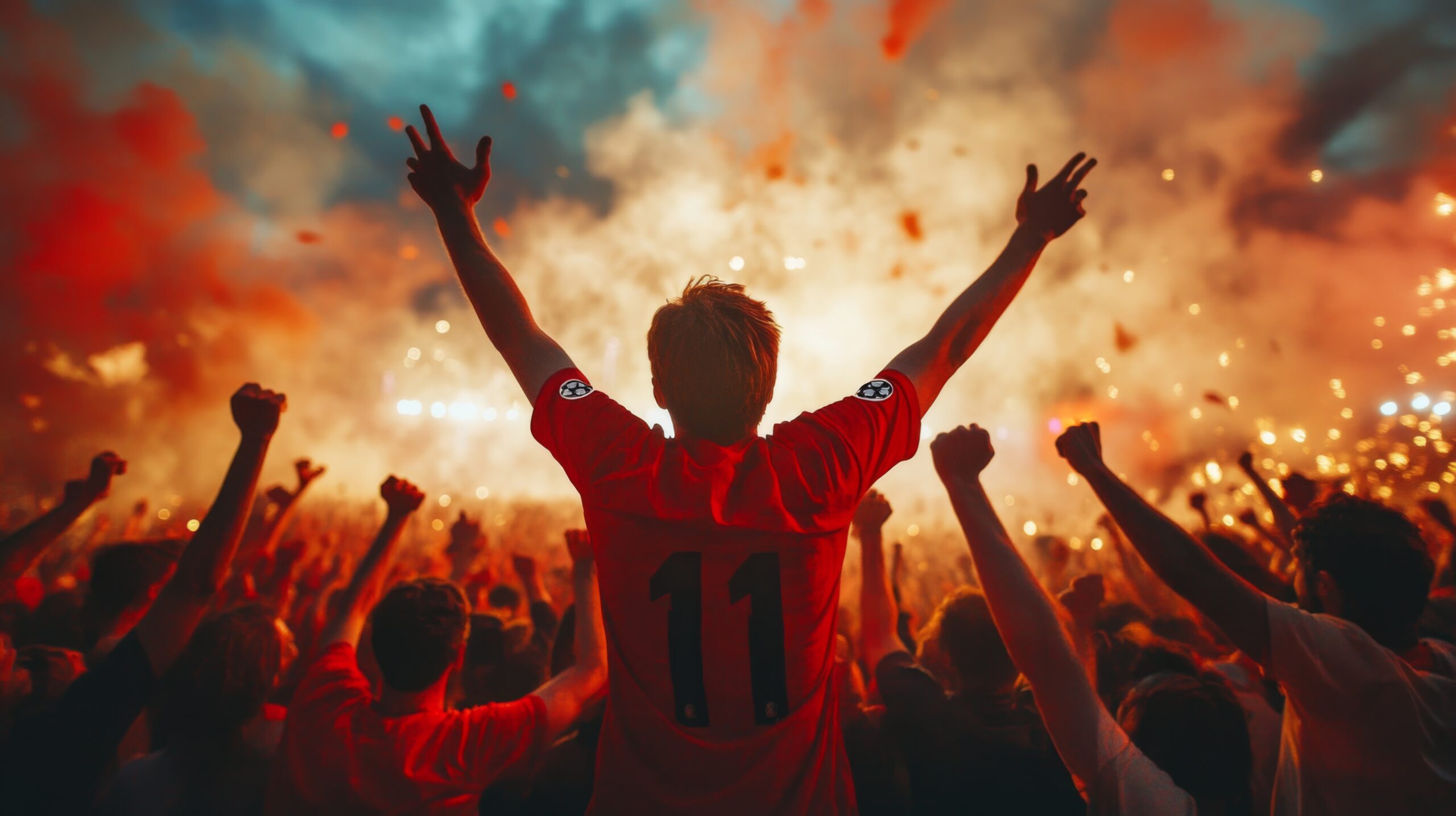
A striker scores in the 89th minute. Across a stadium, thousands erupt in celebration. Across continents, millions jump from sofas, scream at televisions, embrace friends, and flood social media with reactions.
Most of us have never met the player in person. Yet the joy feels deeply personal.
Why?
The answer has more to do with how our brain evolved over history than the actual sport itself. The FIFA World Cup is no doubt the world’s largest sporting event, but it is also one of the largest demonstrations of human neuroscience in action. Every goal, every red card, and every celebration reveals something fundamental about how our brains process reward, emotion, and belonging.
Researchers have long known that sports spectatorship activates many of the same neural systems involved in personal rewards. Studies using functional MRI have found that watching a favored team succeed activates regions associated with reward processing, including the ventral striatum, a core component of the brain’s dopamine network (Cikara et al., 2011; Bernhardt & Singer, 2012).
In other words, when your team scores, your brain responds the same way as though something good has happened to you personally.
This helps explain why fans celebrate victories they did not physically contribute to and suffer through defeats they could not control via television. The brain has partially incorporated the team into its sense of identity.
The neuroscience of football extends beyond individual.
One of the most fascinating discoveries in recent years is the phenomenon of “inter-brain synchronization”. Research led by neuroscientist Uri Hasson at Princeton University has shown that people experiencing the same event can exhibit remarkably similar patterns of neural activity (Hasson et al., 2004; Hasson et al., 2012). When individuals focus on the same narrative, emotion, or moment of suspense, their brains can become synchronized in measurable ways. And the World Cup offers a real-world example on a massive scale.
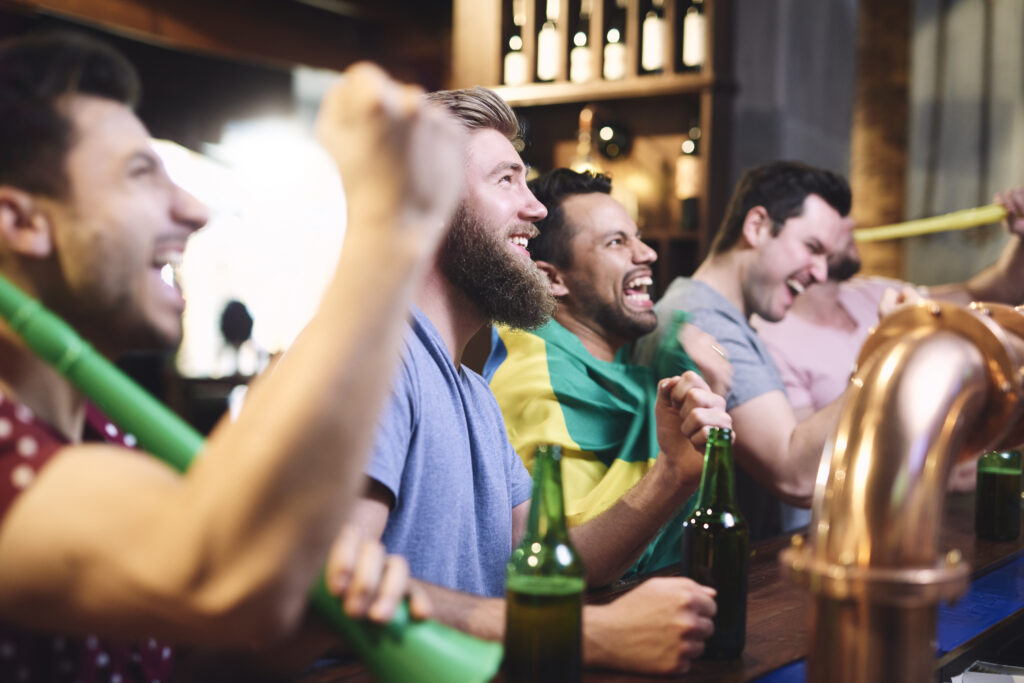
During a penalty shootout, tens of thousands of spectators direct their attention toward the same outcome. They anticipate the same uncertainty. They experience the same emotional tension. While each person remains an individual, neuroscience suggests that shared attention and emotion can temporarily align the activity of many separate brains.
For a brief moment, a crowd becomes more than a collection of individuals. It becomes a shared emotional system. This may help explain why the World Cup feels so different from simply watching a game alone.
At its core, football is not merely entertainment.
It is a mechanism for social connection.
A growing body of research suggests that sports spectatorship contributes positively to wellbeing. A 2024 study published in *Current Psychology* found that people who regularly watched sports reported higher levels of subjective wellbeing and flourishing. The authors proposed that sports provide opportunities for social connection, shared identity, and community participation—fundamental psychological needs that contribute to human health (Inoue et al., 2024).
This finding feels particularly relevant today.
Modern life is increasingly shaped by remote work, digital communication, and rising concerns about loneliness. In 2023, the U.S. Surgeon General described social disconnection as a major public health challenge, linking loneliness to increased risks of cardiovascular disease, depression, anxiety, and premature mortality.
Against that backdrop, the World Cup offers something increasingly rare: a synchronized emotional experience shared not by a fews, but millions of people across the globe.
People may come for the football. Their brains stay for the belonging.
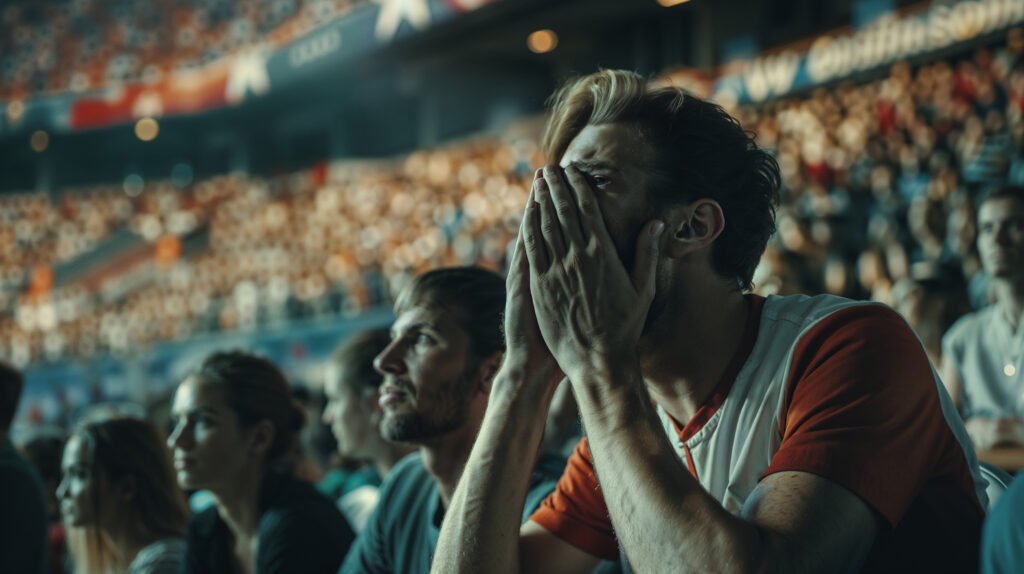
Of course, belonging comes with a cost. Highly invested fans experience measurable physiological stress during important matches. Researchers have documented increases in heart rate, blood pressure, cortisol levels, and even cardiovascular events during major sporting competitions. The emotional highs and lows of fandom are not imagined; they are biological responses to events that the brain perceives as meaningful.
The World Cup ultimately points to something larger than sport.
In laboratories around the world, neuroscientists study how neurons communicate, how emotions emerge, and how social bonds shape human behavior. During the World Cup, those same mechanisms unfold on a global scale. Every celebration, every collective gasp, and every shared moment of anticipation reveals how deeply humans are wired to connect.
The World Cup is often described as a festival of football. Neuroscience suggests it may be something even more fundamental: a celebration of belonging.
And perhaps that is why every goal feels personal. Not because we know the players on the field, but because our brains were never designed to experience life alone.
—
References
Bernhardt, B. C., & Singer, T. (2012). *The Neural Basis of Empathy*. Annual Review of Neuroscience, 35, 1–23.
Cikara, M., Botvinick, M. M., & Fiske, S. T. (2011). *Us Versus Them: Social Identity Shapes Neural Responses to Intergroup Competition and Harm*. Psychological Science, 22(3), 306–313.
Hasson, U., Nir, Y., Levy, I., Fuhrmann, G., & Malach, R. (2004). *Intersubject Synchronization of Cortical Activity During Natural Vision*. Science, 303(5664), 1634–1640.
Hasson, U., Ghazanfar, A. A., Galantucci, B., Garrod, S., & Keysers, C. (2012). *Brain-to-Brain Coupling: A Mechanism for Creating and Sharing a Social World*. Trends in Cognitive Sciences, 16(2), 114–121.
Inoue, Y., et al. (2024). *How Can Sports Spectatorship Affect Health? The Relationship Between Sports Spectatorship and Subjective Wellbeing*. Current Psychology.
U.S. Surgeon General. (2023). *Our Epidemic of Loneliness and Isolation: The U.S. Surgeon General’s Advisory on the Healing Effects of Social Connection and Community*.
Read more Bio, Sciences & Arts articles:
When Life Becomes the Canvas: Bioscience Is Transforming the Language of Art
In the Age of AI Slop, Biology Becomes the Last Authentic Medium
Human may be hardwired for music. But why?