A German concert series is bringing musicians, neuroscientists and medical technology together to explore what music may reveal about memory, cognition and the ageing brain.
A Hall Full of Questions
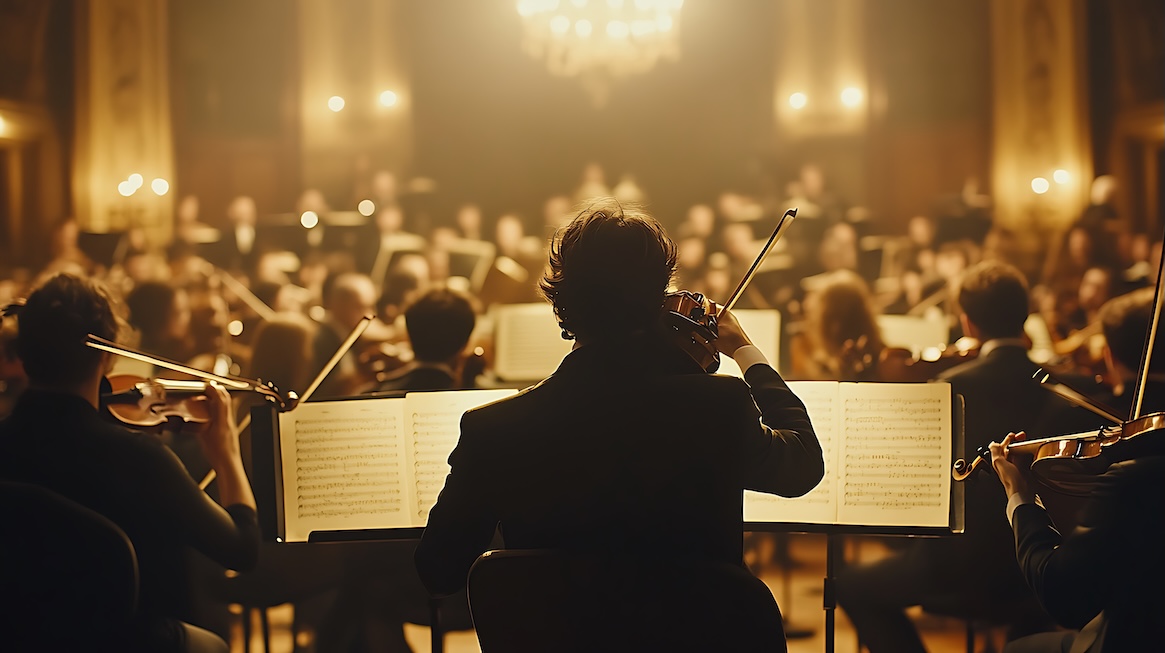
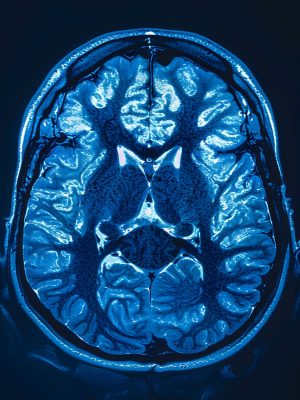
At Cologne Philharmonie on 10 July 2026, the familiar rituals of a concert—listening, singing, clapping and sharing an emotional moment—were joined by something rarely seen beside an orchestra: a portable brain scanner.
Notes and Neurons: Music for Brain Health brought together the Bläck Fööss, members of the Gürzenich Orchestra, the University Hospital Bonn choir and project orchestra, and neuroscientists investigating how music affects memory and cognition. Around 2,000 audience members heard music ranging from Mozart and Beethoven to film scores and rock, while some also joined an app-based experiment examining musical emotion and memory.[1,2]
Music Beyond the Notes
The project’s artistic strength lies in refusing to treat music as background decoration for a science lecture. The concert itself becomes the subject of inquiry.
A melody asks the brain to recognize patterns and anticipate what may come next. Rhythm can recruit movement, even when the listener remains seated. Familiar songs evoke autobiographical memories, while singing and clapping turn a private response into a social experience.
This combination helps explain why music attracts researchers interested in healthy ageing. Unlike a task designed to test one cognitive ability, musical engagement can involve hearing, attention, memory, emotion, coordination and social interaction at the same time.
The organisers therefore present music not as a miracle treatment, but as an accessible activity that may help build cognitive reserve alongside other healthy behaviours.[3]
Plasticity Beneath the Performance
Researchers are also beginning to examine what musical experience may change at the molecular level.
A 2025 systematic review evaluated 15 human studies of music listening, active participation and musical training. The studies reported biological changes involving neurotrophic factors, stress-related hormones and the expression of genes associated with synaptic plasticity and neuroprotection.[4]
Brain-derived neurotrophic factor, or BDNF—a protein involved in neuronal survival and adaptation—appeared repeatedly in the evidence.
Yet the review also showed how young this field remains. The included studies differed considerably in their participants, musical activities and biological measurements. Music clearly stimulates multiple brain systems, but researchers have not established one universal molecular pathway through which a song produces lasting cognitive protection.[4]
Promise, Played Carefully
Clinical research offers reasons for interest, but also for restraint.
In a 2025 randomized trial, 52 older adults with mild cognitive impairment completed either six weeks of guided “music imaging” or a health-education programme. The music group showed greater improvements in measures of global cognition, memory, executive function, sleep and quality of life.[5]
A separate meta-analysis of nine randomized trials involving 625 cognitively healthy older adults found modest benefits for global cognition, memory and executive function, but no significant improvement in attention.[6]
These findings concern structured, repeated interventions—not a single evening in a concert hall. They do not prove that attending concerts prevents dementia. What Notes and Neurons demonstrates is something subtler: art can invite the public into the scientific process without surrendering its emotional power. A scanner may reveal patterns of anatomy and activity, but it cannot replace the moment when a remembered melody moves through an audience.
Perhaps the most valuable experiment begins there—in understanding why music can be measured, yet never reduced to measurement.
References
- Kölner Philharmonie. “Notes and Neurons.” Event programme, 10 July 2026.
https://www.koelner-philharmonie.de/en/events/notes-and-neurons/9595 - German Center for Neurodegenerative Diseases. “Music Meets Neuroscience as ‘Notes and Neurons’ Series Debuts in Cologne.” 13 July 2026.
https://www.dzne.de/en/im-fokus/meldungen/2026/music-meets-neuroscience-as-notes-and-neurons-series-debuts-in-cologne/ - Max Planck Institute for Empirical Aesthetics. “A Concert Tour During the ‘Medicine of the Future’ Science Year.” 14 April 2026.
https://www.aesthetics.mpg.de/en/newsroom/news/news-article/article/a-concert-tour-during-the-medicine-of-the-science-year.html - Kunikullaya U.K., et al. “The Molecular Basis of Music-Induced Neuroplasticity in Humans: A Systematic Review.” Neuroscience & Biobehavioral Reviews, 2025, 175:106219.
https://pubmed.ncbi.nlm.nih.gov/40412457/ - Zhou M., et al. “Effects of Music Imaging on Older Adults With Mild Cognitive Impairment: A Randomized Controlled Trial.” Journal of the American Medical Directors Association, 2025, 26(10):105821.
https://pubmed.ncbi.nlm.nih.gov/40854517/ - Tang L., et al. “The Effects of Music-Based Interventions on Cognitive Function in Cognitively Normal Older Adults: A Systematic Review and Meta-Analysis.” Frontiers in Psychology, 2025, 16:1632873.
https://pubmed.ncbi.nlm.nih.gov/41341734/
Read more articles on Bio, Art & Science
AI versus Human: Can Machines Learn Like We Do?
The Organoid World Is Meeting in Korea This September
Behind Minnesota’s “Grandparents Happy Hour”: The Neuroscience of Joy
Nature’s Blueprint: What We Can Learn from Diatoms
Why Every Goal Feels Personal: The Neuroscience Behind the World Cup