Developing effective cancer therapies requires more than a single experimental model. While conventional cell cultures, animal models, and emerging organoid technologies each offer unique advantages, no individual system can fully capture the complexity of human disease. A recent collaborative research project involving investigators at the Korea Advanced Institute of Science and Technology (KAIST) highlights how colorectal cancer (CRC) organoids can serve as a critical component of modern preclinical research by providing human-relevant validation within an integrated drug development workflow.
In This Article
A Multi-Model Approach to Cancer Drug Discovery
The study investigated lomitapide, an FDA-approved cholesterol-lowering drug originally developed for the treatment of homozygous familial hypercholesterolemia (HoFH). Through a structure-based virtual screening approach, researchers identified lomitapide as a potential inhibitor of mechanistic target of rapamycin complex 1 (mTORC1), a key regulator of cell growth, metabolism, and autophagy. The discovery process followed a comprehensive translational research strategy:- Computational screening identified promising mTOR inhibitor candidates.
- Cellular and biochemical studies confirmed that lomitapide directly inhibits mTOR kinase activity.
- Cancer cell line experiments demonstrated suppression of tumor cell growth and induction of autophagy-mediated cell death.
- Patient-derived CRC organoids were used to validate therapeutic efficacy in human tumor-derived tissue.
- In vivo tumor models further confirmed antitumor activity and therapeutic potential.
The Role of CRC Organoids in Human-Relevant Validation
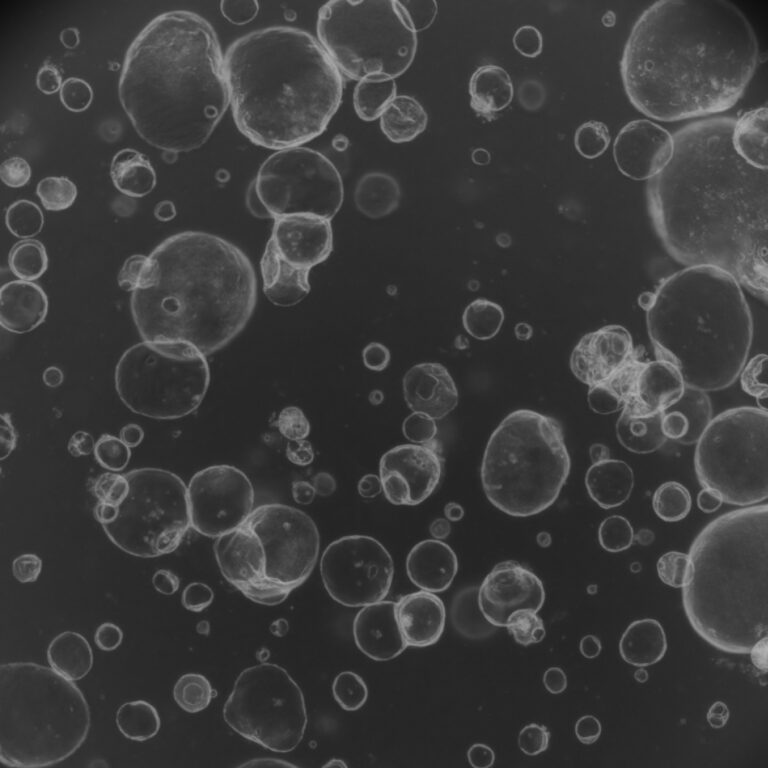
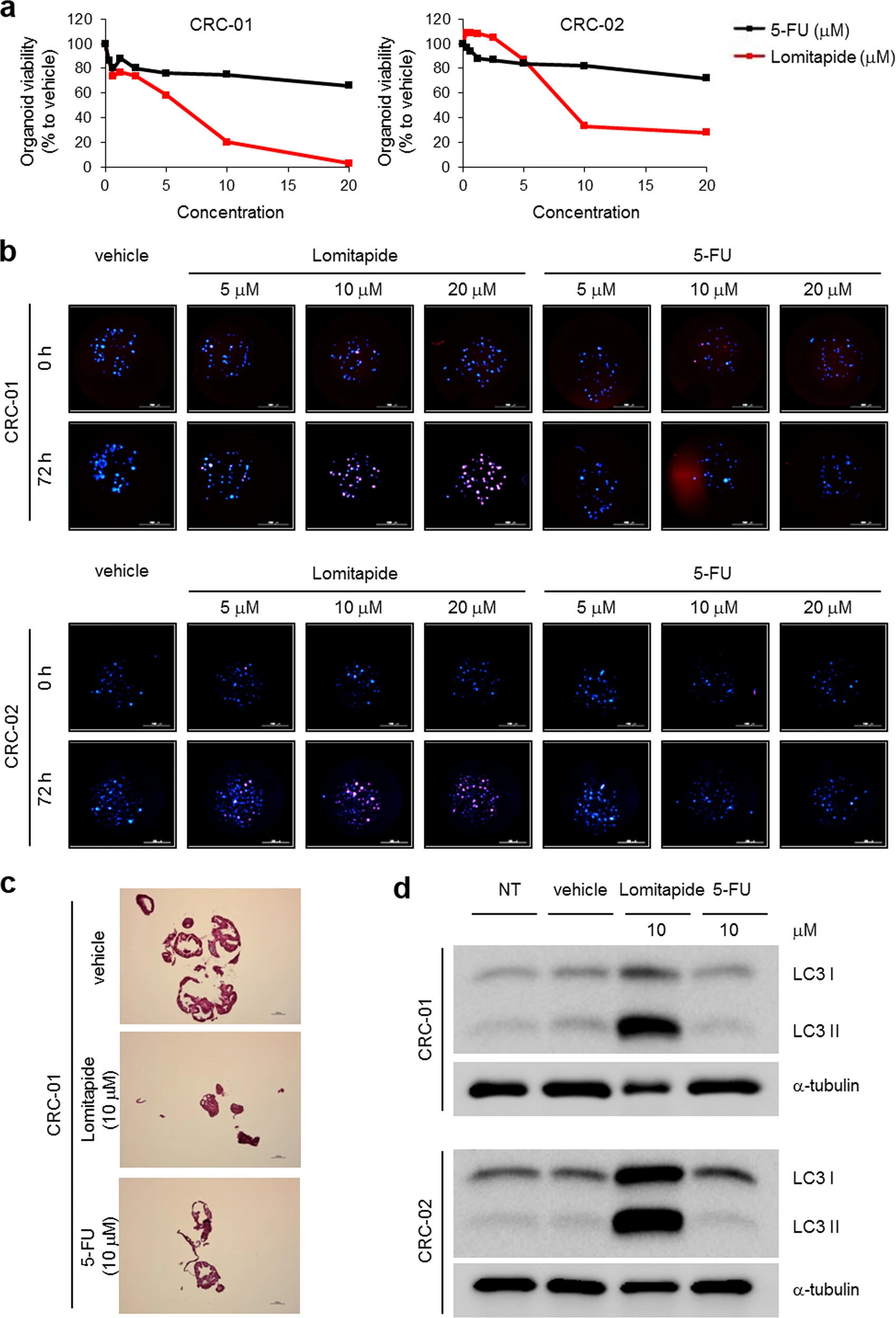
While conventional 2D cell cultures remain valuable for mechanistic studies and early-stage screening, they cannot fully replicate the complexity of patient tumors. This is where patient-derived CRC organoids provide unique value. Generated directly from patient tumor samples, CRC organoids preserve many of the cellular, molecular, and histological characteristics of the original tumor, including clinically relevant genetic alterations and treatment-response behaviors. In the lomitapide study, CRC organoids demonstrated significant reductions in growth and viability following treatment, while also exhibiting increased autophagy. These findings provided critical confirmation that the therapeutic effects observed in conventional models could be reproduced in a human-relevant system. As the research team noted: “Organoid has proven to be a powerful tool for human sample-based validation in the drug development process. In this study, CRC organoids were utilized to evaluate the efficacy of candidate drugs, demonstrating superior anticancer effects compared to conventional therapies. This highlights the predictive accuracy and practical applicability of organoid models.”Why Integrated Preclinical Workflows Matter
Discussions around organoids often focus on whether they can replace traditional animal models. However, the most effective preclinical research strategies increasingly rely on the integration of multiple complementary systems. Each model contributes different insights:
2D Cell Models
- Rapid screening of candidate compounds
- Mechanistic and pathway-focused studies
- Cost-effective experimental optimization
Patient-Derived CRC Organoids
- Human-relevant validation
- Preservation of tumor-specific biology
- Improved translational confidence
PDX and In Vivo Models
- Evaluation of systemic responses
- Tumor-host interactions
- Pharmacokinetic and pharmacodynamic assessment
Rather than replacing existing approaches, CRC organoids strengthen the translational bridge between in vitro discovery and in vivo validation.
The researchers further emphasized this point:
“By integrating organoid models with traditional 2D and PDX systems, the platform has established itself as an essential component of modern experimental workflows.”
The project also demonstrated the practical advantages of organoid-based research, with results delivered in less than one month.
“The results were delivered in less than a month, enabling us to proceed with submission quickly and efficiently.”
Supporting Translational Oncology Research
Through strategic collaborations in Korea and internationally, Lambda Biologics continues to support academic institutions, biotechnology companies, and pharmaceutical organizations seeking advanced organoid-based solutions for oncology research and drug development.
By combining organoid technologies with established preclinical models, researchers can generate more comprehensive datasets, strengthen translational relevance, and accelerate decision-making throughout the drug development process.
Human Colorectal Cancer (CRC) Organoids at Lambda Biologics
Lambda Biologics provides a library of patient-derived colorectal cancer organoids that faithfully recapitulate the cellular, molecular, and histological characteristics of primary tumors. These models preserve key CRC biomarkers, including CDX2, β-catenin, and CK20, while maintaining clinically relevant genomic alterations identified through Whole Exome Sequencing (WES).
Platform Highlights
- Patient-derived organoids that preserve tumor-specific morphology and molecular characteristics
- WES-characterized organoid library with clinically relevant CRC mutations
- Mutation-matched models for targeted therapy evaluation
- Diverse collection representing heterogeneous treatment responses and resistance profiles
- Established drug response datasets for standard-of-care therapies, including 5-FU, Oxaliplatin, and Irinotecan
- Flexible platform for drug screening, biomarker discovery, and mechanism-of-action studies
- Support for precision oncology and genotype-guided therapeutic development
Whether for target validation, efficacy testing, biomarker discovery, or precision medicine applications, CRC organoids provide a powerful human-relevant platform for advancing colorectal cancer research.
Explore Collaboration Opportunities
We welcome collaborations with academic researchers, biotechnology companies, and pharmaceutical organizations interested in leveraging patient-derived CRC organoids to accelerate oncology research and drug development.