Three decades and still dominate the box office with its new chapter, few film franchises have successfully captured the experience of growing up quite like Toy Story.
Through our childhood, we have watched Woody, Buzz, Jessie, and their companions navigate friendship, change, loss, and the inevitable passage of time. On the surface, these stories are about toys coming to life. But beneath all the adventures lies a theme that has quietly shaped the entire franchise from the beginning: memory.
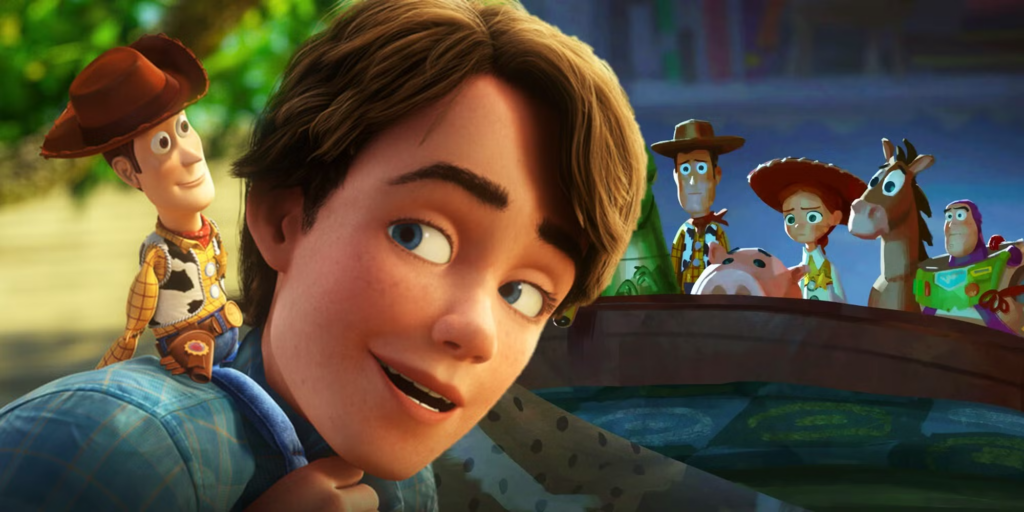
The toys of Toy Story are defined not by what they are, but by whom they remember. Woody’s identity is inseparable from Andy. Jessie’s story is shaped by her memories of Emily. Even Buzz Lightyear’s journey begins with a crisis of memory and self-perception. Again and again, the franchise returns to the same emotional question: what happens when the people and experiences that define us begin to change?
As “Toy Story 5” arrives during Alzheimer’s & Brain Awareness Month, it offers an unexpected opportunity to revisit a question that neuroscientists continue to explore today: what makes us who we are?
Memory: The Hidden Thread Running Through Toy Story
One reason “Toy Story” resonates across generations is that its emotional core reflects a fundamental aspect of human experience. While the films are filled with humor and adventure, their most powerful moments often revolve around remembering and being remembered.
Takes Woody, our beloved protagonist for example. Across five films, he changes dramatically as a character, despite remaining physically the same toy. His priorities evolve, his relationships deepen, and his understanding of purpose shifts over time. In many ways, this mirrors how modern neuroscience understands identity.
Rather than existing as a fixed entity, the ‘self’ is increasingly viewed as an ongoing construction built from memories, relationships, and experiences. Researchers studying autobiographical memory have shown that our sense of personal identity emerges from the stories we continuously tell ourselves about our lives (Conway & Pleydell-Pearce, 2000).
The person you are today is not simply the sum of your experiences. It is the way your brain remembers, organizes, and interprets them.
Popular culture often portrays memory as a recording system, storing experiences like files on a hard drive. Modern neuroscience paints a more dynamic picture.
Research over the past two decades has demonstrated that memories are not static records. Each time we recall a memory, it enters a malleable state and can be modified before being stored again—a process known as “memory reconsolidation”.
In other words, the remembering process itself also includes a form of rewriting.
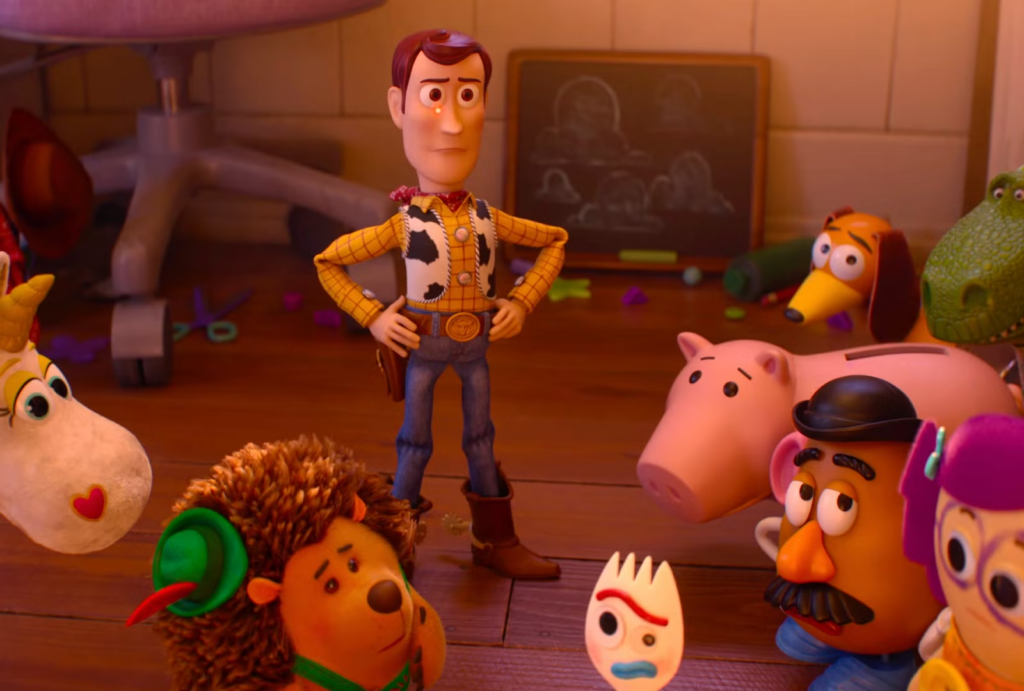
This concept helps explain why childhood memories change over time, why different family members can recall the same event differently, and why our understanding of ourselves changes as we grow older.
The same principle can be seen throughout “Toy Story”. Woody’s memories of Andy never disappear, but their meaning changes. It begins as a relationship based on ownership, gradually becomes a lesson in growth, acceptance, and letting go. As it envolves, his sense of self grows with it, reshaping how he sees himself and carries his own identity throughout different adventures in the movies.
Where Does Identity Live in the Brain?
If memories help shape who we are, where exactly are they stored?
The answer is surprisingly complex.
Neuroscientists have not identified a single “identity center” in the brain. Instead, memory emerges from networks involving the hippocampus, cortex, and numerous interconnected neural circuits. Recent work on “memory engrams” — physical and biochemical changes within specific groups of neurons associated with particular memories—has brought researchers closer to understanding how experiences become lasting components of identity (Josselyn & Tonegawa, 2020).
The pioneering work of Nobel laureate Susumu Tonegawa and colleagues has shown that specific neuronal populations can be linked to particular memories and experimentally reactivated in animal models.
In short, identity – or the perception of one’s image, is constructed through a complex map of memory and past experience. While these discoveries may sound far removed from a children movie, they ultimately address the same question at the heart of *Toy Story*: what allows a person—or a toy—to remain themselves over time?
The Fear of Being Forgotten
Beyond friendship or adventure, perhaps the most emotionally resonate theme in the franchise is the fear of being forgotten.
For Woody, being left behind represents more than abandonment. It threatens his sense of purpose and identity.
This fear resonates because memory plays a similar role in our life: it’s the foundation of who we think we are, and who our loved ones see we are.
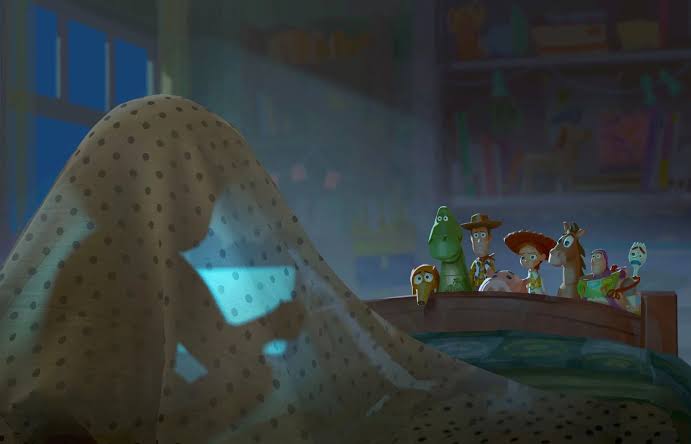
Such thought leads us right back to Alzheimer’s disease, and other variations of dementia, affects millions of people worldwide. While it is often described as a form of disease causing memory loss, its impact extends far beyond forgetting names or appointments. Alzheimer’s gradually disrupts autobiographical memory, relationships, and the ability to maintain a coherent sense of self.
This is why Alzheimer’s research is so important. Scientists are not merely studying memory as information storage; they are investigating one of the corner stone of human identity.
Recent advances in biomarkers, neuroimaging, and disease-modifying therapies have accelerated progress in the field, offering new hope for earlier diagnosis and more effective interventions (Alzheimer’s Association)
Why Toy Story Still Matters
The enduring success of “Toy Story” lies in its ability to transform complex human experiences into stories that feel universally relatable. The franchise reminds us that memories are more than records of the past. Memory is how we connect our past to our future. It shapes our relationships, influences our decisions, and define who we become. Perhaps that is why “Toy Story” continues to resonate and gain success after all these years. Beneath the humor, adventure, and nostalgia lies a simple truth: our lives are ultimately shaped by the memories we carry—and by the people who help create them.
The newly released movie is more than just a continuation of a series that we loved since we were a child. As for neuroscientists, whose works involve exploring the wonder our brain, investing how memories are encoded, stored, modified, and sometimes lost, this movie is a gentle reminder of why we do what we do: pushing the fore front of science, to infinity and beyond.
—
References
Alzheimer’s Association. (2025). *2025 Alzheimer’s Disease Facts and Figures*. Alzheimer’s & Dementia.
Conway, M. A., & Pleydell-Pearce, C. W. (2000). The construction of autobiographical memories in the self-memory system. *Psychological Review*, 107(2), 261–288.
Josselyn, S. A., & Tonegawa, S. (2020). Memory engrams: Recalling the past and imagining the future. *Science*, 367(6473), eaaw4325.
Nader, K., Schafe, G. E., & LeDoux, J. E. (2000). Fear memories require protein synthesis in the amygdala for reconsolidation after retrieval. *Nature*, 406, 722–726.
Read more Bio, Sciences & Arts articles:
Why Every Goal Feels Personal: The Neuroscience Behind the World Cup
When Life Becomes the Canvas: Bioscience Is Transforming the Language of Art
In the Age of AI Slop, Biology Becomes the Last Authentic Medium
Human may be hardwired for music. But why?
Working on Brain research?
Explore our brain organoid platform and Neurodegeneration disease models