Cancer dependency maps have traditionally relied on 2D cell lines. A newly published study on Nature moves that effort into patient-derived tumour organoids, combining a 256-model biobank with genome-wide CRISPR screening to reveal how tumour genotype and treatment history shape functional vulnerabilities across multiple cancer types.
From Mutation Maps to Functional Dependencies
Cancer dependency maps have largely been built from 2D cell lines—powerful models that nevertheless capture only part of patient tumour diversity and often lack matched clinical context. Researchers at the Wellcome Sanger Institute and collaborating UK centres have now shifted that effort into 3D.
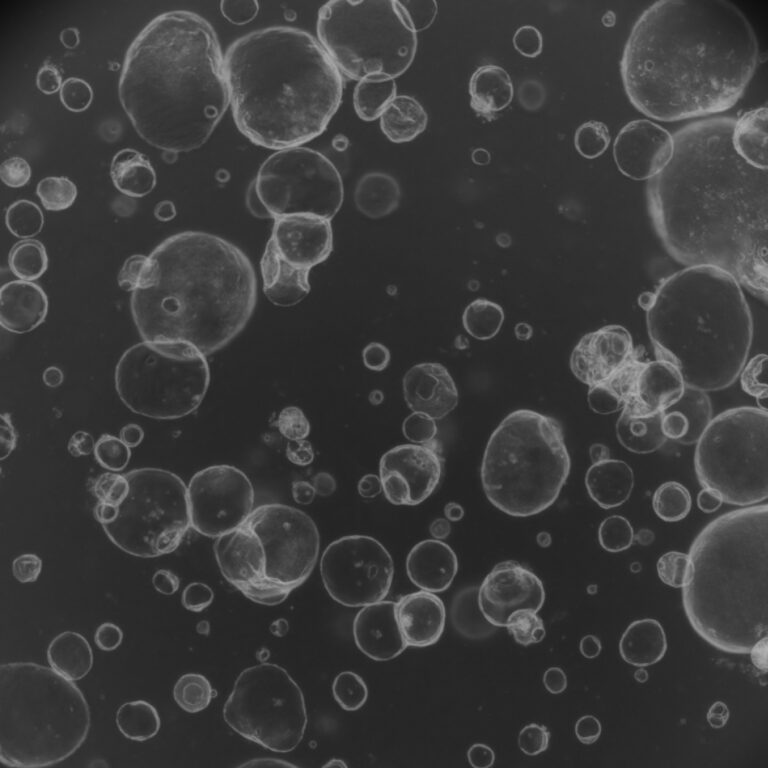
The team established a renewable biobank of 256 patient-derived tumour organoids spanning colorectal, oesophageal, ovarian, pancreatic and gastric cancers. Whole-genome and transcriptome profiling showed that the models broadly preserved genomic features of their source tumours, while genome-wide CRISPR–Cas9 screening across 162 organoids produced a systematic map of gene dependencies.
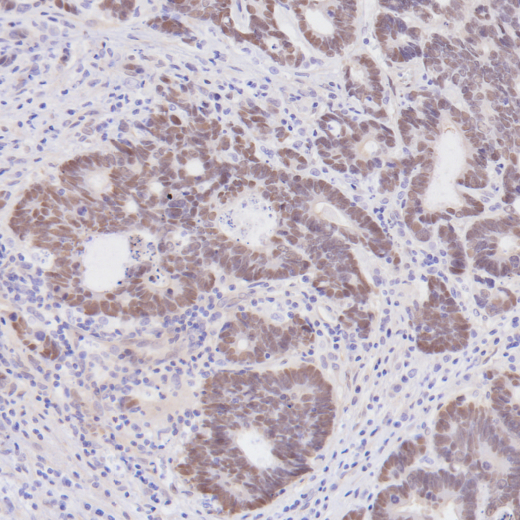
The important change is not simply scale. By linking functional dependencies with tumour genotype and clinical history, the study moves from describing cancer mutations towards testing what individual tumours may actually depend on. In colorectal cancer, distinct KRAS variants showed different dependencies on KRAS and upstream EGFR signalling. In paired oesophageal organoids collected before treatment and after relapse, tumour evolution was accompanied by altered dependencies and drug sensitivities.
This is the shift: organoids are moving from representative cancer models towards functional maps of tumour diversity. Important limitations remain, including the influence of culture conditions and the absence of full stromal, immune and spatial context.
For researchers, this opens a practical next step: using patient-derived organoids not only to reproduce tumour features, but to test how molecular context shapes treatment response. Lambda’s oncology organoid platform extends that approach across colorectal, ovarian, gastric and pancreatic cancers, supporting new ways to investigate tumour biology and therapeutic response.
Reference
Herranz-Ors, C. et al. “A tumour-derived organoid biobank maps cancer gene dependencies.” Nature (2026). DOI: 10.1038/s41586-026-10830-y.
Intested in Patient-derived Organoid powered research? Check out Lambda Biologics’ Oncology Organoid Biobank:
Colorectal Cancer Organoid | Ovarian Cancer Organoid Pancreatic Cancer Organoid
Gastric Cancer Organoid | See more…