The Cancer Dependency Map has helped identify genetic vulnerabilities across hundreds of cancer models, but conventional 2D cell lines can miss tumour states seen in patients. A new Nature study integrates organoids and tumour spheroids into DepMap, revealing dependencies linked not only to genomic alterations, but also to transcriptional state, growth format and culture environment.
Precision oncology depends on identifying the genes and pathways that individual tumours rely on for survival. The Cancer Dependency Map, or DepMap, has advanced this effort through large-scale functional screening of cancer cell lines. However, traditional two-dimensional cultures do not always preserve the molecular states or subtype diversity found in patient tumours.
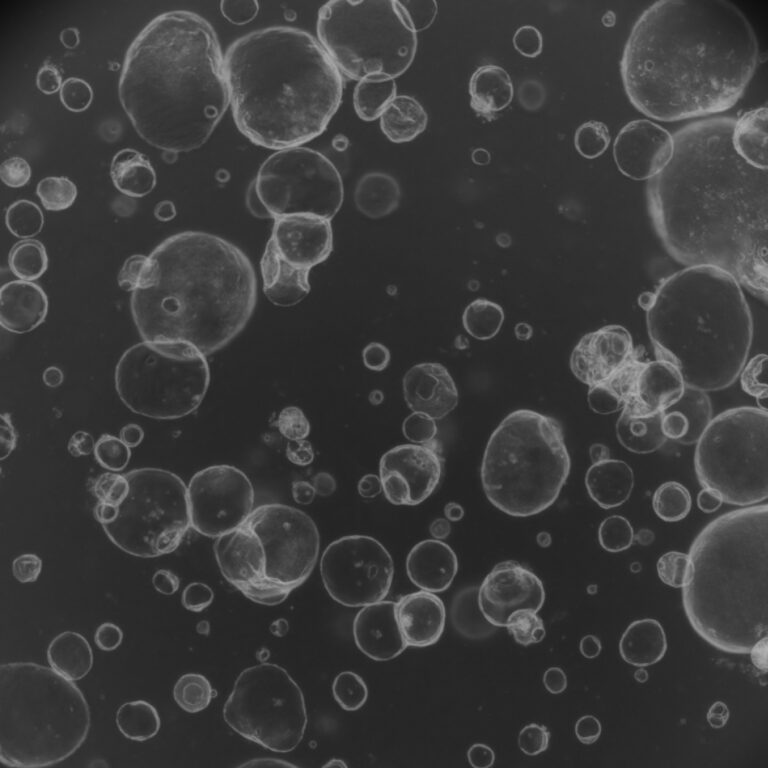
Neiswender and colleagues addressed this limitation by expanding DepMap with next-generation three-dimensional cancer models. The study assembled 314 patient-derived models, including 237 carcinoma organoids and 77 central nervous system tumour spheroids, and performed genome-scale CRISPR screening on 147 of them alongside whole-genome and RNA sequencing.
The resulting models increased representation of genomic alterations and tumour subtypes that were poorly captured by conventional cell lines. Importantly, the 3D models also retained transcriptional programmes that were often lost under traditional culture conditions. In glioblastoma, for example, next-generation models more closely preserved glial gene-expression states seen in human tumours and revealed an association between CDKN2A loss and CDK6 dependency. In gastrointestinal cancers, organoids maintained a mucinous differentiation programme linked to selective dependencies on components of WNT signalling.
The study also demonstrates that cancer dependency is partly shaped by the experimental environment itself. Growth format altered dependencies involving integrins and actin regulation, while culture medium influenced lipid-metabolism dependencies. These observations caution against treating any single model system as a complete representation of tumour biology.
Rather than replacing conventional cell lines, the authors position 3D models as a complementary layer within DepMap. Their integration broadens the range of tumour states that can be functionally interrogated and may improve the identification of vulnerabilities associated not only with genomic alterations, but also with transcriptional state and cellular context.
Reference
Neiswender, J. V. et al. “A dependency map enhanced with next-generation 3D cancer models.” Nature (2026). DOI: 10.1038/s41586-026-10843-7.
Lambda Biologics’ Oncology Solutions: Patient-derived cancer organoid-based drug evaluation service
Gastric Cancer Organoid | Breast Cancer Organoid | Hepatocarcinoma Cancer Organoid | Pancreatic Cancer Organoid