Science and art are often portrayed as opposites: one seeks objective truths through repeatable evidence; the other explores subjective experiences through unique creativity and interpretation. Yet throughout history, the two have evolved side by side. Renaissance artists relied on anatomical studies to depict the human body with unprecedented accuracy. The invention of photography transformed visual art by changing how reality could be captured and represented. Scientific discoveries have repeatedly expanded the creative possibilities available to artists.
In recent years, advances in genetics, stem cell biology, tissue engineering, and regenerative medicine are not only changing how scientists understand life—they are also changing how artists express it. For a growing number of contemporary artists, biology is no longer merely a source of inspiration. It has become a medium of expression.
This transformation is explored in the 2021 paper Bioart Towards a New Concept of Identity (Elsarraff, Heba Elaziz), which examines how developments in biotechnology have fundamentally reshaped artistic approaches to identity. The paper argues that scientific breakthroughs such as DNA sequencing, the Human Genome Project, MRI and fMRI imaging, stem cell technologies, and tissue engineering have shifted our understanding of identity from something visible on the surface to something embedded within biological systems.
Traditionally, portraiture focused on external appearance. A portrait sought to capture a person’s face, body, or social status. Bioart challenges this tradition by asking a different question: what if identity is not defined by what we look like, but by what we are biologically made of?
The paper highlights several influential examples. In Stranger Visions, artist Heather Dewey-Hagborg collected discarded genetic material such as hair and cigarette butts and used DNA analysis to reconstruct facial portraits, raising questions about privacy, surveillance, and genetic identity. Marta de Menezes created portraits using patterns of brain activity measured through functional MRI, suggesting that identity may be expressed through cognition rather than appearance. In Ergo Sum, artist Charlotte Jarvis transformed her own cells into stem cells and differentiated them into various tissue types, creating a biological self-portrait composed of living material.
Together, these works demonstrate a profound shift. Portraiture no longer needs to represent the outside of a person. Through bioscience technique, it can represent genes, cells, physiological functions, and the invisible biological processes that sustain life.
Yet the most interesting implication of Bioart extends beyond identity.
For centuries, artists have represented life through paint, stone, photography, or digital media. Bioart introduces a fundamentally different possibility: using life itself to explore life. Scientific techniques become creative tools. DNA sequencing, microscopy, cell culture, and tissue engineering enter the artist’s studio alongside traditional materials.
This changes the whole dynamic relationship between artwork and subject.
A painting of a flower represents a living organism. A culture of living cells actively grows, responds, and changes over time. The artwork is no longer a depiction of biology—it becomes biological. In this sense, Bioart represents a shift from representation to participation. Artists are no longer simply observing living systems; they are working alongside them.
This idea has become even more relevant in recent years as bioscience enters a new era defined by organoids, regenerative medicine, and increasingly sophisticated models of human biology.
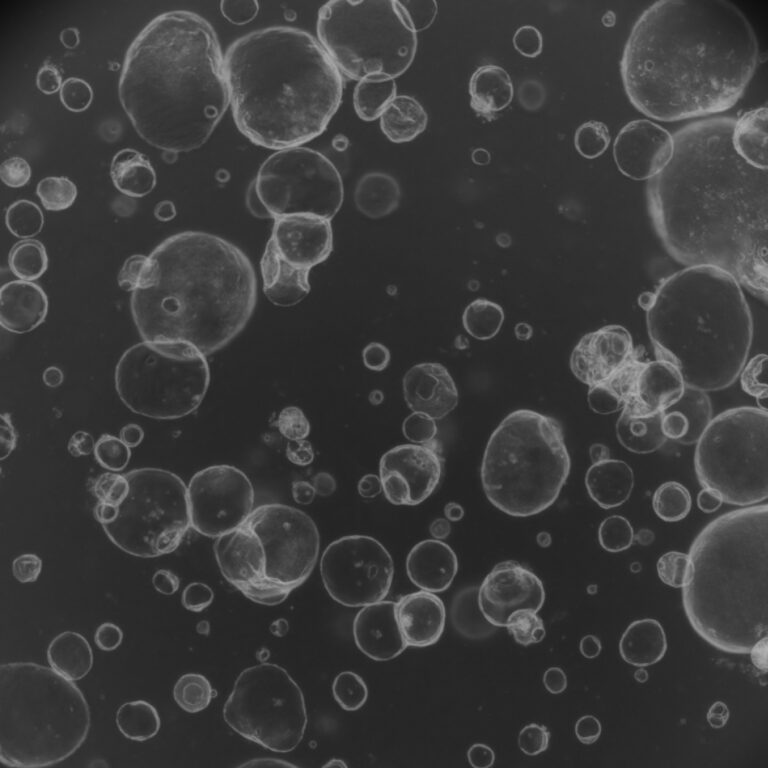
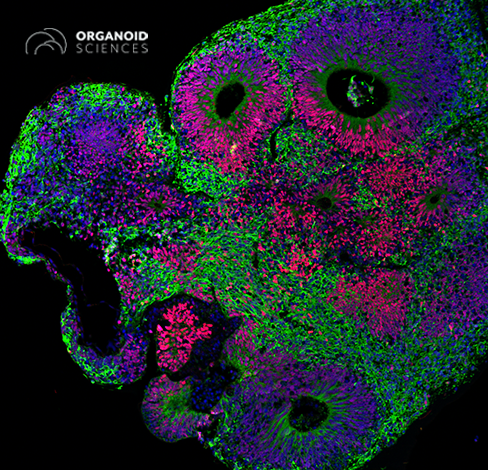
Organoids—miniature tissue structures grown from stem cells—have emerged as one of the most exciting developments in modern cell biology. Researchers can now grow organoids that mimic aspects of the brain, retina, intestine, liver, and many other organs. These systems are transforming disease modeling, drug discovery, and personalized medicine.
At the same time, organoids raise questions that resonate far beyond the laboratory. What does it mean to grow a miniature version of a human organ outside the body? Where does biological identity begin and end? Can living tissues exist independently of the person from whom they originated?
These are scientific questions, but they are also philosophical and artistic ones.
Similarly, regenerative medicine challenges conventional assumptions about the body. Scientists are learning how tissues repair themselves, how cells can be reprogrammed into new identities, and how damaged biological systems might be restored. The body increasingly appears not as a static object but as a dynamic process of growth, adaptation, and renewal.
Bioart provides a cultural framework for exploring these ideas. Long before many biotechnologies become commonplace, artists help society imagine their implications. They transform scientific developments into experiences that invite reflection, curiosity, and debate.
This is why Bioart should not be viewed as a niche intersection between science and culture. It may be one of the defining artistic movements of the biotechnology age.
Every breakthrough in stem cell biology, organoid research, gene editing, tissue engineering, and regenerative medicine expands not only what we can do, but also how we think about identity, personhood, memory, and life itself. The questions emerging from modern bioscience are no longer confined to laboratories. They are becoming cultural questions.
In many ways, artists and scientists are now exploring the same frontier from different directions. Scientists seek to understand the mechanisms of life. Artists seek to understand the meaning of life. As biotechnology advances, these pursuits are becoming increasingly intertwined.
The significance of bioscience therefore extends beyond medicine. It influences how we define ourselves, how we imagine our future, and how we understand our place within the living world. Every new biological discovery opens a window not only into how life works, but also into how life can be interpreted.
Reference:
Abdel-Aziz, M. (2021). Bioart Towards a New Concept of Identity. Journal of Art, Design and Music.
—
Read more Bio, Sciences & Arts articles:
In the Age of AI Slop, Biology Becomes the Last Authentic Medium
Human may be hardwired for music. But why?