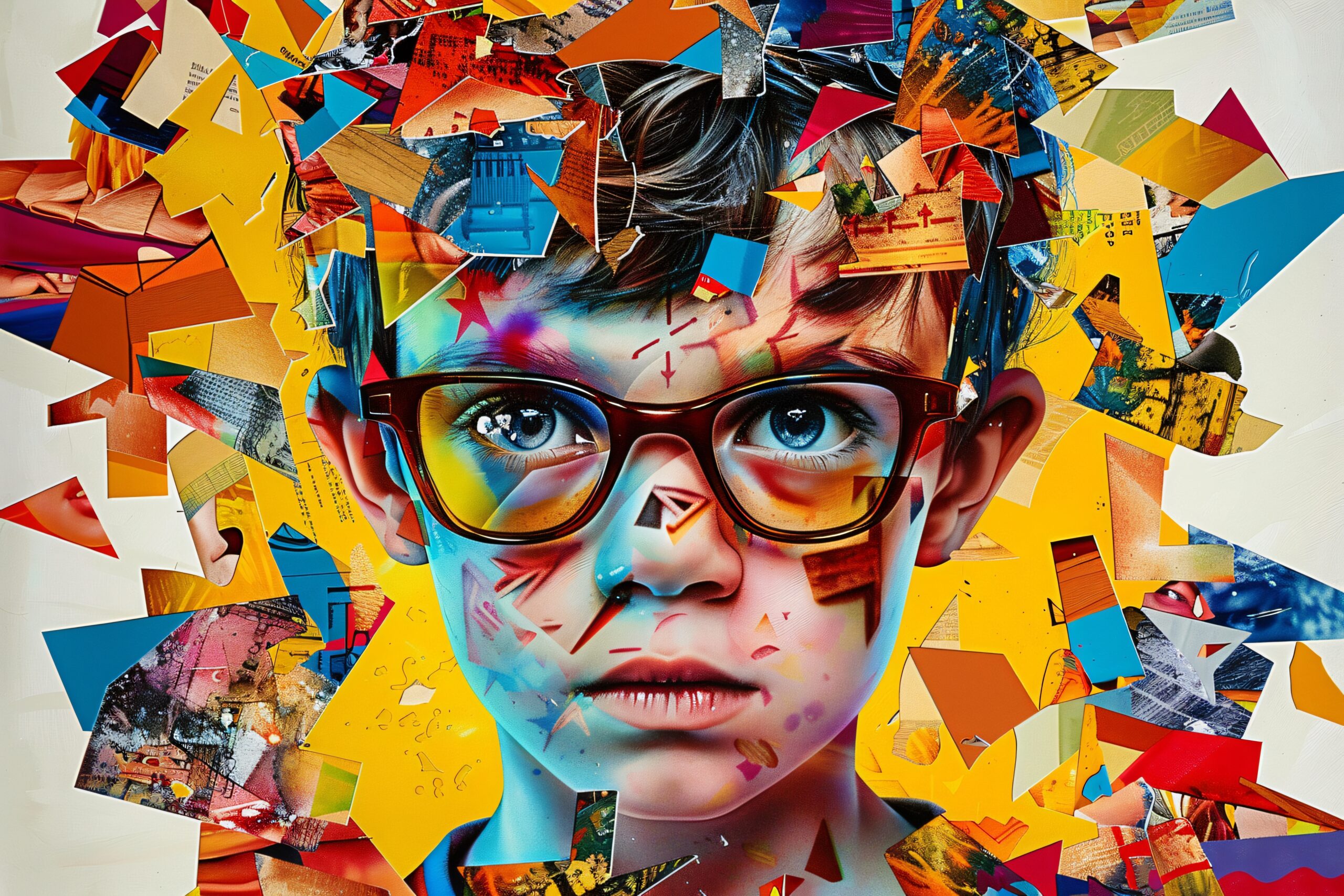
For the first time in history, culture is becoming frictionless. With AI.
Images are generated in seconds. Essays appear instantly. Music, branding, illustration, even entire personalities can now be synthesized through prompts and prediction models. Our feeds are increasingly filled with content that is aesthetically polished, emotionally legible, and infinitely reproducible. Everything looks good. Everything sounds right. And yet, much of it feels strangely empty.
The internet has already developed a name for this sensation: “AI slop” — a flood of synthetic content optimized for attention but stripped of texture, tension, and lived experience.
What is fascinating is not that AI has become powerful, but that its rise is producing an equally powerful cultural reaction. Across art, fashion, design, and everyday life, people are gravitating toward things that feel unmistakably human: handmade ceramics, film photography, visible imperfections, live performances, handwritten notes, offline spaces, and tactile experiences that resist digital smoothness.
In a world increasingly dominated by generated culture, people are reacting. Not that they fear, nor hate AI, an undoubtly powerful tool that reshaping our daily lives. They are simple craving ‘life’.
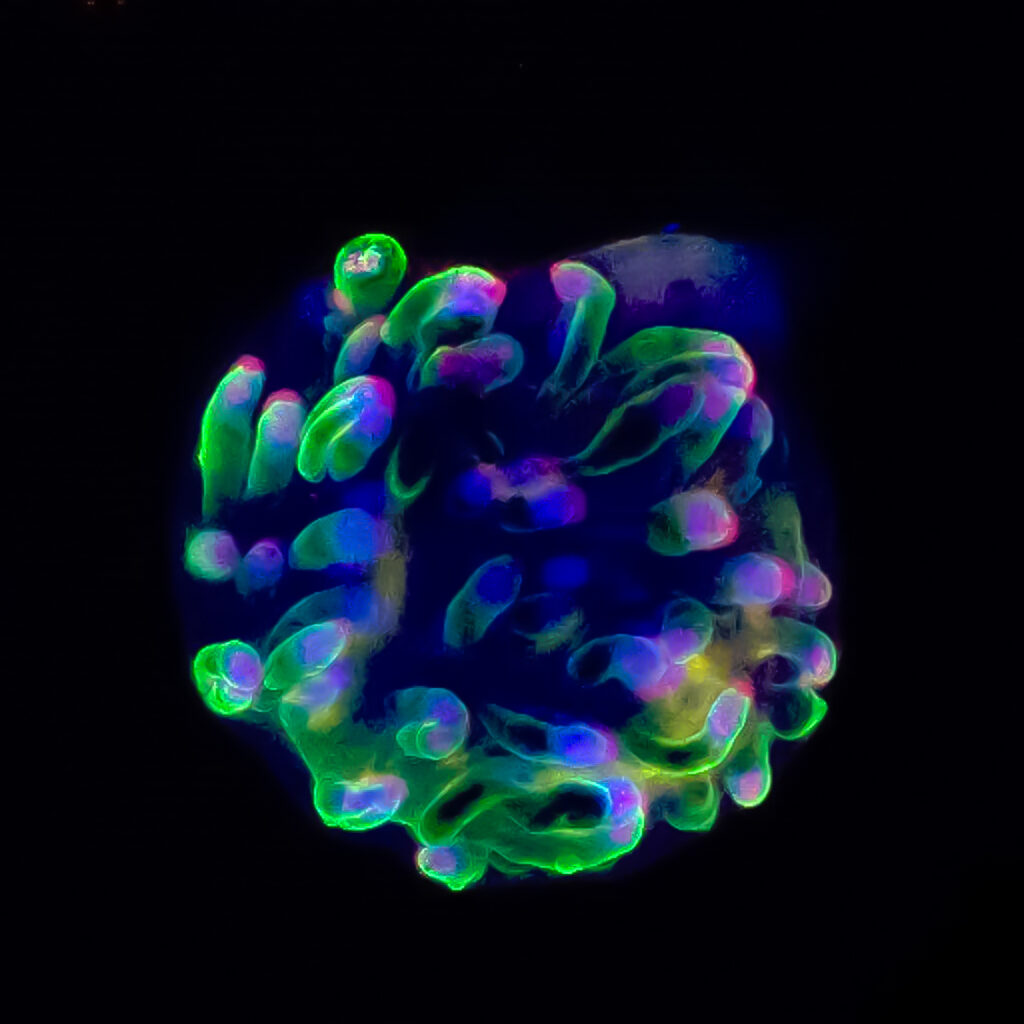
This cultural shift arrives at the exact same moment biotechnology is entering a new era of discovery. While artificial intelligence works through prediction and pattern compression, biology continues to reveal something far more complex: emergence.
Organoids grown from stem cells can now mimic aspects of miniature human organs. Regenerative medicine explores how tissues repair themselves. Spatial biology allows scientists to observe living systems interacting in dynamic and unpredictable ways. Again and again, biology demonstrates that life is not simply engineered line by line. It grows, adapts, reorganizes, and evolves in most fascinating ways possible.
Artificial intelligence generates outputs. Biology generates existence.
This distinction matters emotionally as much as scientifically.
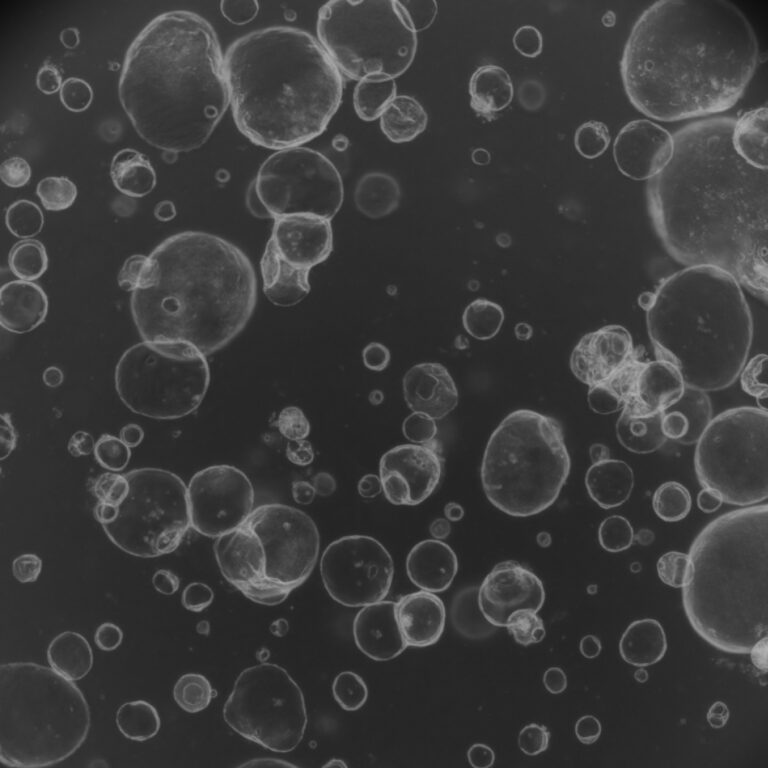
One of the most beautiful aspects of modern biotech discovery is witnessing how living systems organize themselves from apparent chaos. Cells communicate, differentiate, and assemble into structures with astonishing complexity. Tiny clusters of tissue begin to resemble organs. Damaged cells regenerate. Life continuously reshapes itself through processes we still do not fully understand.
Even at the frontier of science, where AI is joining with the brightest minds, biology retains a mystery that sparks endless inspiration.
And perhaps that mystery is exactly what people are craving in an era of algorithmic sameness.
Human beings are drawn to texture, unpredictability, and imperfection because these qualities make experiences feel real. A handmade object carries evidence of time and touch. A live performance contains the possibility of failure. A biological system evolves in ways no dataset can perfectly predict.
AI may be able to imitate creativity, but living systems carry something deeper: vulnerability, adaptation, memory, and growth – everything that makes us human.
This is why biology feels increasingly profound in contemporary culture. It reminds us that not everything meaningful can be optimized. Not everything valuable can be compressed into data.
As artificial intelligence reshapes the digital world, biology may become the place where humanity rediscovers awe. Not because life is technologically primitive, but because living systems continue to reveal forms of intelligence that are embodied, regenerative, and irreducibly alive.
To our dear scientists working at the frontier of bioscience, this matters more than ever. In a culture increasingly dominated by simulation and synthetic generation, the exploration of living systems carries a different kind of weight. Every organoid cultured, every signaling pathway mapped, every failed experiment repeated late into the night is part of a deeper effort to understand life itself — not as abstraction, but as something dynamic, fragile, and real.
Biological research is often slow, frustrating, and resistant to clean answers. Cells behave unpredictably. Experiments fail. Progress comes in increments that are invisible to most people outside the lab. Yet that difficulty is precisely what makes discovery meaningful. Unlike generated outputs optimized for speed and scale, scientific understanding is earned through patience, uncertainty, intuition, and persistence.
The satisfaction of seeing a tissue finally differentiate correctly, of uncovering a mechanism no one has seen before, of watching living systems reveal their hidden logic — these moments cannot be automated into existence. They emerge from curiosity, discipline, and years of accumulated effort.
And perhaps that is one of the most human things in this data-driven era.
In the age of artificial generation, the deepest frontier may not be synthetic intelligence, but life itself.
Read more Bio, Sciences & Arts articles:
Human may be hardwired for music. But why?
Planning your next bioscience discovery?
Explore our established biobank of human-relevant organoid models that can fast-track your next translational research: