The researchers developed a human embryonic stem cell (hESCs; WA25, Wicell)-derived 3D hair-bearing skin organoid model that can successfully recapitulate androgenic alopecia-like conditions through long-term DHT (dihydrotestosterone) treatment. This organoid system bridges the gap by:
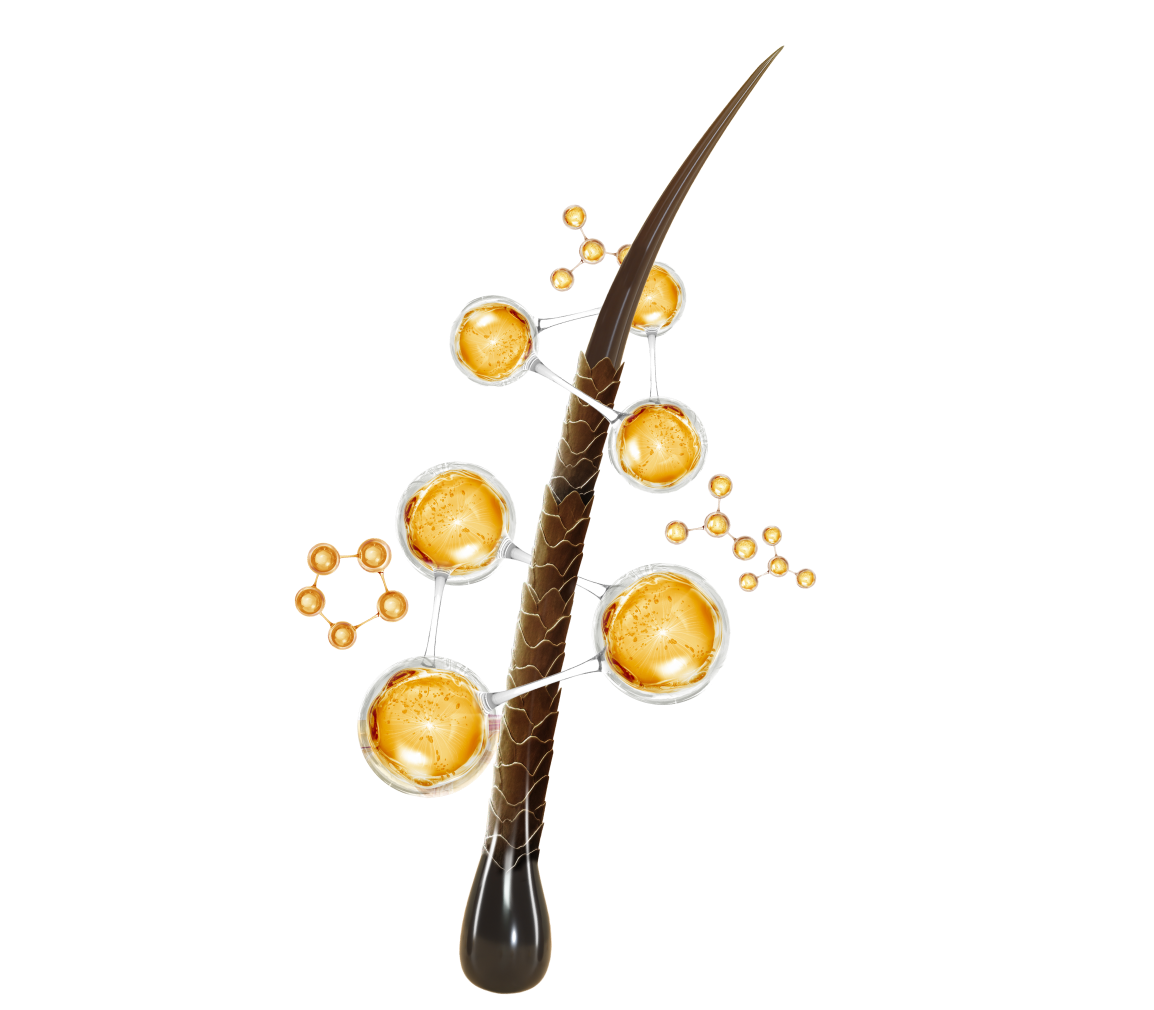
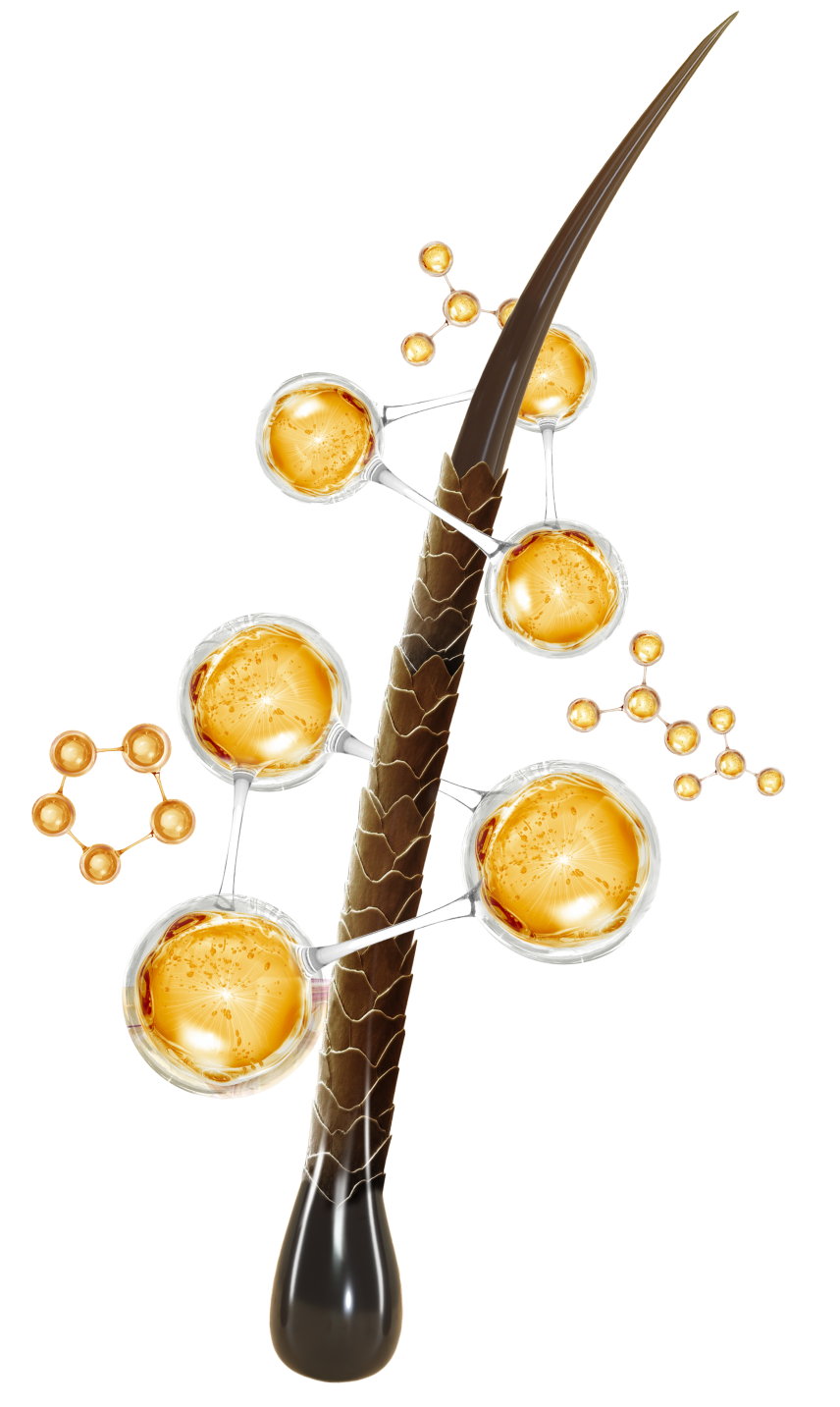
Developed a hair-bearing scalp organoid derived from stem cells that mimics the structural and functional characteristics of human hair follicles and scalp tissue.
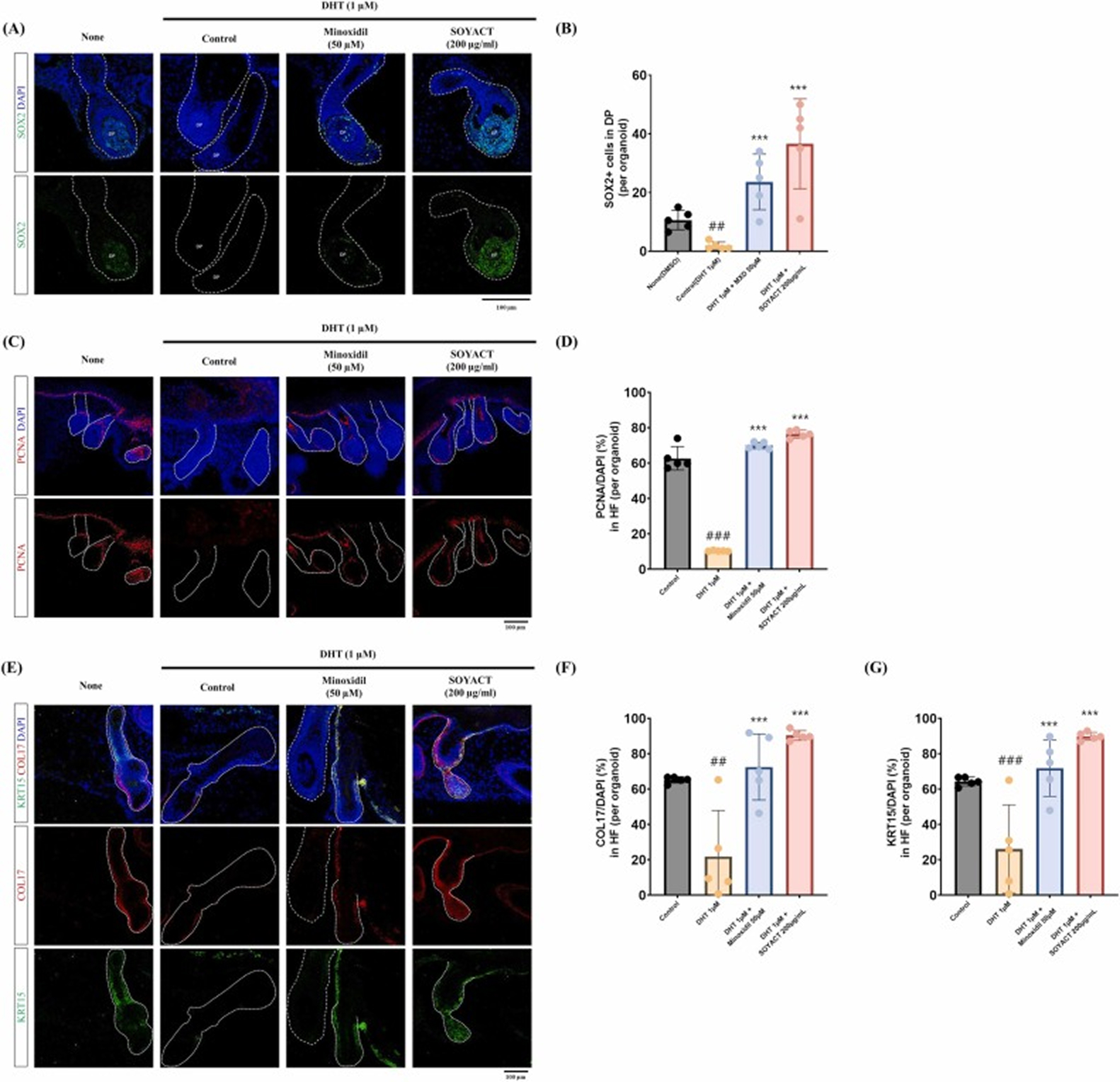
The organoids enable long-term evaluation of anti-hair loss agents. Both FDA-approved Minoxidil and the Korean FDA-certified ingredient SOYACT demonstrated protective effects by preserving hair follicle number, maintaining pigmented hair shafts, and restoring key biomarkers (SOX2, PCNA, COL17, and KRT15).
Provides a long-term, physiologically relevant platform that bridges conventional cell assays and clinical studies, supporting therapeutic screening, mechanism studies, and cosmetic efficacy evaluation.
Step 1 – Organoid Generation
Differentiate human embryonic stem cells into 3D skin/scalp organoids with hair follicles through stepwise culture and growth factor induction.
Step 2 – Hair Follicle Maturation
Culture organoids for >100 days until mature, pigmented hair shafts form.
Step 3 – Induction of Hair Loss
Treat organoids with DHT to induce androgenic alopecia-like follicular regression.
Step 4 – Compound Treatment
Administer Minoxidil or SOYACT to evaluate anti-hair loss efficacy.
Step 5 – Multi-Level Evaluation
Assess efficacy using:Successful Generation of Hair-Bearing Skin Organoids
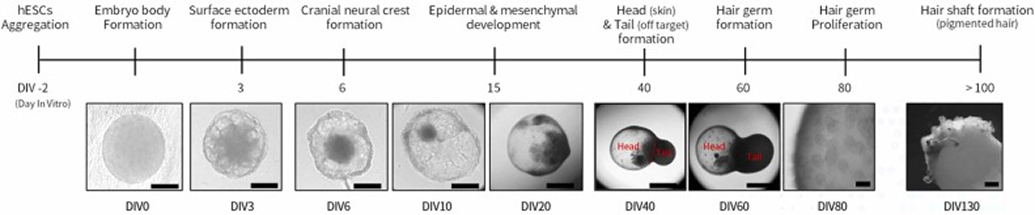
The researchers successfully cultured skin organoids from human embryonic stem cells (hESCs; WA25, Wicell) that developed hair follicles. Hair germs appeared at DIV 60, followed by proliferation at DIV 80. By DIV 100–150, mature pigmented hair shafts were clearly visible, confirming the formation of functional hair-bearing skin organoids.
In Vitro Effects on Dermal Papilla Cells (DPCs)
Both Minoxidil (MXD) and SOYACT significantly promoted DPC proliferation (120–140% increase). They also upregulated key hair growth factors: Increased mRNA and protein expression of VEGF and HGF. These beneficial effects were maintained even in the presence of DHT.
In human hair follicle organ culture, treatment with MXD and SOYACT (20–200 µg/mL) significantly enhanced hair shaft elongation compared to controls. The hair growth-promoting effect was evident by day 8, even under DHT-induced conditions.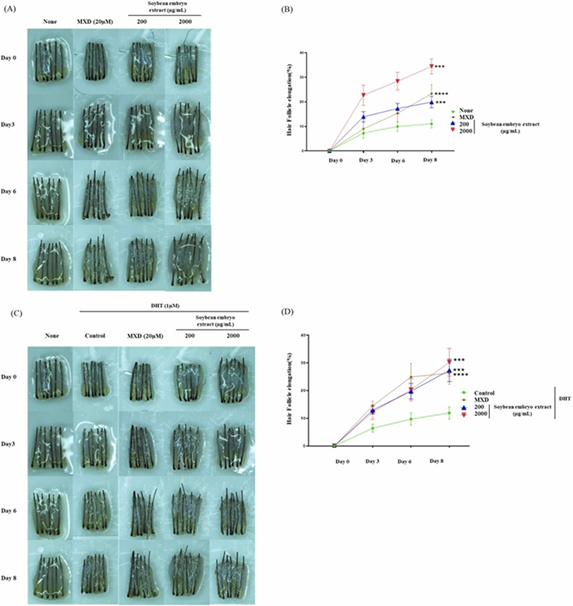
Protection Against DHT-Induced Alopecia in Organoids
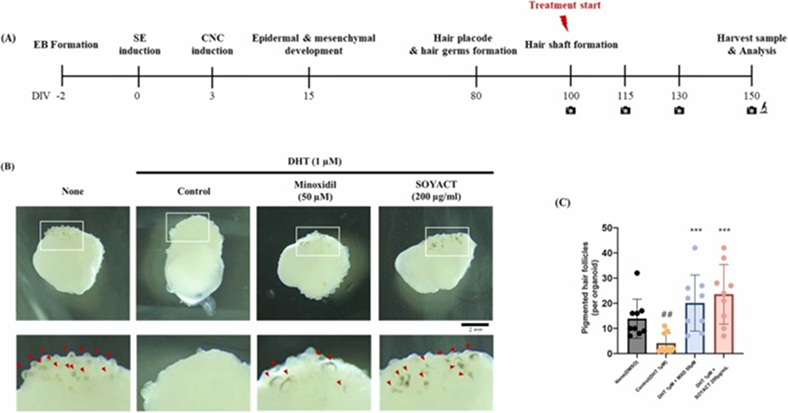
Long-term DHT treatment (1 µM for 50 days starting at DIV 100) induced androgenic alopecia-like changes in the organoids, including:
In contrast, co-treatment with MXD (50 µM) or SOYACT (200 µg/mL) effectively preserved follicular structure, maintained higher numbers of pigmented hairs, and showed clear protective effects.
Restoration of Molecular Hair Development Markers
Immunofluorescence analysis revealed that DHT markedly decreased critical hair follicle markers:
Treatment with MXD or SOYACT successfully restored the expression of these biomarkers, often bringing them back to or above control levels.
Overall Result: The study demonstrated that the hair organoid model can reliably recapitulate androgenic alopecia upon DHT exposure and effectively evaluate the anti-hair loss efficacy of both a known drug (Minoxidil) and a cosmetic ingredient (SOYACT) at macroscopic (hair count) and microscopic (biomarker) levels.
We use cookies that are necessary to make our site work. We may also use additional cookies to analyze, improve, and personalize our content and your digital experience. You can manage your cookie preferences using the Cookie settings link. For more information, see our Privacy Policy