Lipid metabolism reprogramming shapes the immune landscape in the tumor microenvironment
Journal: Cellular & Molecular Immunology
Author: Du, YW., Cai, ZR., Duan, XT. et al., China
Lipid metabolism reprogramming drives tumor progression by fueling cancer cells and reshaping the tumor microenvironment. This metabolic rewiring promotes immune evasion by inducing dysfunction in antitumor immune cells and supporting immunosuppressive populations, offering promising new targets for enhancing cancer immunotherapy.
A compatible gravity-driven organoid perfusion (GDOP) platform for drug screening with sensitivity and toxicity process evaluation
Journal: Communications Biology
Author: Wang, S., Zhang, X., Ma, H. et al., China
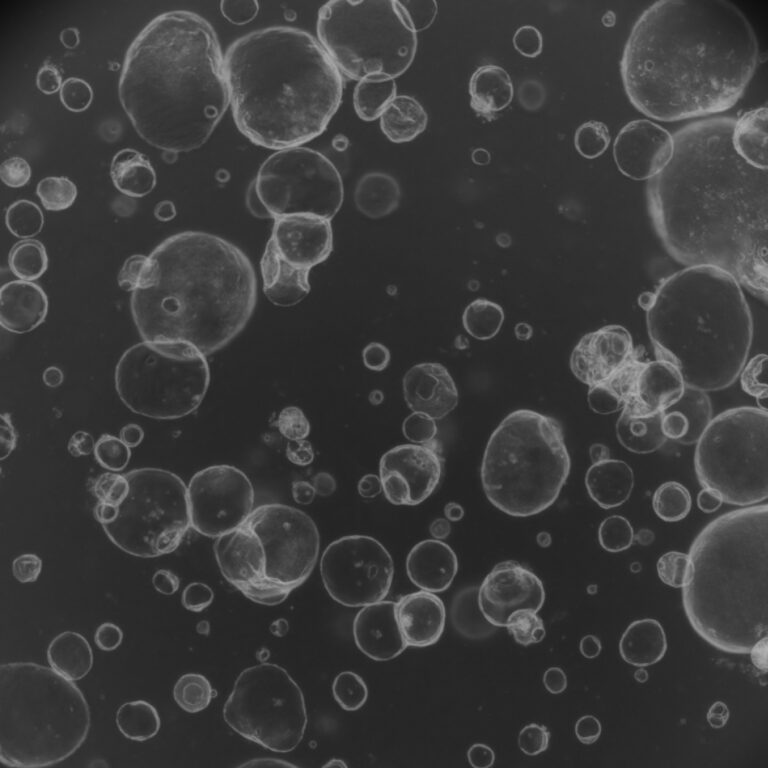
The gravity-driven organoid perfusion (GDOP) platform enables high-throughput drug screening with unidirectional flow and real-time monitoring. By simultaneously evaluating sensitivity and toxicity in breast and brain organoids, it provides a reliable, scalable approach for advancing clinical diagnostics and personalized research.
An in vitro menstrual cycle using organoids captures epithelial cell transitions during menstruation and regeneration of the human endometrium
Journal: Cell Stem Cell
Author: Nikolakopoulou K, Ybañez W, Klaeylé L et al., Switzerland
An organoid-based in vitro menstrual cycle protocol successfully captures the human endometrium’s unique shedding and scarless regeneration. It identifies WNT7A as a critical driver for epithelial maintenance and reveals how regenerating tissue signals to the vasculature to promote wound healing.
Knowledge-enhanced pretraining for vision-language pathology foundation model on cancer diagnosis
Journal: Cancer Cell
Author: Zhou X, Sun L, He D. et al., China
KEEP integrates a medical knowledge graph into vision-language pretraining to align pathology images with hierarchical disease data. It significantly outperforms existing models in cancer segmentation and subtyping, particularly for rare cancers, establishing a knowledge-enhanced paradigm for more accurate computational pathology.