Organoid Shapes Reveal Cancer Secrets: New Classification System for Oral Tumors
Journal: Cell Reports Medicine
Author: Mi Rim Lee et al., South Korea
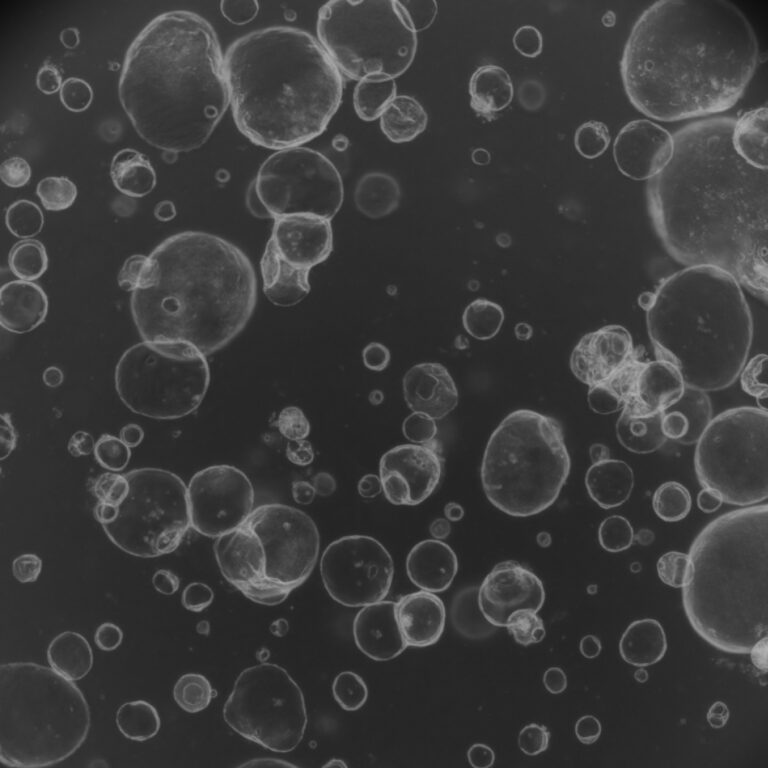
Revolutionary patient-derived organoid study classifies oral cancers into three morphological subtypes (normal-like, dense, and grape-like), correlating with genomic profiles and patient outcomes, potentially transforming treatment approaches for this aggressive disease.
AI Transforms Organoid Research: New 3D Analysis Pipeline Enables Complex Imaging
Journal: Nature Methods
Author: Hui Ting Ong et al., Singapore
Novel AI-based platform enables high-speed, multi-level 3D analysis of organoid structures, overcoming longstanding imaging challenges and offering user-friendly interface (3DCellScope) to screen morphological changes including responses to mechanical stressors like microgravity.
Synthetic Organizers Create Perfect Neural Tube Organoids
Journal: Cell Stem Cell
Author: Tao Luo et al., China
Innovative “ORDER” method creates neural tube organoids with precise dorsal-ventral patterning by establishing opposing BMP and SHH gradients, closely mimicking human embryonic spinal cord development and enabling modeling of neural tube defects.
Bile Acids Hold Key to Long-lasting Liver Organoids
Journal: Cell Reports
Author: Taro Shimizu et al., Japan
Breakthrough culture strategy using bile acids and FXR receptor agonists creates iPSC-derived hepatic organoids with “grape-like” structure that maintain hepatocyte characteristics during long-term culture, offering new possibilities for regenerative medicine.