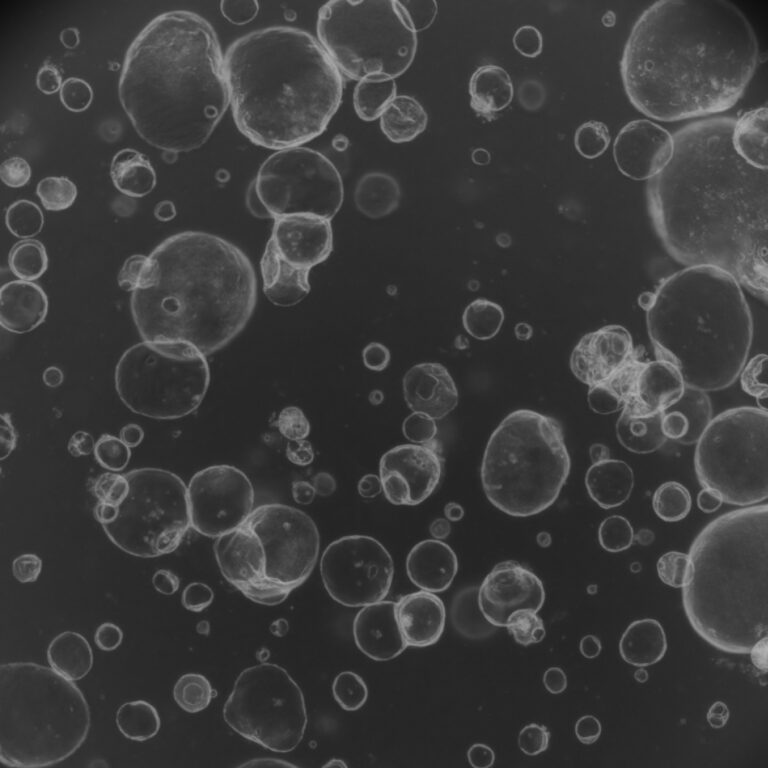
The study discussed in the provided text focuses on the successful long-term culture of 64 patient-derived hepatobiliary tumor organoids (PDHOs) from a Chinese population. These PDHOs were used to study their response to various chemicals related to metabolism and epigenetics, as well as anti-cancer drugs. The research involved integrating data from whole genome sequencing, transcriptome analysis, chromatin accessibility profiles, and drug sensitivity testing for 64 clinically relevant drugs. One significant finding is that a mutation in the RUNX1 promoter is linked to increased chromatin accessibility and higher gene expression in hepatobiliary tumors. This mutation also makes these tumors more sensitive to a specific cluster of drugs. Overall, this study not only establishes a biobank of PDHOs for human liver cancer but also proposes a systematic approach to comprehensively understand the gene-regulatory network of liver cancer. This approach has the potential to advance personalized medicine applications in the field.
Keywords: Organoids, oncology