The search for effective Alzheimer’s therapies has long been dominated by strategies targeting amyloid-beta. Yet despite decades of research, translating promising preclinical findings into meaningful clinical outcomes remains one of the greatest challenges in neuroscience.
A recent study from ETH Zurich offers a compelling new direction. Led by Prof. Ursula Quitterer, Professor of Molecular Pharmacology at ETH Zurich, researchers identified a previously underappreciated driver of Alzheimer’s pathology and developed an experimental compound that slowed disease progression in animal models. The findings were published in “Cell Reports Medicine” by Joshua Abd Alla, Alexander Perhal, Xuebin Fu, Andreas Langer, Yasser el Faramawy, and Ursula Quitterer.
A New Target Emerges: GRK2 Aggregation
The ETH Zurich team discovered that an inactive form of the enzyme GRK2 accumulates in the brains of dementia patients and Alzheimer’s mouse models. Rather than remaining harmless, these inactive GRK2 molecules form aggregates that damage mitochondria, impair cellular energy production, and promote the formation of amyloid-beta. The result is a self-reinforcing cycle that accelerates neurodegeneration.
To interrupt this process, the researchers developed “Compound 10,” a small molecule designed to prevent GRK2 aggregation. In mouse studies, the compound improved mitochondrial function, reduced amyloid-beta accumulation, preserved neuronal health, and extended survival. According to Quitterer, the discovery is significant because “we’ve now identified a new target protein in the form of GRK2” that operates through a different mechanism than existing Alzheimer’s drugs.
Why This Matters for Alzheimer’s Research
The importance of this work extends beyond a single experimental drug. Increasingly, Alzheimer’s is understood as a complex network disease involving mitochondrial dysfunction, cellular stress, protein aggregation, inflammation, and neuronal loss. The identification of GRK2 as a potential upstream regulator adds another critical piece to this puzzle.
For researchers and drug developers, discoveries like this broaden the therapeutic landscape. Rather than focusing exclusively on downstream amyloid pathology, future interventions may target earlier disease-driving mechanisms that contribute to neurodegeneration.
The Translational Challenge: Moving Beyond Mouse Models
At the same time, it is important to acknowledge the limitations of the current findings. The therapeutic effects of Compound 10 have so far been demonstrated primarily in Alzheimer’s mouse models. While animal studies remain indispensable for understanding disease mechanisms and evaluating candidate therapeutics, species-specific differences in brain biology continue to complicate translation to human patients.
This challenge is particularly relevant in Alzheimer’s research, where numerous therapies have shown promise in animal models but struggled to achieve comparable success in clinical trials.
The Growing Role of Human-Relevant Alzheimer’s Disease Models
As novel targets such as GRK2 emerge, the field increasingly requires experimental systems that better reflect human neurobiology. This is where organoid technologies are beginning to transform Alzheimer’s research.
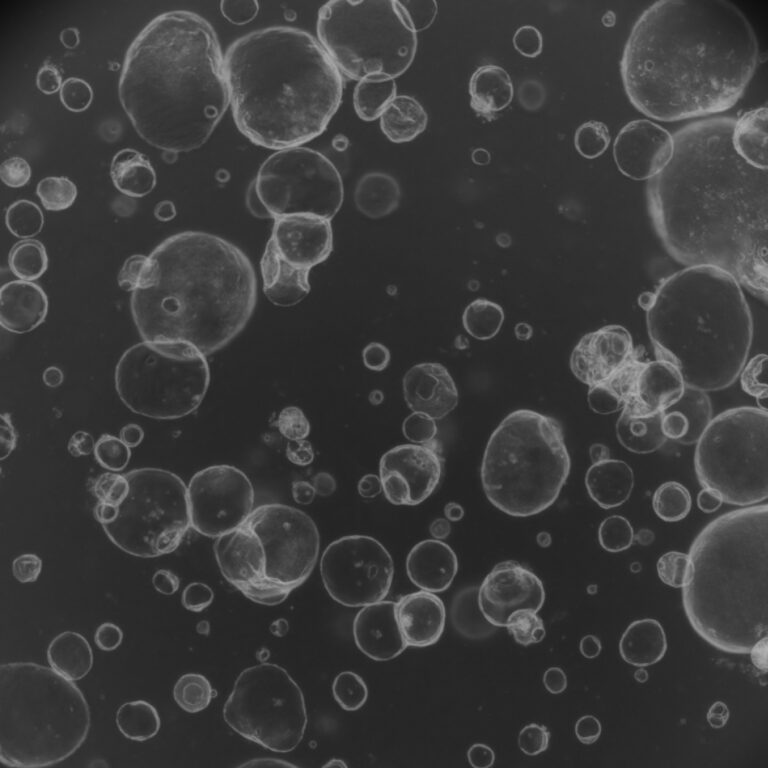
Human-derived Alzheimer’s disease models, such as Organoid-based platforms, enable researchers to investigate disease mechanisms in a physiologically relevant human context. These systems can help evaluate how pathways such as GRK2 aggregation influence neuronal health, mitochondrial function, and therapeutic response in human neural tissue.
The ETH Zurich discovery highlights an exciting new avenue for Alzheimer’s drug development. Equally important, however, is ensuring that promising discoveries can be validated in models that more closely recapitulate human disease. Combining innovative therapeutic targets with advanced organoid-based Alzheimer’s disease models may ultimately accelerate the path from laboratory discovery to clinical impact.
—
Reference
Abd Alla J, Perhal A, Fu X, Langer A, el Faramawy Y, Quitterer U: Analysis of GRK2 aggregation in the pathology of Alzheimer disease in animal models. Cell Reports Medicine 2026, 7: 102707, DOI: external page 10.1016/j.xcrm.2026.102707
Explore Our Alzheimer’s Disease Modeling Platform