
Home » AFS » Colorectal Cancer Organoid
Organoid Service

Colorectal Cancer Organoid

1784€+

Colorectal Cancer Organoid

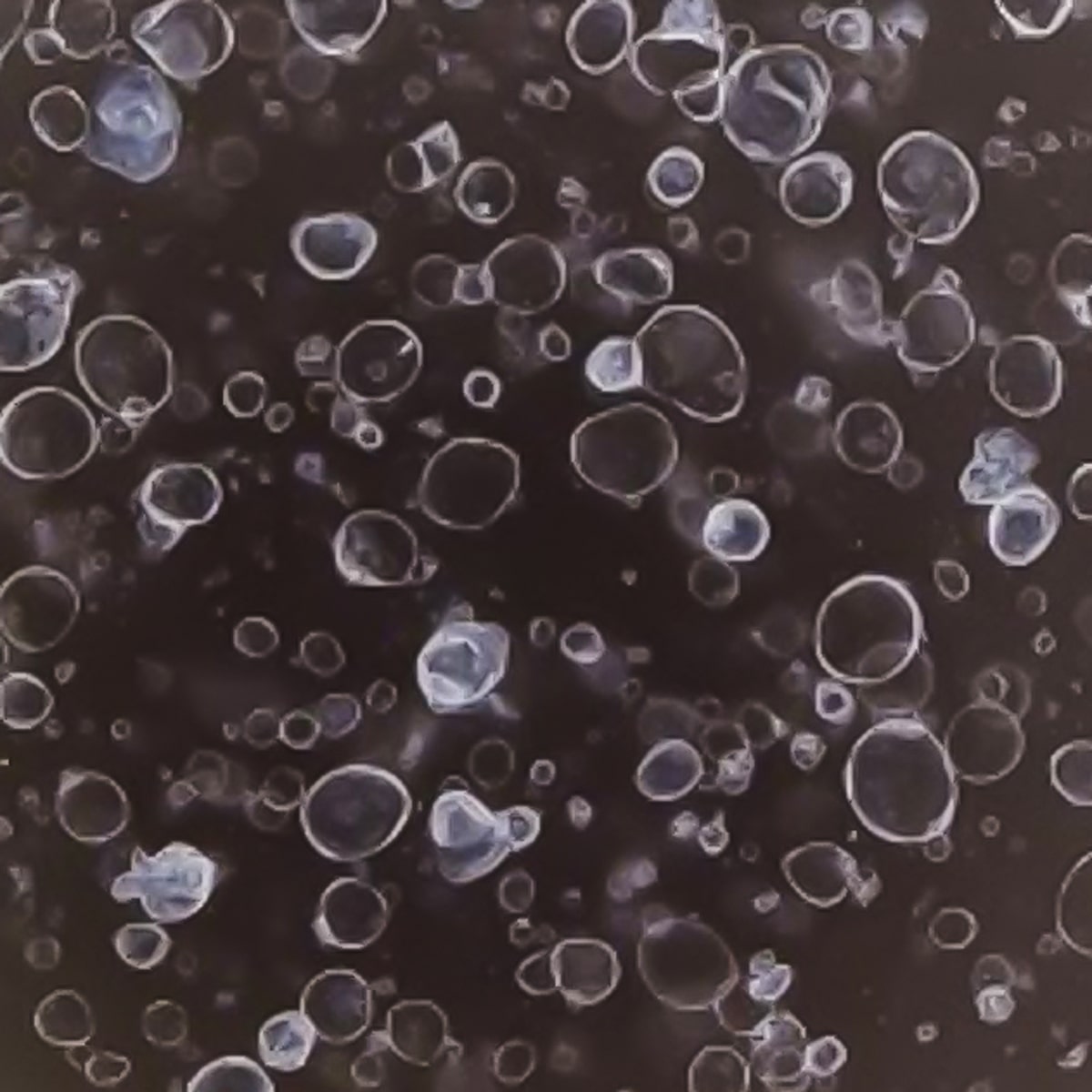
  • Colorectal cancer organoids (CRC organoids) are three-dimensional (3D) in vitro models that closely replicate the structure and cellular composition of patient-derived tumor tissue. By preserving key characteristics of colorectal cancer, including genetic mutations and protein expression patterns, CRC organoids serve as highly reliable models for cancer research.
  • Their ability to maintain tumor heterogeneity and accurately mimic aspects of the tumor microenvironment (TME) makes them valuable tools for studying colorectal cancer progression and therapeutic responses.
  • As physiologically relevant models, CRC organoids play an important role in advancing precision oncology and supporting the development and evaluation of more effective cancer therapies.

Price
1784€+
Organism
Human
Product Type
Tissue derived organoid
Tissue
Intestine (Colon)
Disease
Colorectal cancer

Applications

Toxicity

Small molecules

mRNA

Antibody

Cancer vaccine

Immune Cells

Immuno Oncology with TME

Cytotoxic T cell

TIL (Tumor infiltrating lymphocytes)

Regulatory T cell

Macrophage

CAF (Cancer associate fibroblast)

Professor Lee Chang-seok Eulji University
Customer insight

Advancing K-Beauty with Skin Organoids: A Next-Generation Platform for Non-Animal Testing and High-Precision Cosmetic Innovation

With the global rise of K-beauty, the cosmetics industry continues to grow steadily. Since the ban on animal testing for cosmetics in Korea in 2017, various alternative testing methods have...

Tomocube (Spatial)
Customer insight

HT-X1: A Label-Free Imaging Breakthrough for Organoid-Based Disease Modeling and Drug Screening

Traditional microscopy methods often require fluorescent labeling to analyze cellular structures, which can be time-consuming and invasive. In contrast, our HT-X1 system allows for high-resolution visualization of cellular morphology without...

Seoul National University College of Medicine
Customer insight

Pioneering Spatial Protein Analysis in Korea: Advancing Clinical Pathology with Lambda Biologics’ Support

Traditional protein analysis has primarily focused on quantifying expression levels within tissue samples. However, recent advances in spatial analysis techniques have shifted attention toward evaluating not only expression levels, but...

K Research Institute
Customer insight

ODISEI-Gut Platform Reveals Immune-Boosting Potential of Kimchi-Derived Bacterial Strain

Among the many fermented foods we consume, kimchi is particularly known for containing a diverse range of lactic acid bacteria, which are believed to influence the activation of immune cells...

Bundang Jesaeng General Hospital
Customer insight

Multiplex Marker Analysis Enhances Research Efficiency with 31-Marker Detection on a Single Slide

We conducted a study focused on identifying disease-related markers using patient-derived tissue samples. However, traditional methods limited our ability to analyze multiple candidate markers simultaneously, and the limited availability of...
Description

Cellular and structural similarity

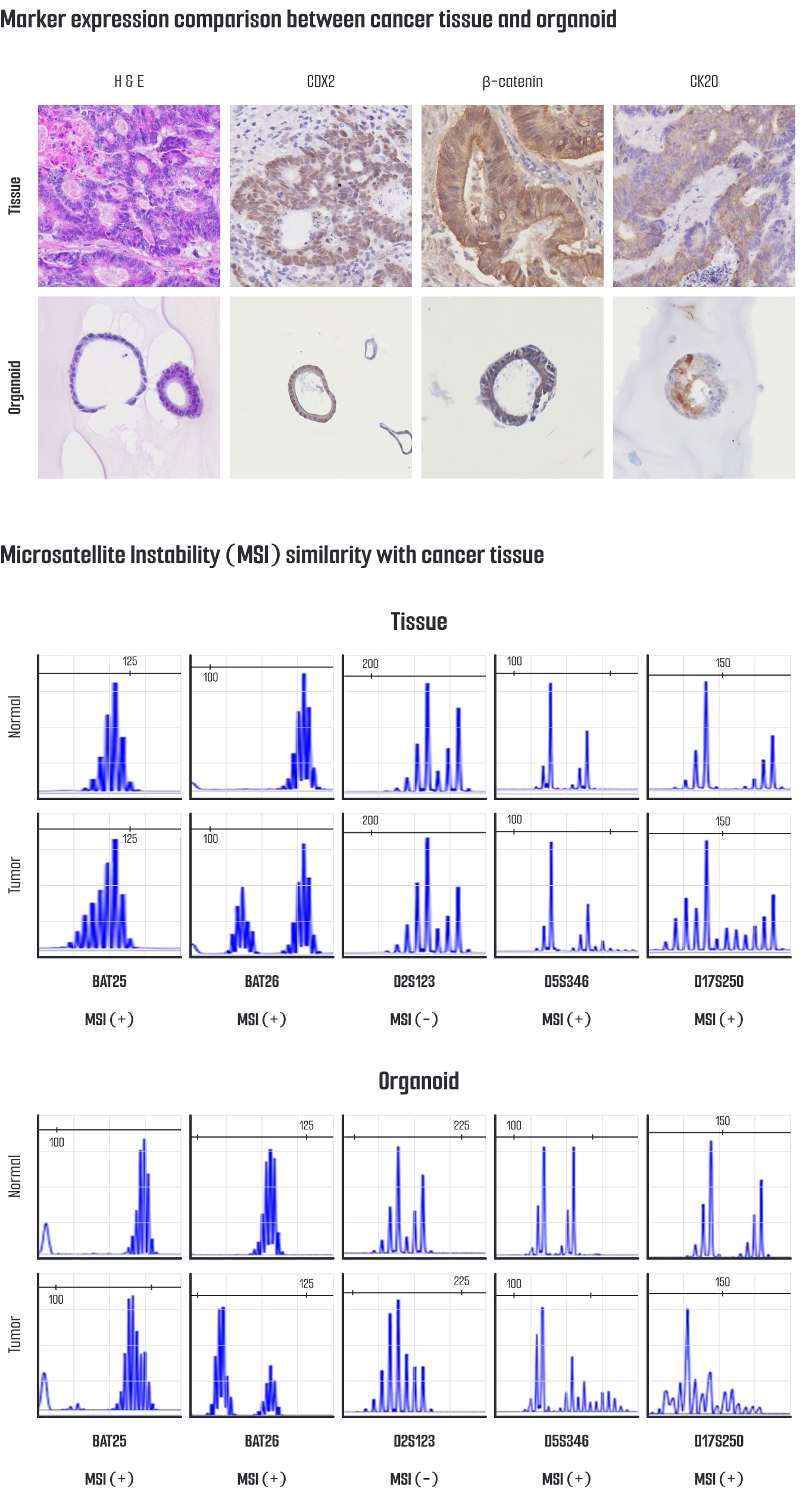
Our colorectal cancer (CRC) organoids exhibit a high degree of pathological similarity to patient-derived tumor tissues, expressing key colorectal cancer markers including CDX2, β-catenin (CTNNB1), and CK20 (KRT20).

Immunohistochemistry (IHC) analyses confirm that these markers are expressed in the organoids in patterns consistent with those observed in primary tumors, accurately reflecting the differentiation status and histological characteristics of the original tissue.

These pathological marker analyses demonstrate that CRC organoids faithfully recapitulate the morphological and molecular features of patient tumors, establishing them as a reliable platform for colorectal cancer research, oncology drug development, and the evaluation of personalized therapeutic strategies.

Targeted Therapy Development with Mutation-Matched Organoids

The colorectal cancer (CRC) organoid platform provides a physiologically relevant model that reflects the genetic characteristics of patient tumors.

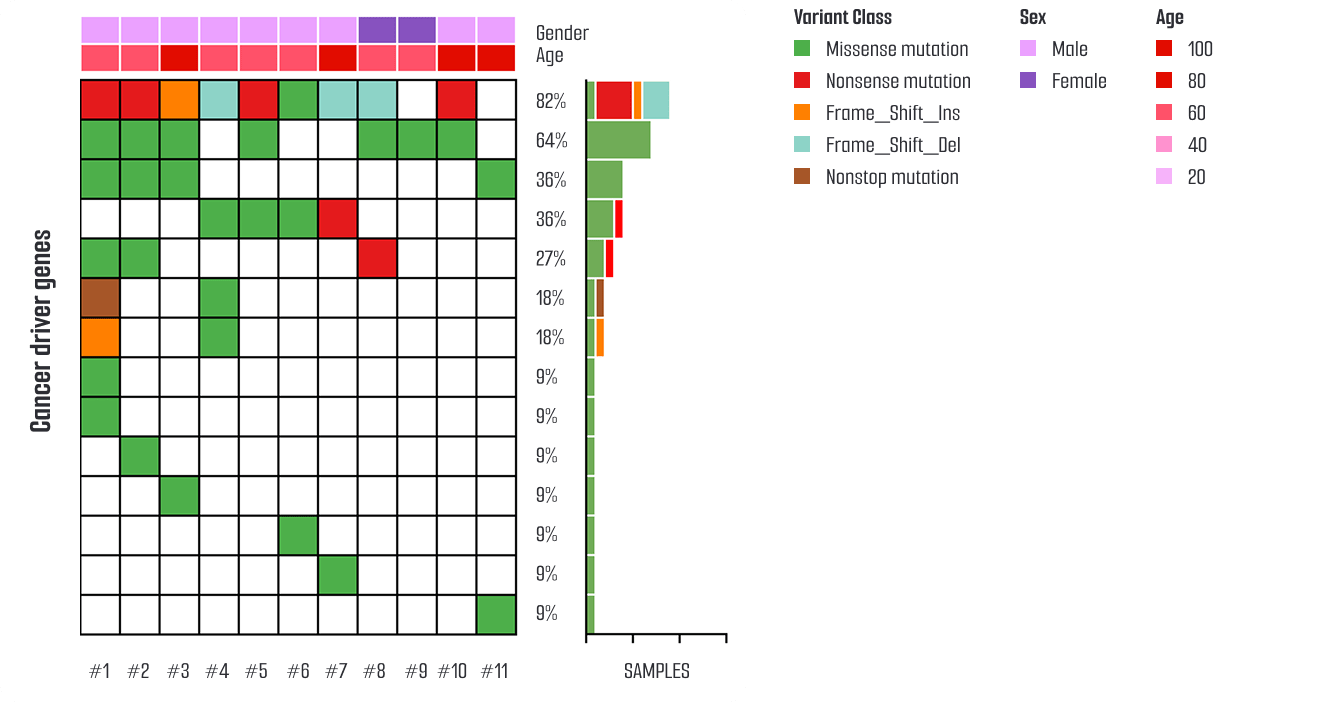
Whole Exome Sequencing (WES) has been performed on the organoid library, identifying key driver mutations commonly found in CRC.

These genomic profiles are visualized using Oncoplots, providing clear interpretation of the genetic features of each organoid model.

With WES data already established, cancer organoids harboring specific gene mutations can be selectively utilized for targeted drug testing, mechanistic studies, and mutation-driven drug response analysis.

These organoids serve as versatile models that reflect diverse tumor characteristics such as metastasis, treatment resistance, and drug sensitivity, making them effective for evaluating both standard therapies and novel anticancer strategies.

This platform supports mutation-specific organoid selection and testing, positioning it as a powerful tool for precision oncology and the development of personalized cancer therapies.

Drug sensitivity testing for Precision Oncology

A tailored solution for evaluating the efficacy and resistance of new drugs is available using an established colorectal cancer (CRC) organoid library.

By leveraging comprehensive drug sensitivity data, the most suitable organoid lines are selected based on the characteristics of the investigational drug, enabling precise and reliable drug testing.

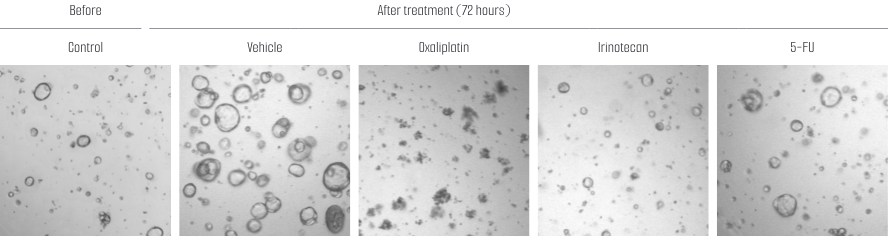
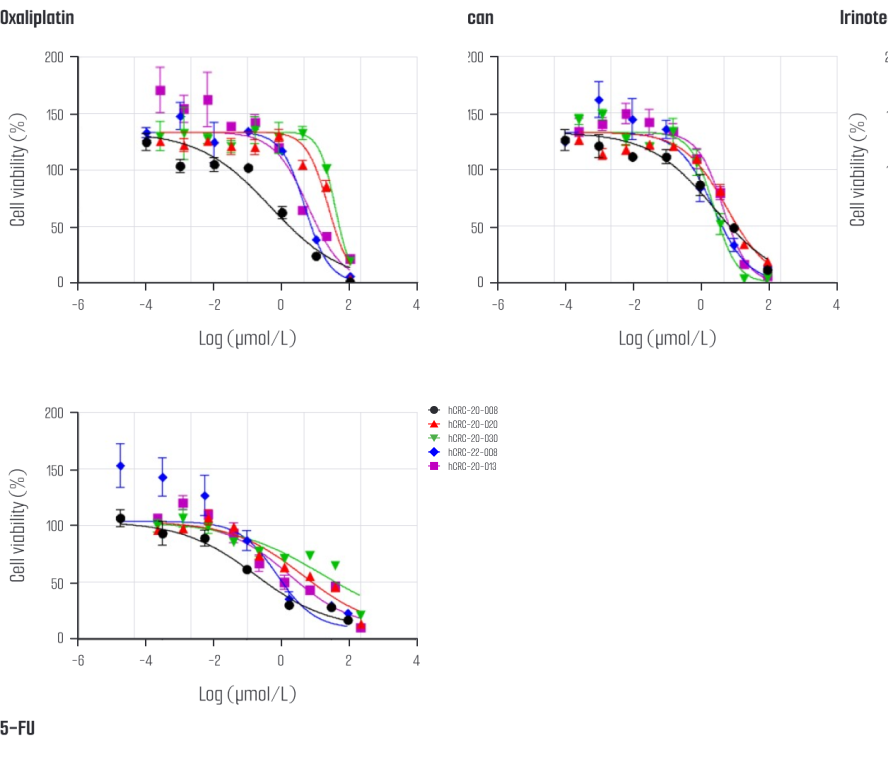
Drug sensitivity tests have been conducted using 5-FU, Oxaliplatin, and Irinotecan which are widely used in clinical cancer treatment, and drug response data has been collected from a subset of CRC organoid models, comprising over 20 distinct lines.

This dataset continues to expand as additional testing is performed.

This organoid-based drug sensitivity testing platform enhances the efficiency and reliability of the drug development process and contributes to the advancement of personalized cancer treatment strategies.

Advance Drug Discovery with Smarter, Ethical Models.

Interested in bringing colorectal cancer organoids into your research?
Contact Lambda Biologics to discuss your project with our team.

FAQs

A colorectal cancer organoid is a three-dimensional (3D) in vitro model derived from patient tumor tissue of Colorectal Cancer. These organoids recapitulate key features of the original tumor, including its cellular architecture, genetic mutations, and biological behavior, making them valuable tools for cancer research and drug testing.

Colorectal cancer organoids are established by isolating tumor cells from surgical or biopsy samples of Colorectal Cancer patients. The cells are embedded in a 3D extracellular matrix and cultured in a specialized growth medium containing factors such as EGF, Noggin, and R-spondin, allowing them to self-organize into organoid structures.

Colorectal cancer organoids preserve the genetic mutations and tumor heterogeneity of patient tumors. This enables researchers to evaluate drug responses in models that more accurately reflect Colorectal Cancer, improving the predictive value of preclinical drug screening and helping identify more effective therapeutic candidates.

Organoids derived from Colorectal Cancer are widely used for drug screening, biomarker discovery, disease modeling, and precision oncology research. They also enable studies of tumor biology, treatment resistance, and interactions within the tumor microenvironment.

Simply contact Lambda Biologics team. Our scientists will review your project needs and provide the right options whether it’s technical guidance, a quote, or custom organoid development.

Thank you for your insterest

You can now download the file.

Connect with Us