What if scientists could grow human brain-like tissue in a dish to study complex neurological disorders such as Alzheimer’s disease? This is no longer science fiction. During Brain Awareness Week, Lambda Biologics highlights one of the most promising frontiers in neuroscience: the use of human cerebral organoids to model brain development and disease in the lab.
From neurodevelopment to neurodegeneration, these three-dimensional models are transforming how researchers study the human brain – helping bridge the gap between basic research and clinical discovery.
Interested in cerebral organoids? Contact our scientists to learn more.
In This Article
What Are Cerebral Organoids?
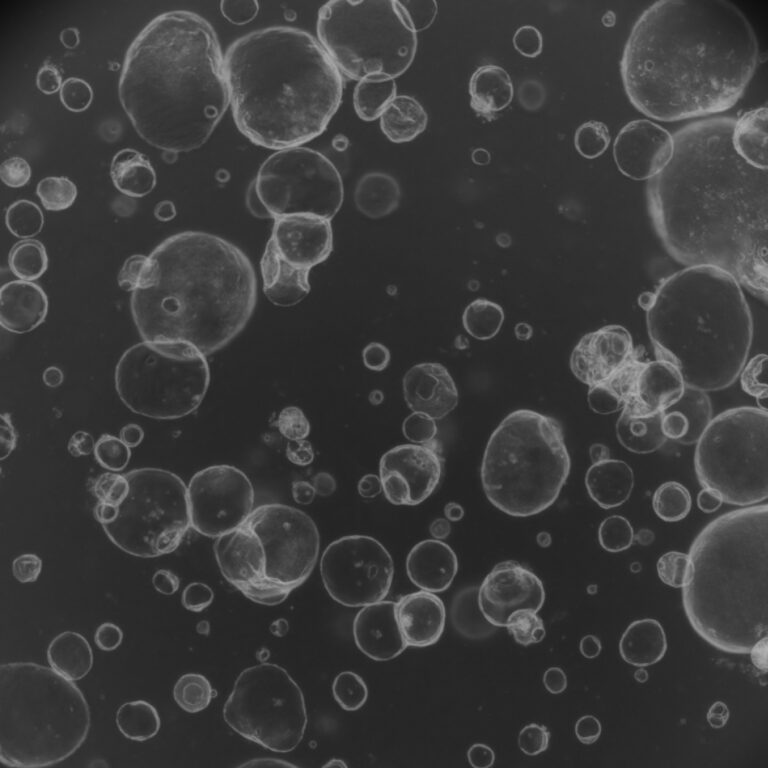
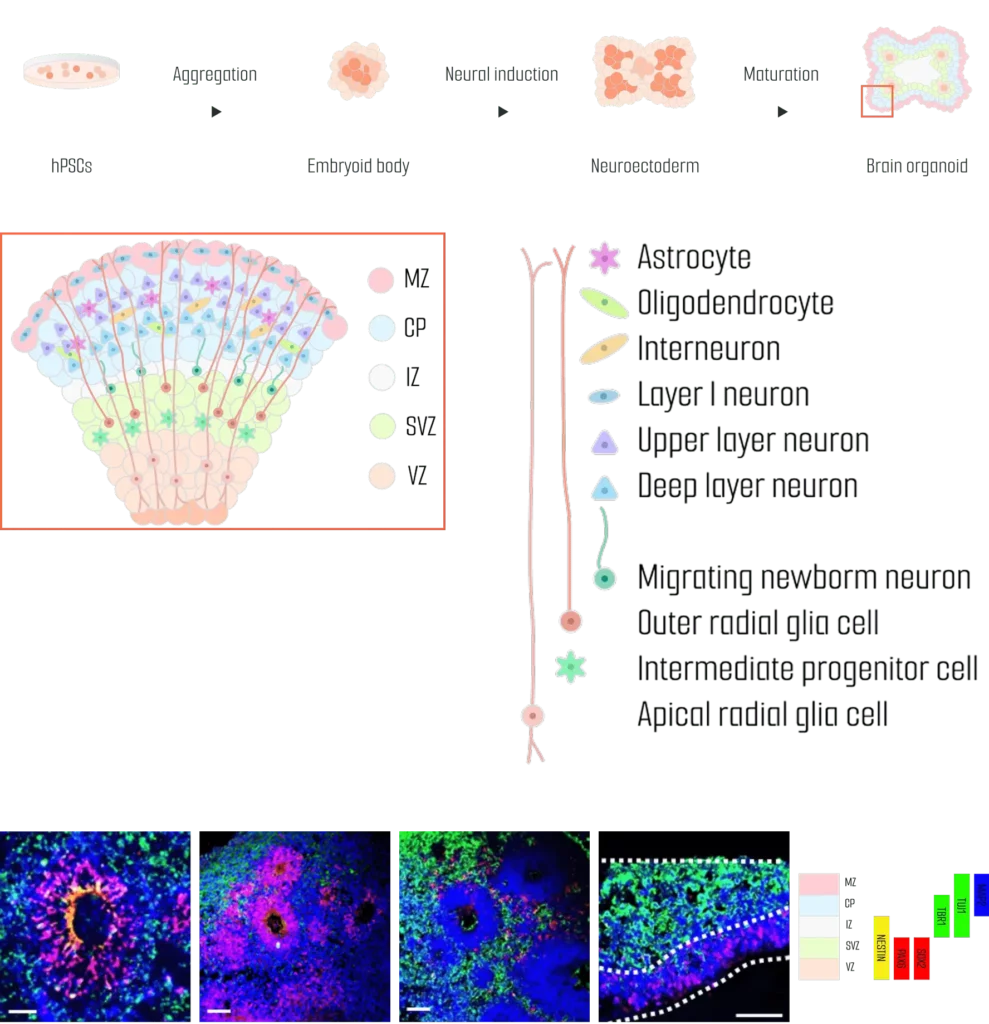
Cerebral organoids are miniature, three-dimensional structures grown from human stem cells that mimic key aspects of early human brain development and organization.
Unlike traditional 2D cell cultures, cerebral organoids can self-organize into structures that resemble certain features of developing brain regions. They contain diverse neural cell types and can exhibit spontaneous neural activity and early forms of circuit formation.
While they do not fully replicate the complexity or maturity of the human brain, cerebral organoids provide a powerful and physiologically relevant system for studying human brain biology in vitro.
Cerebral Organoids vs. Traditional Models
For decades, neuroscience research has relied on animal models and flat cell cultures. While both approaches remain valuable, they have important limitations:
- Animal models often do not fully capture human-specific disease mechanisms
- 2D cultures lack the structural and cellular complexity of real brain tissue
Cerebral organoids offer a complementary, more human-relevant platform. By preserving human genetic context and enabling three-dimensional organization, they allow researchers to study certain aspects of brain function and disease in ways not previously possible.
Applications of Cerebral Organoids in Brain Disease Research
Disease Modeling
Cerebral organoids are increasingly used to study a range of neurological disorders, including:
- Alzheimer’s disease: modeling amyloid-related pathology and neuronal dysfunction
- Parkinson’s disease: investigating dopaminergic neuron vulnerability and degeneration
- Autism spectrum disorder: exploring changes in neural development and connectivity
- Microcephaly: revealing defects in early brain growth and development
When derived from patient-specific induced pluripotent stem cells (iPSCs), these models retain individual genetic backgrounds – enabling more precise insights into disease mechanisms and variability between patients.
Notably, cerebral organoids gained widespread attention for their role in modeling Zika virus–associated microcephaly, demonstrating their ability to recapitulate human-specific developmental defects.
Drug Discovery and Testing
Cerebral organoids are also emerging as valuable tools in drug development. Researchers can use them to:
- Screen therapeutic compounds in a human-relevant system
- Evaluate drug efficacy and potential neurotoxicity
- Explore patient-specific responses to treatment
While still evolving, this approach holds promise for improving translational relevance and supporting more informed decision-making in early-stage drug development.
Neurodevelopment and Advanced Modeling
Beyond disease modeling, cerebral organoids are opening new avenues for studying human brain development.
Recent innovations include:
- Assembloids: integrating multiple organoids to study interactions between brain regions
- CRISPR-based gene editing: enabling targeted investigation of disease-causing mutations
- Organoid-based neural systems: exploring whether in vitro neural networks can exhibit adaptive or learning-like responses
These advances are expanding the scope of what can be studied in human-relevant in vitro systems.
From Petri Dish to Translational Research
One of the key advantages of cerebral organoids is their potential to support translational neuroscience. By providing a system that reflects important aspects of human biology, organoids enable researchers to:
- Study disease progression over time
- Investigate mechanisms in a human genetic context
- Evaluate therapeutic strategies in more relevant models
As a result, they are becoming an increasingly important tool in neuroscience research and precision medicine.
Limitations and Considerations of Cerebral Organoids
Despite their promise, cerebral organoids have important limitations. They typically lack vascularization, full immune system components, and long-range connectivity, and they resemble early developmental stages rather than mature adult brain tissue.
These factors should be considered when interpreting results and designing experiments.
Advancing Brain Research with Lambda Biologics’ ODISEI Brain Platforms
At Lambda Biologics, we leverage cerebral organoid technology to support cutting-edge neuroscience research.
Our ODISEI Brain platforms are designed to:
- Generate reproducible, high-quality brain organoids
- Capture patient-specific genetic and phenotypic features
- Enable disease modeling, drug screening, and mechanistic studies
Whether investigating neurodevelopmental disorders or exploring novel therapeutics, our human-relevant models provide the flexibility and reliability needed to accelerate discovery.
The Future of Brain Disease Modeling
Cerebral organoids represent a significant step forward in neuroscience research. By enabling scientists to study human brain biology in new ways, they are reshaping our understanding of complex neurological disorders.
As the technology continues to evolve, these models hold strong potential to support the development of more effective and personalized therapies for brain diseases.
Read more:
Lambda Biologics’ Organoid Solutions: Advancing Ethical Science, Together
Drug development demands accuracy, speed, and relevance to human biology. At Lambda Biologics, we deliver advanced organoid-based platforms that replicate the complexity of human organs – empowering pharmaceutical and biotechnology companies to make better decisions, faster.
Cerebral Organoid | Midbrain Organoid | Skin & Hair Organoid | Intestine Organoid |