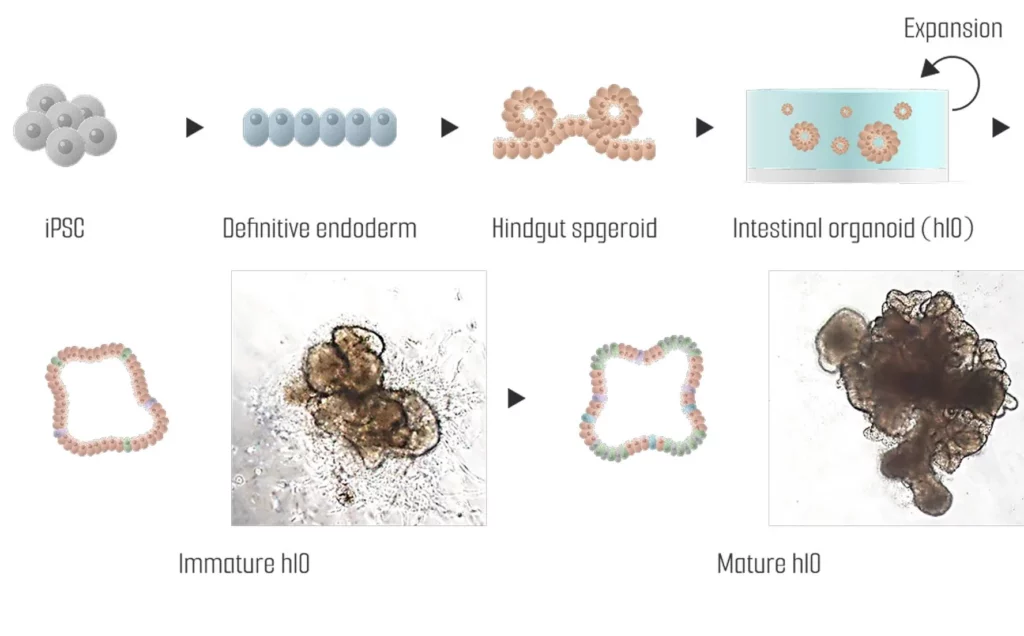
An intestinal organoid-based in vitro model of leaky gut syndrome induced by epithelial barrier damage, characterized by tight junction disruption, increased permeability, and barrier dysfunction.
This human-relevant model enables quantitative evaluation of epithelial structure recovery and barrier function improvement in response to candidate compounds.
Intestinal barrier dysfunction, marked by tight junction disruption and increased permeability, plays a central role in leaky gut syndrome and related inflammatory conditions. However, existing in vitro and animal models fail to accurately capture the human epithelial barrier architecture and dynamic recovery processes, limiting their translational value for compound screening and mechanism studies.
This case study introduces a human intestinal organoid–based leaky gut model in which epithelial barrier dysfunction is experimentally induced and followed by compound-driven recovery. The model enables quantitative, reproducible assessment of epithelial structure restoration and functional barrier improvement in a human-relevant system.
Step 1. Organoid generation & barrier damage induction
Human intestinal organoids are generated using iPSC-derived intestinal organoids, tissue-derived intestinal organoids, or organoid-based regenerative platforms (ATORM-C), followed by controlled induction of epithelial barrier damage resulting in tight junction disruption and increased permeability.
Step 2. Compound treatment & barrier recovery
Damaged organoids are treated with candidate compounds to promote epithelial structure recovery and improvement of intestinal barrier function.
Step 3. Quantitative recovery assessment & compound ranking
Barrier restoration is quantitatively evaluated through permeability measurements and tight junction marker analysis, enabling comparative assessment and ranking of compounds based on barrier recovery efficacy.