This case study showcases a human liver organoid-based model that recapitulates key features of fatty liver disease.
The platform enables predictive assessment of lipid metabolism and therapeutic response in a human-relevant 3D system.
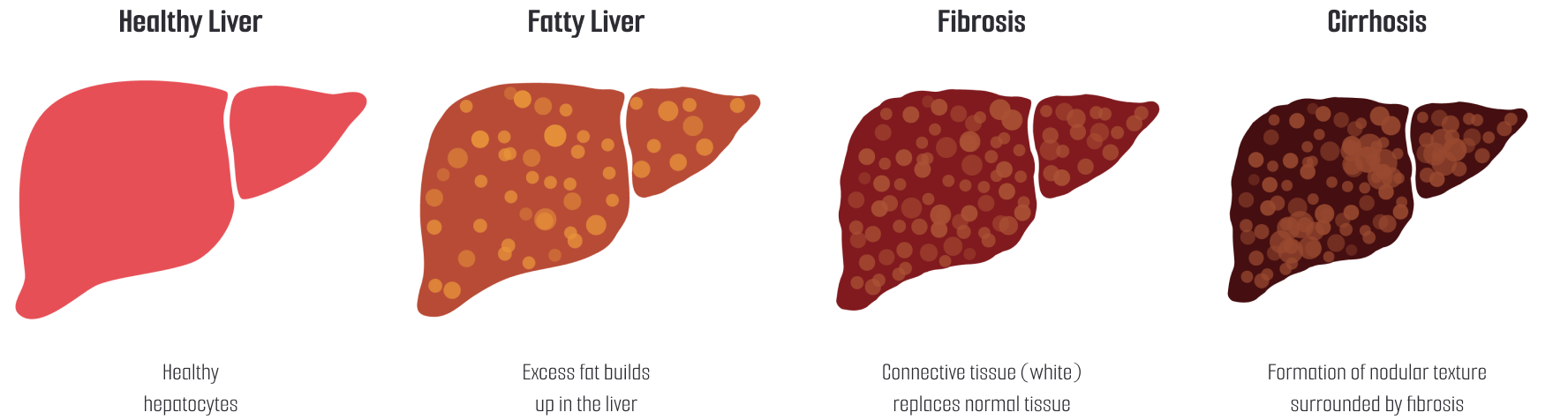
Metabolic dysfunction – associated fatty liver disease (MAFLD, formerly NAFLD) is one of the most prevalent chronic liver disorders worldwide and a major risk factor for progression to steatohepatitis, fibrosis, and cirrhosis. However, predictive human-relevant in vitro models remain limited. Conventional 2D hepatocyte cultures rapidly lose metabolic function, while animal models often fail to recapitulate human-specific lipid metabolism and drug responses.
of 2D hepatocyte cultures, which rapidly lose metabolic function and fail to sustain lipid metabolism over time.
of animal models, due to species-specific differences in lipid handling and drug response.
from early steatosis to more advanced lipid accumulation under chronic metabolic stress.
suitable for compound screening and mechanistic studies in metabolic liver disease.
We established a human liver organoid–based platform that recapitulates key features of fatty liver disease in a physiologically relevant 3D system. The model enables robust induction and quantification of lipid accumulation, supporting disease modeling, compound evaluation, and improved translational confidence in metabolic drug development.
Step 1: Generation of Human Liver Organoids
Human iPSC-derived liver organoids were generated through directed hepatic differentiation in a 3D extracellular matrix-supported culture system. The resulting organoids exhibit liver-specific architecture and maintain key hepatic functions relevant to lipid metabolism.

Step 2: Induction of Fatty Liver Phenotype
To model fatty liver disease, liver organoids were exposed to excess free fatty acids to mimic metabolic overload conditions observed in MAFLD.
Following treatment, reduced expression of hepatocyte functional markers such as HNF4A, Albumin, and CYP3A4 indicated impaired hepatic function consistent with disease-associated stress.
Step 3: Phenotypic Validation and Lipid Accumulation Analysis
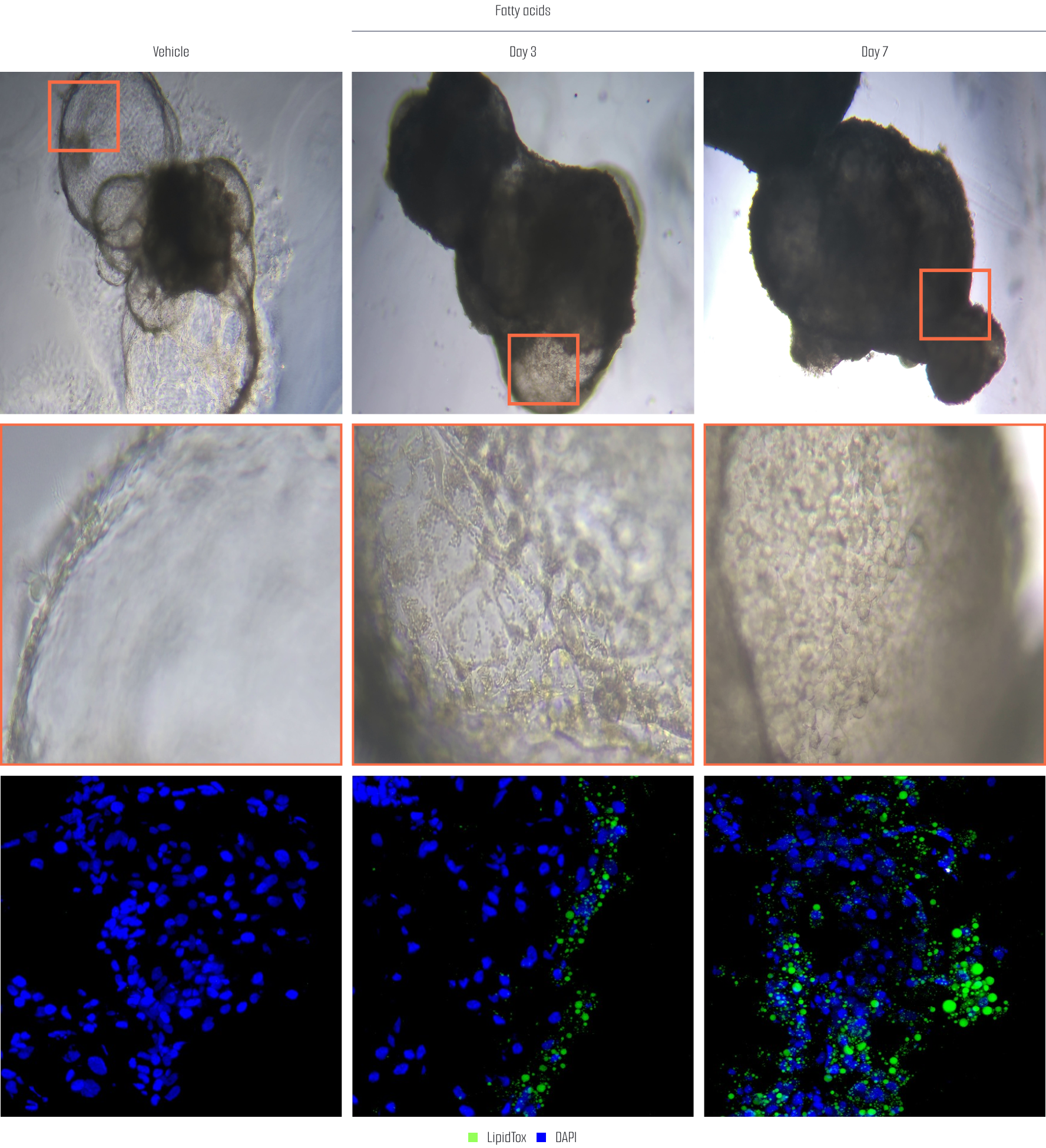
Fatty acid-treated liver organoids exhibited progressive intracellular lipid accumulation, assessed using LipidTox staining at Day 3 and Day 7.
Early-stage lipid accumulation was observed at Day 3, while significantly increased lipid burden was detected at Day 7, demonstrating time-dependent progression of steatosis.
These results confirm the suitability of this model for studying fatty liver disease mechanisms and evaluating therapeutic candidates.
Our human liver organoid-based fatty liver models provide a human-relevant platform for studying metabolic liver disease and evaluating therapeutic candidates with improved translational confidence.