Unlike mammals, zebrafish can spontaneously regenerate damaged inner-ear hair cells. A new study maps this process at single-cell resolution and identifies dlx5a as a transcription factor required for effective regeneration. The work also reveals coordinated contributions from supporting cells, immune cells and regenerative signalling pathways—offering a clearer framework for how sensory repair unfolds in vivo.
Regeneration After Injury
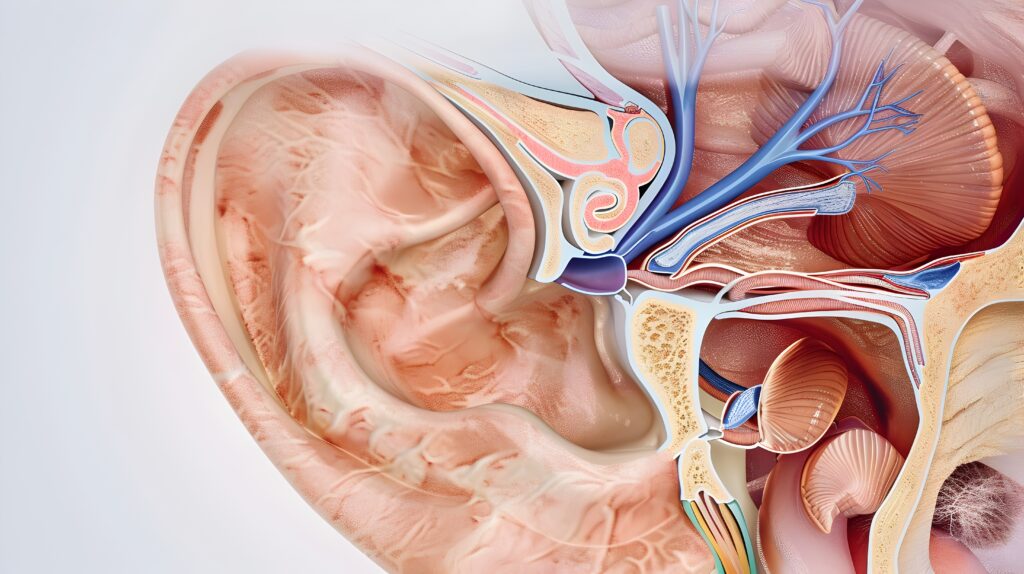
Sensory hair cells of the inner ear are essential for hearing and balance, but in mammals their regenerative capacity is extremely limited. Zebrafish, by contrast, can spontaneously regenerate these cells after injury, making them useful for identifying molecular programmes that may be relevant to sensory repair.
Gong and colleagues established a larval zebrafish model of vestibular hair-cell injury by injecting neomycin into the otic vesicle. They found that damaged crista hair cells began to regenerate within hours, with vestibular function recovering by 48 hours even though hair-cell numbers had not yet fully returned to baseline. Lineage tracing showed that regenerated cells arose from supporting-cell populations through both mitotic and non-mitotic routes.
A Coordinated Cellular Response
Single-cell RNA sequencing across the regeneration timeline showed that the strongest transcriptional and intercellular signalling changes occurred around 24 hours after injury.
Supporting cells, epithelial cells and immune populations all contributed to the response, with macrophages showing particularly strong activation and communication with supporting cells. Regenerative programmes included JAK–STAT, Notch, MAPK and inflammatory signalling pathways.
Identifying a Regeneration-Specific Factor
The study’s central mechanistic finding was the identification of dlx5a as a key transcription factor. Its expression increased in crista supporting cells during regeneration, and conditional loss of dlx5a significantly impaired hair-cell recovery.
Notably, loss of dlx5a did not significantly alter normal crista hair-cell development or vestibular function, indicating that its role may be particularly important in the regenerative response rather than initial hair-cell formation.
The findings provide a cellular and transcriptional framework for understanding vestibular regeneration. However, the authors also note an important limitation: the work was performed in the developing zebrafish inner ear, and the regenerative mechanisms identified may not translate directly to the non-regenerative mammalian system.
Reference:
Gong, J., Yang, C., Zhang, G. et al. “Transcriptomic profiling of inner ear hair cell spontaneous regeneration reveals the key role of dlx5a.” Nature Communications (2026). DOI: 10.1038/s41467-026-76892-8.
Lambda Biologics’ Oncology Solutions: Patient-derived cancer organoid-based drug evaluation service
Gastric Cancer Organoid | Breast Cancer Organoid | Hepatocarcinoma Cancer Organoid | Pancreatic Cancer Organoid