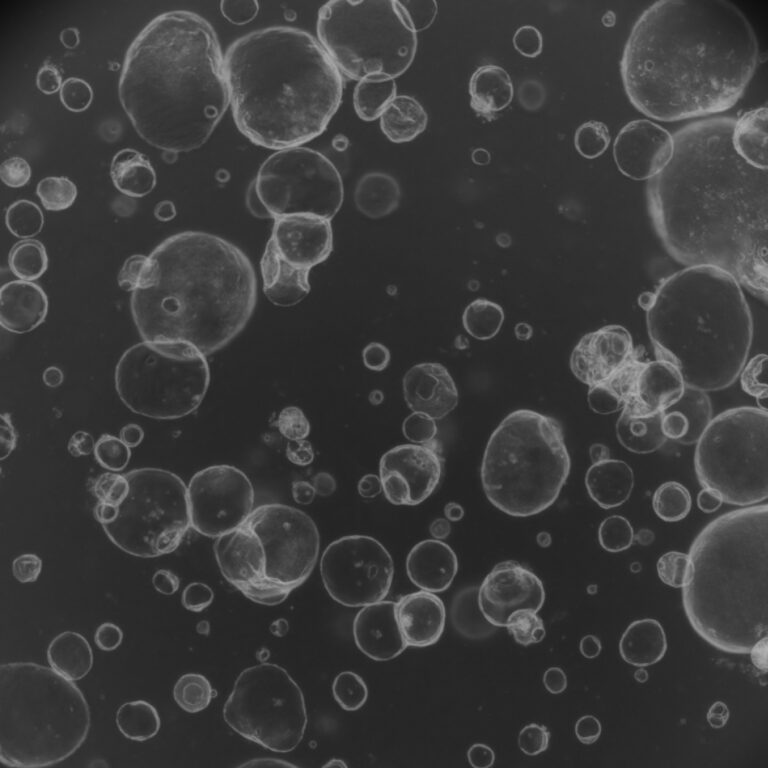
A cell fate specification and transition mechanism for human foveolar cone subtype patterning
Journal: PNAS
Author: K.A. Hussey et al., USA
Researchers uncover how retinoic acid and thyroid hormone signaling shape cone fate, revealing mechanisms that build the foveola’s specialized architecture and inform retinal organoid engineering.
CD19 CAR T cell therapy for treatment-refractory seropositive rheumatoid arthritis: a phase 1 trial
Journal: Nature Medicines
Author: Fredrik N. Albach, Marie C. Rehm, Marie Luise Hütter-Krönke, Thanh Hang Le, Julia M. Giezen et al., Germany
Early clinical data suggest CD19 CAR T cells can safely deplete B cells, reduce autoantibodies and improve disease activity in treatment-refractory rheumatoid arthritis.
DHODH is a synthetic lethal target in PIK3CA-mutant colorectal cancer
Journal: Cell Reports
Author: Jun Liang, Xi Liu, Ziyun Ni et al., China
Targeting DHODH disrupts PI3K-AKT signaling and suppresses tumor growth, revealing a metabolic vulnerability that could enable precision treatment of PIK3CA-mutant colorectal cancer.
HDAC-driven autophagy repression aids macrophage immune evasion by K. pneumoniae strains displaying classical, MDR, and hypervirulent phenotypes
Journal: iScience
Author: Abhinand K, Sony S, Anil A et al., India
Klebsiella pneumoniae exploits HDAC-mediated autophagy suppression to evade macrophage defenses, while HDAC inhibition restores bacterial clearance and immune responses.