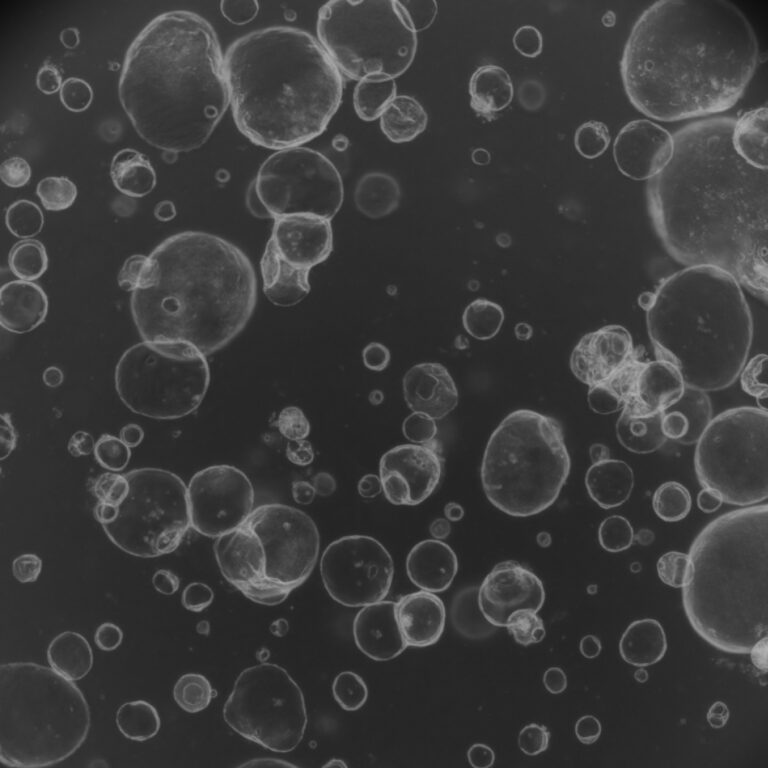
Organoid technology has fundamentally transformed biomedical research, but remains limited by its inability to manipulate the in vivo physicochemical microenvironment. In this research, Eric Kwame Owusu and colleagues introduce a platform that bridges engineering and biology by elevating organoid-on-chip culture from a static process to a dynamic, precise science.
While organoid technology has transformed biomedical research, traditional cultivation methods remain trapped in “static” environments. In nature, the intestinal epithelium thrives within a complex, ever-shifting landscape of pH levels and oxygen gradients. When grown in stationary Matrigel domes, organoids often suffer from necrotic cores and impaired differentiation because they lack these vital environmental cues.
To bridge this gap, a new study introduces a groundbreaking closed-loop microfluidic platform designed to transform organoid-on-chip culture into a dynamic, precise science. This system moves beyond simple fluid perfusion by integrating a physics-informed feedback loop that mimics tissue-level homeostasis in real time.
On-Demand Microenvironments
The platform’s core innovation is an integrated microreactor that generates CO2 microbubbles via on-chip acid-base reactions. This allows researchers to bypass slow, external gas mixers and achieve localized, spatiotemporal control over pH and oxygen levels. By dissolving or displacing these gases on demand, the system can impose the steep oxygen gradients necessary to sustain the crypt-villus axis and promote stem cell function.
Morphodynamic Sensing
To monitor biological health without invasive testing, the researchers developed a suite of label-free, image-based sensors. These include:
- Dynamic Deformation Index (DDI): Quantifies structural instability and cellular stress.
- Curvature Growth Indicator (CGI): Tracks morphogenic activities like budding and branching.
- Time-Integrated Shape Entropy (TISE): Measures phenotypic variability and developmental consistency.
Results
By linking these sensors to the bubble-based actuator, the system autonomously maintains the organoid’s state. The results are striking: the platform achieved over 95% viability and a 50% reduction in hypoxic core formation compared to static cultures. This intelligent bioengineering framework not only improves organoid maturation but also sets a new standard for high-fidelity disease modeling, drug screening, and personalized medicine.
Read the full article on ScienceDirect
Lambda Biologics’ Oncology Solutions: Patient-derived cancer organoid-based drug evaluation service
Gastric Cancer Organoid | Breast Cancer Organoid | Hepatocarcinoma Cancer Organoid | Pancreatic Cancer Organoid