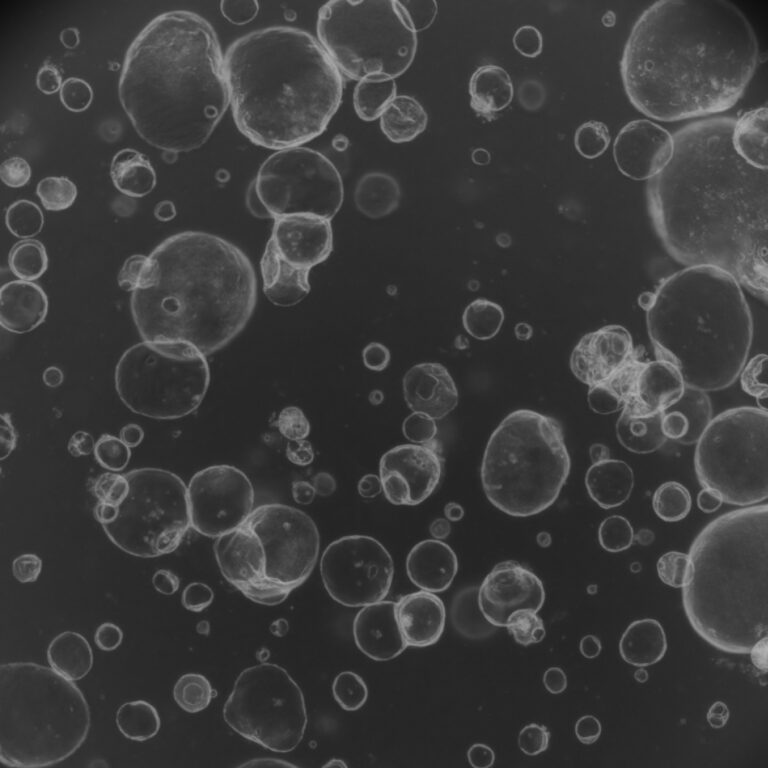
Tumor organoids are emerging as one of the most powerful human-relevant in vitro models for cancer research and drug discovery. Derived directly from patient tumor tissues, these three-dimensional (3D) culture systems reproduce many of the structural and molecular characteristics of the original tumor.
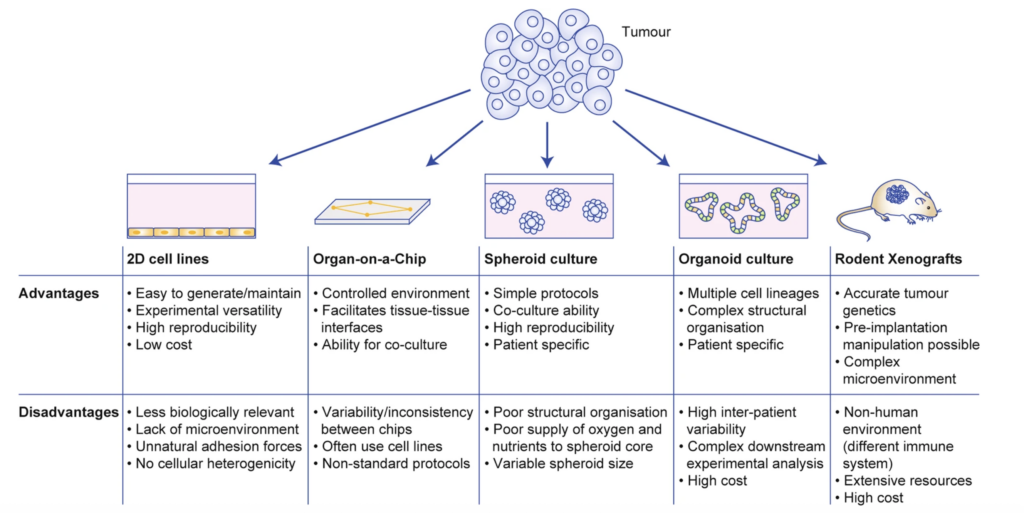
Traditional preclinical models such as 2D cancer cell lines or animal models have long been used to evaluate therapeutic candidates. However, these systems often fail to capture the complexity of human tumors, leading to poor prediction of clinical outcomes. Tumor organoids offer a promising alternative by preserving tumor heterogeneity and patient-specific biological features.
As a result, tumor organoids are increasingly used by pharmaceutical companies, biotechnology firms, and academic laboratories to study tumor biology, evaluate drug efficacy, and support precision oncology research.
This article explores how tumor organoids are generated, their applications in drug discovery, advantages compared with conventional models, and the current limitations of this rapidly evolving technology.
Read more: How to Grow Organoids in the Lab: Materials, Media, and Methods
What Are Tumor Organoids
Tumor organoids are three-dimensional in vitro tumor models derived from patient cancer tissues that replicate key biological features of the original tumor.
Unlike traditional 2D cell culture systems where cells grow in flat monolayers, tumor organoids develop within a three-dimensional extracellular matrix environment. This allows cancer cells to self-organize into structures that resemble the architecture and cellular organization of tumors found in patients.
Importantly, tumor organoids preserve many critical features of the original tumor, including:
- Genetic mutations and molecular signatures
- Tumor heterogeneity across different cell populations
- Cellular interactions within the tumor structure
- Patient-specific responses to therapeutic compounds
Because of these characteristics, tumor organoids have become valuable experimental models for investigating cancer progression and testing potential treatments.
How Tumor Organoids Are Generated
Tumor organoids can be generated from multiple biological sources, including tumor tissues, patient-derived xenografts, isolated cancer cells, or established cancer cell lines. In some cases, organoids may also be derived from pluripotent stem cells that are guided to form tumor-like structures under specific culture conditions.
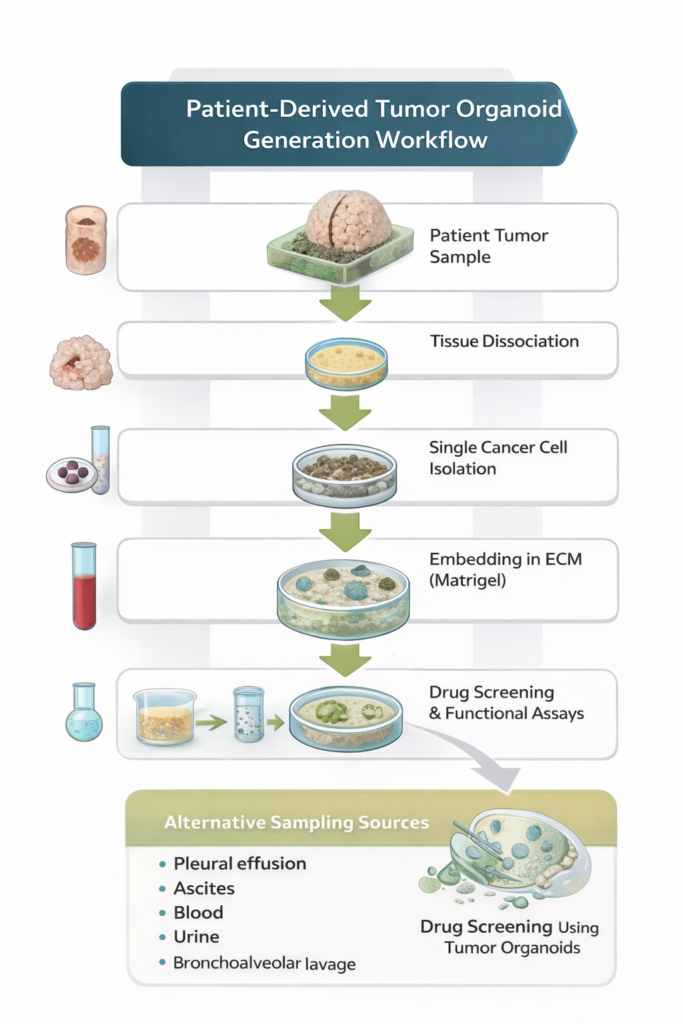
The general workflow involves collecting tumor samples, isolating viable cells through enzymatic digestion, and embedding these cells within an extracellular matrix (ECM) that supports three-dimensional growth. Under defined culture conditions, the cells proliferate and self-organize into organoid structures that resemble the architecture of the original tumor.
In addition to surgical tumor samples, tumor cells can sometimes be obtained from minimally invasive sources such as bronchoalveolar lavage fluid, pleural effusion, ascites, blood, or urine, enabling the generation of patient-derived tumor organoids for research applications.
Applications of Tumor Organoids in Drug Discovery
Tumor organoids have become increasingly important tools for preclinical oncology research and drug discovery programs. Their ability to recapitulate patient-specific tumor biology enables several powerful applications.
High-throughput drug screening
Tumor organoids can be cultured in multi-well plates and exposed to large libraries of therapeutic compounds. Researchers can evaluate drug efficacy, toxicity, and dose-response relationships in a physiologically relevant human tumor model.
This approach allows rapid identification of promising therapeutic candidates before advancing to more complex preclinical studies.
Precision oncology research
Because tumor organoids retain the genetic and molecular characteristics of the patient tumor, they can be used to evaluate individualized treatment strategies. Researchers can test multiple therapeutic options on patient-derived tumor organoids to better understand potential treatment responses.
This capability is particularly valuable in the development of personalized cancer therapies.
Target validation
Tumor organoids enable researchers to investigate the biological role of specific genes, signaling pathways, or molecular targets involved in cancer progression. By manipulating these pathways in organoid systems, scientists can assess whether potential targets represent viable therapeutic opportunities.
Tumor microenvironment modeling
More advanced organoid systems incorporate additional cellular components such as stromal cells, immune cells, or extracellular matrix factors. These co-culture models help recreate aspects of the tumor microenvironment and enable researchers to study complex cellular interactions within tumors.
Advantages of Tumor Organoids Over Animal Models
Tumor organoids offer several advantages compared with traditional animal models used in oncology research.
- Human biological relevance: Tumor organoids are derived directly from human tumor tissues, allowing researchers to study cancer biology in a system that more accurately reflects human disease.
- Preservation of tumor heterogeneity: These models maintain genetic diversity and cellular complexity found in patient tumors, which is often lost in long-term cell line cultures.
- Faster experimental timelines: Organoid cultures can typically be established within weeks, while developing animal models often requires significantly longer timeframes.
- Reduced reliance on animal testing: The use of organoid models supports efforts to develop human-relevant experimental systems that can complement or reduce the use of animal models in preclinical research.
Together, these advantages make tumor organoids a valuable component of modern oncology research workflows.
Limitations of Tumor Organoid Models
Despite their advantages, tumor organoids also present several technical and biological limitations that researchers must consider.
- Incomplete tumor microenvironment: Standard organoid cultures may not fully capture all components of the tumor microenvironment, such as vascular networks or immune system interactions.
- Variability between patient samples: Organoid formation efficiency and growth characteristics can vary depending on tumor type, sample quality, and culture conditions.
- Technical complexity: Establishing and maintaining organoid cultures requires specialized expertise, optimized culture media, and advanced laboratory infrastructure.
- Limited systemic interactions: Unlike whole-organism models, organoid systems cannot fully replicate systemic physiological responses that occur within the human body.
To address these challenges, researchers are developing next-generation organoid systems that integrate immune cells, stromal components, and microfluidic technologies to better replicate tumor biology.
Read more: Pancreatic Cancer Organoid Co-Culture with CAF for Tumor Microenvironment Modeling
The Future of Tumor Organoids in Drug Discovery
Rapid advances in organoid technology are expanding the capabilities of these models in biomedical research.
Emerging developments include:
- Organoid-immune co-culture systems for immunotherapy studies
- Integration with microfluidic platforms and organ-on-chip technologies
- Large-scale organoid biobanks representing diverse patient populations
- High-content imaging and multi-omics analysis pipelines
These innovations are expected to further enhance the predictive power of tumor organoid models and accelerate the development of new cancer therapies.
Tumor Organoid Research Services at Lambda Biologics
Lambda Biologics provides advanced tumor organoid platforms for oncology drug discovery and translational research.
As a specialized contract research organization (CRO), Lambda Biologics collaborates with pharmaceutical and biotechnology partners to develop human-relevant in vitro models that generate meaningful biological insights.
Key capabilities include:
- Patient-derived tumor organoid development
- Tumor microenvironment co-culture systems
- Oncology drug screening assays
- High-content imaging and molecular profiling
- Customized experimental design for translational oncology studies
By integrating biologically relevant organoid models with advanced analytical workflows, Lambda Biologics helps research partners accelerate drug discovery programs while generating clinically meaningful insights.
References
- Yang C, Yang L, Feng Y, Song X, Bai S, Zhang S, Sun M. Modeling methods of different tumor organoids and their application in tumor drug resistance research. Cancer Drug Resist.
- Lv J, Du X, Wang M, Su J, Wei Y, Xu C. Construction of tumor organoids and their application to cancer research and therapy. Theranostics.
Frequently Asked Questions
What are tumor organoids used for?
Tumor organoids are primarily used for cancer research, drug screening, target validation, and precision oncology studies. They allow researchers to evaluate therapeutic responses in models that closely resemble patient tumors.
How are tumor organoids different from cell lines?
Unlike traditional 2D cancer cell lines, tumor organoids grow in three-dimensional structures that preserve tumor heterogeneity, genetic mutations, and cellular interactions found in real tumors.
Are tumor organoids better than animal models?
Tumor organoids provide human-relevant biological insights and are valuable tools in preclinical research. However, they are often used alongside animal models to provide complementary data during drug development.
Lambda Biologics’ Oncology Solutions: Patient-derived cancer organoid-based drug evaluation service
Gastric Cancer Organoid | Breast Cancer Organoid | Hepatocarcinoma Cancer Organoid | Pancreatic Cancer Organoid