Glioblastoma Multiforme (GBM) is the most aggressive primary brain tumor, defined not only by rapid proliferation but by its diffuse invasion into surrounding brain tissue. Traditional in vitro and animal models often fail to capture this invasive behavior in a human-relevant context.
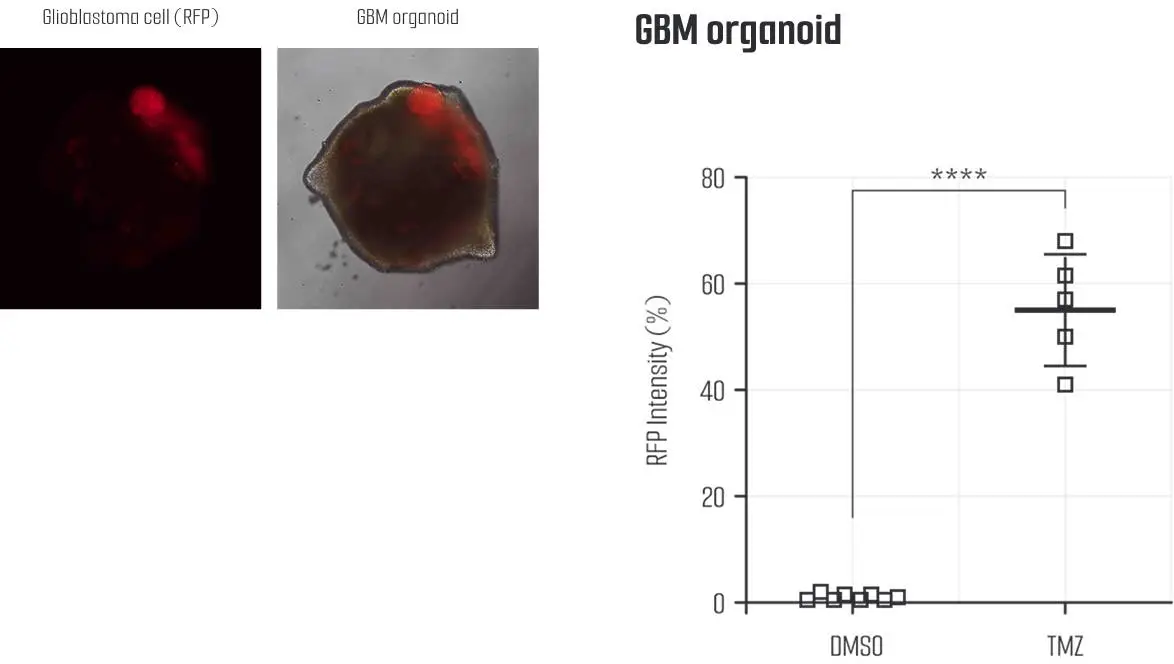
This case study presents a cerebral organoid – based GBM model that enables the study of tumor invasion and tumor – brain interactions within a 3D human brain – like microenvironment.
GBM research continues to be limited by models that fail to capture key disease features, including the loss of invasive tumor behavior in 2D cultures and species mismatch in animal studies. Current systems also inadequately represent tumor–neuron and tumor–glia interactions, contributing to the poor translatability of preclinical drug response data.
As a result, there is a clear need for models that reflect how GBM behaves within human brain tissue, rather than in isolation.
To address these challenges, human iPSC-derived cerebral organoids were used as a physiologically relevant brain-like scaffold and co-cultured with patient-derived GBM cells. Rather than modeling tumor initiation, this platform focuses on tumor progression and invasion in a human neural context.
Key features of the model:
Cerebral organoids recapitulate key structural and cellular features of human brain tissue
atient-derived GBM cells interact directly with neuronal and glial networks
Enables analysis of diffuse GBM infiltration and migration patterns
Supports quantitative assessment of invasion dynamics and drug response
Step 1: Generation of cerebral organoids
Human iPSC-derived cerebral organoids are differentiated to form complex neural tissues containing neurons and glial progenitors.

Step 2: Introduction of GBM cells
Patient-derived GBM cells or stem-like populations are introduced via surface seeding or microinjection.
Step 3: Tumor–brain interaction analysis
GBM invasion, migration patterns, and cellular plasticity are monitored within the organoid matrix.
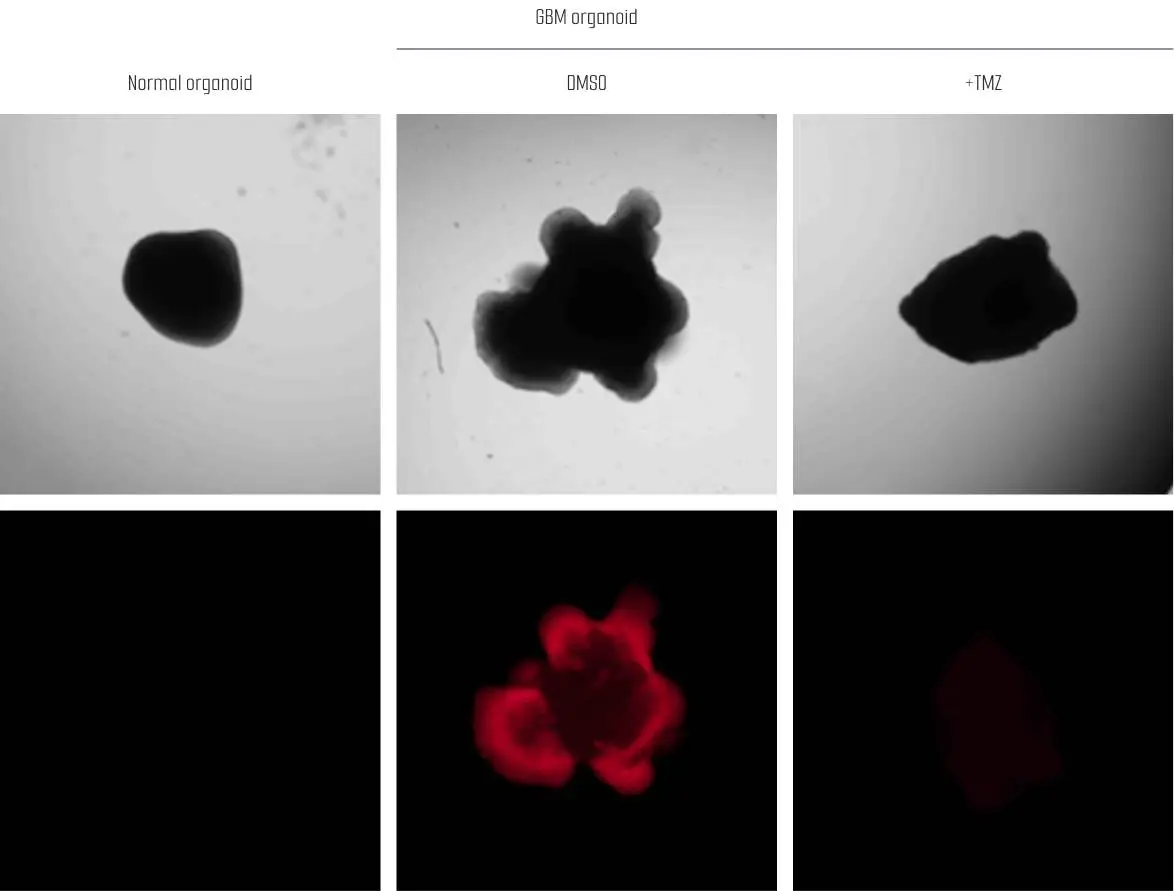
Customizable cerebral organoid models for Glioblastoma Multiforme research.