Despite significant advances in molecular oncology, therapeutic responses in cancer remain highly variable. Tumors with comparable genetic alterations frequently exhibit markedly different responses to identical treatments, highlighting the limitations of approaches that focus exclusively on tumor-intrinsic factors. An expanding body of research indicates that the tumor microenvironment (TME) plays a central role in modulating tumor progression, immune interactions, and treatment efficacy. Rather than serving as a passive backdrop, the TME actively shapes disease behavior and represents a critical determinant of therapeutic outcome in cancer.
What is the tumor microenvironment?
The tumor microenvironment refers to the local cellular, structural, and biochemical context in which cancer cells reside. It encompasses non-malignant cells, extracellular matrix components, and physicochemical conditions that interact dynamically with tumor cells throughout disease development.
Importantly, these interactions are bidirectional. Tumor cells continuously remodel their microenvironment, while microenvironmental cues influence tumor cell proliferation, survival, invasion, and response to therapy. Consequently, cancer is increasingly understood as a disease driven not only by malignant cells, but by complex interactions within a tissue ecosystem.
Key components of the tumor microenvironment
Cellular constituents
The TME contains diverse populations of non-malignant cells that exert context-dependent effects on tumor behavior:
- Cancer-associated fibroblasts (CAFs) contribute to extracellular matrix remodeling, mechanical stiffening, and pro-tumorigenic signaling.
- Immune cells, including T lymphocytes, tumor-associated macrophages, and myeloid-derived suppressor cells, regulate immune surveillance and immune suppression.
- Endothelial cells and pericytes form structurally and functionally abnormal vasculature, influencing oxygen availability and drug delivery.
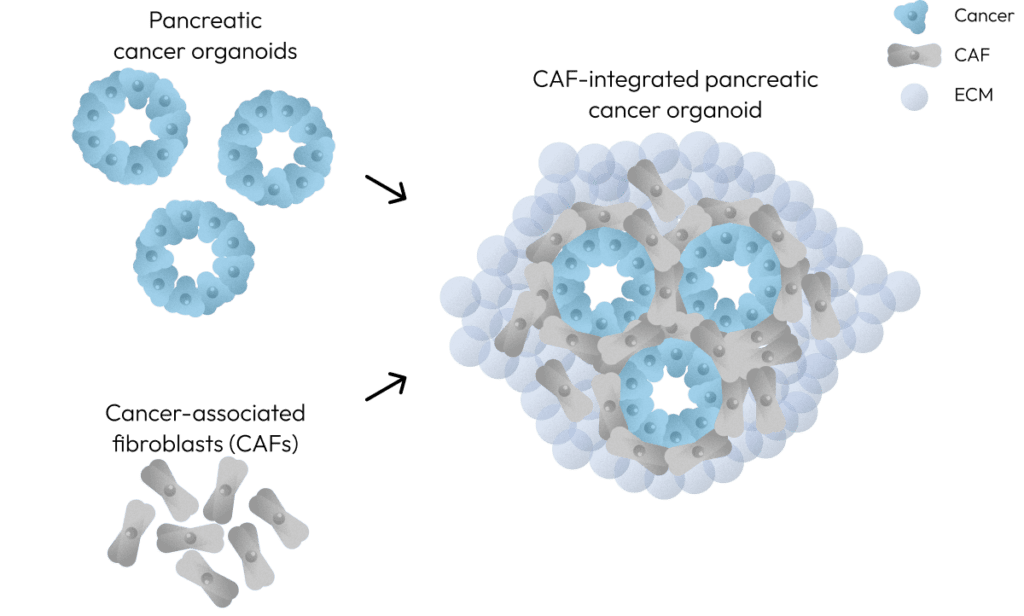
The composition and functional state of these cells vary across tumor types and patients, contributing substantially to inter- and intra-tumoral heterogeneity.
Extracellular matrix and tissue mechanics
Surrounding the cellular compartment is the extracellular matrix (ECM), a complex network of structural and signaling molecules. Beyond providing physical support, the ECM regulates cell adhesion, migration, and mechanotransduction.
Alterations in ECM composition, organization, and stiffness have been shown to influence tumor invasiveness, immune cell infiltration, and resistance to therapy, underscoring its active role in cancer progression.
Biochemical and metabolic conditions
Solid tumors commonly exhibit hypoxia, nutrient gradients, and altered pH, reflecting dysregulated vascularization and metabolic demand. These conditions can promote aggressive tumor phenotypes and reduce the efficacy of both cytotoxic and immune-mediated therapies.
Why the tumor microenvironment matters in cancer therapy?
A substantial body of evidence demonstrates that the tumor microenvironment is a major determinant of therapeutic efficacy and resistance.
First, microenvironmental features such as dense ECM and abnormal vasculature can physically limit drug penetration, while stromal-derived signaling can activate survival pathways in tumor cells, contributing to therapeutic resistance.
Second, the TME plays a central role in immune modulation. Many tumors establish immunosuppressive microenvironments that impair cytotoxic immune responses, thereby limiting the effectiveness of immunotherapies, including immune checkpoint inhibitors.
Finally, interactions between tumor cells and their microenvironment support tumor progression and metastatic dissemination, influencing both disease course and clinical outcome.
Collectively, these observations highlight the limitations of therapeutic strategies that target tumor cells in isolation.
Limitations of conventional cancer models
Despite increasing recognition of the importance of the tumor microenvironment, many widely used preclinical cancer models fail to adequately recapitulate its complexity.
- Two-dimensional cell cultures lack spatial organization, mechanical cues, and multicellular interactions characteristic of human tumors.
- Animal models, while valuable, are constrained by species-specific differences in immune and stromal biology that limit their translational relevance.
As a result, these models often overestimate therapeutic efficacy and fail to reliably predict clinical response.
Advancing cancer therapy through tumor microenvironment modelling
To overcome these limitations, three-dimensional human-relevant model systems have been developed to better capture key features of the tumor microenvironment.
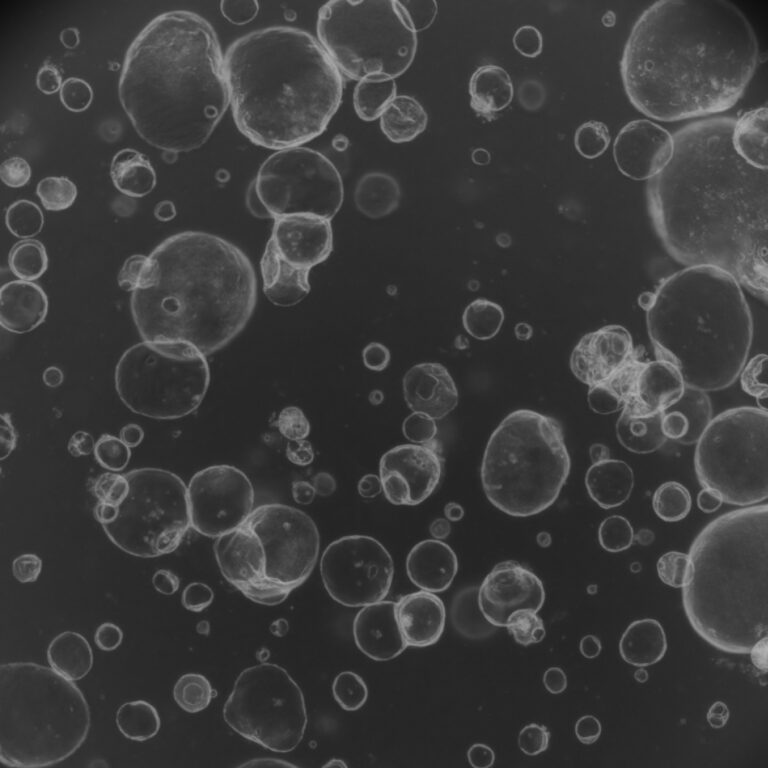
Tumor organoids-derived from patient tumors or human stem cells – retain essential genetic and architectural characteristics of the original tissue. When combined with stromal and immune components, or cultured under controlled microenvironmental conditions, organoid systems enable systematic investigation of tumor–microenvironment interactions in a physiologically relevant context.
Such approaches have been shown to improve the predictive assessment of drug responses, support mechanistic studies of resistance, and facilitate evaluation of immuno-oncology strategies.
Tumor microenvironment modelling at Lambda Biologics
Lambda Biologics develops human-relevant tumor organoid platforms designed to incorporate critical aspects of the tumor microenvironment. These systems integrate key stromal and immune elements and allow controlled modulation of extracellular and biochemical conditions relevant to specific cancer indications.
By enabling systematic interrogation of tumor–microenvironment interactions, these platforms support translational cancer research, drug response profiling, and immuno-oncology evaluation with improved clinical relevance.
Conclusion
The tumor microenvironment is increasingly recognised as a fundamental determinant of cancer progression and therapeutic response. Accurately modelling this complex system is essential for improving the translational value of preclinical research and advancing more effective cancer therapies.
Human-relevant, TME-inclusive model systems represent a critical step toward bridging the gap between experimental findings and clinical outcomes in oncology.
Research Article:
- Cancer organoids 2.0: modelling the complexity of the tumour immune microenvironment
- Tumor Microenvironment and Differential Responses to Therapy
- Tumor Microenvironment in Cancer Biology: A Comprehensive Review of Stromal, Immune, and Vascular Components Driving Malignancy
- Tumour and microenvironment crosstalk in NSCLC progression and response to therapy
Lambda Biologics’ Oncology Solutions: Patient-derived cancer organoid-based drug evaluation service
Gastric Cancer Organoid | Breast Cancer Organoid | Hepatocarcinoma Cancer Organoid | Pancreatic Cancer Organoid