Human Lung Organoids Model Radiation-Induced Fibrosis for Drug Screening
Journal: Scientific Reports
Author: Park, HR., Kwon, Y., Ji, H.J. et al., Republic of Korea
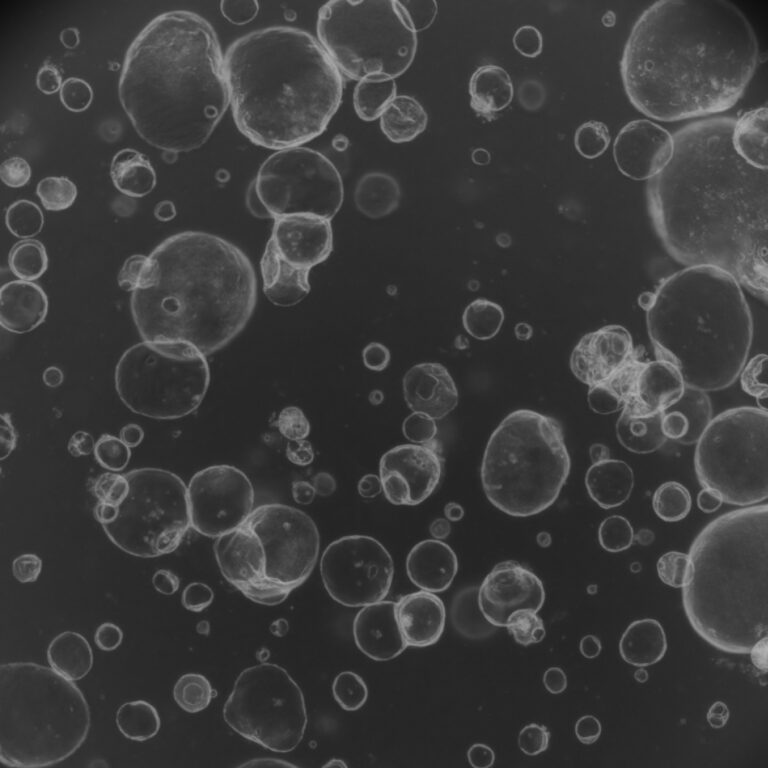
This study presents a human embryonic stem cell–derived lung organoid model that recapitulates key molecular, cellular, and structural features of radiation-induced pulmonary fibrosis, including epithelial damage, fibrotic signaling, and collagen deposition. Single-cell analysis revealed in vivo–like shifts in lung epithelial populations after irradiation, while treatment with the antifibrotic drug pirfenidone significantly reduced profibrotic markers. The platform offers a scalable, human-relevant alternative to animal models for studying disease mechanisms and screening antifibrotic therapies.
BATF2 Links Tumour Metabolism to Type-I Interferon–Driven Anti-Tumour Immunity
Journal: Nature Communications
Author: Gong, W., Taner, H.F., Wu, Y. et al., USA
This study identifies BATF2 as a glutamine-responsive tumour suppressor that supports STING-mediated type-I interferon signalling and effective anti-tumour immunity in head and neck squamous cell carcinoma. Glutamine-driven silencing or loss of BATF2 disrupts interferon production, promotes immune evasion, and accelerates tumour progression by reshaping both cancer cell metabolism and the tumour immune microenvironment.
AI-Driven Liquid Biopsy Detects Brain Tumours via Tumour Ecosystem Signatures
Journal: Nature Nanotechnology
Author: Goerzen, D., Kim, M., Schroff, C. et al., USA
This study demonstrates a machine perception–based liquid biopsy that detects and classifies intracranial tumours from blood with 98% accuracy using nanosensor–machine learning integration. Proteomic analysis revealed that the diagnostic signal arises not only from tumour cells but also from immune and tumour microenvironment–derived factors, enabling a holistic, non-invasive approach to brain tumour detection.
Intracellular Oscillators as Modular Building Blocks in Synthetic Biology
Journal: Nature Communications
Author: Holló, G., Park, J.H., Evard, R.A. et al., Switzerland
This work proposes intracellular oscillators as higher-level building blocks for synthetic biology circuits and models how different coupling strengths shape their collective dynamics. The study predicts rich behaviors – from synchronization and resonance to chaos – and highlights applications such as oscillator-based computing that integrates memory and nonlinear information processing.