NSD2 Blockade Restores Treatment Sensitivity in Advanced Prostate Cancer
Journal: Nature
Author: Li, J.J., Vasciaveo, A., Karagiannis, D. et al., China
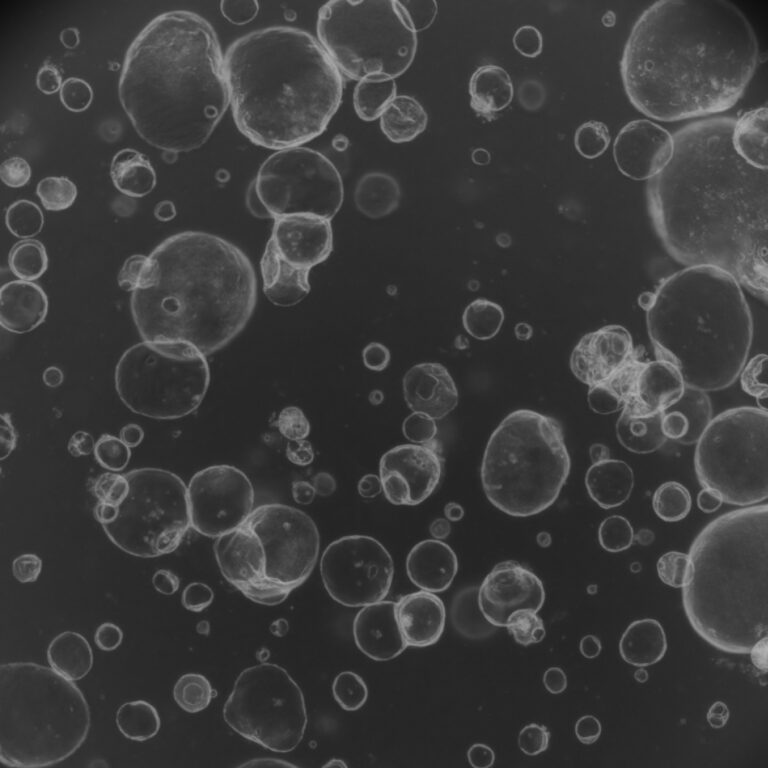
Scientists have discovered that inhibiting NSD2 – a key epigenetic regulator – can reverse lineage plasticity and drug resistance in advanced prostate cancer. By blocking NSD2, prostate cancer organoids regain androgen-receptor signaling and become responsive to treatments like enzalutamide, offering a promising new therapeutic approach for lethal CRPC subtypes.
WDR4: A New Target for Reprogramming Tumour-Associated Macrophages in Liver Cancer
Journal: Nature Cell Biology
Author: Liu, J., Qu, C., Liu, Y. et al., China / USA / Sweden
Researchers have identified WDR4 as a key driver that keeps tumour-associated macrophages in a pro-tumour state by boosting selective translation and cholesterol efflux in hepatocellular carcinoma. Silencing WDR4 shifts macrophages toward an anti-tumour phenotype, suppresses tumour growth, and enhances the effectiveness of anti–PD-1 immunotherapy.
Miniature CRISPR Tools: A New Generation of Compact Genome Editors
Journal: Nature Communications
Author: Zhang, F., Peng, Y., Fan, D. et al., China
Scientists have engineered a highly active, compact CRISPR-associated IscB system – called enDelIscB – that recognizes a flexible DNA motif and achieves nearly 50-fold higher activity than its native form. By integrating nucleases and deaminases, they created efficient miniature editors and successfully used them to generate mouse models, highlighting strong potential for in vivo therapeutic genome editing.
Rewriting Leukemia Mechanics: A New Strategy to Break Stemness and Boost Immunotherapy
Journal: Nature Communications
Author: Zhu, M., Yang, H., Qiu, K. et al., China
Researchers from China found that leukemic stem cells in AML are unusually small and mechanically soft, traits that help maintain their stemness and therapy resistance. Inhibiting ALDH1A1 stiffens these cells and makes them far more vulnerable to NK cell–based immunotherapy, offering a promising combined strategy to suppress leukemia progression.