Researchers at the University of Leicester have announced a major breakthrough regarding the Ketton mosaic in Rutland – considered one of the most significant Roman-era discoveries in Britain in the past century.
The mosaic was first uncovered in 2020 by local resident Jim Irvine on his family farm during the COVID-19 lockdown, and was subsequently excavated by the University of Leicester Archaeological Services, funded by Historic England. Surprisingly, the artwork does not illustrate Homer’s Iliad as scholars initially believed. Instead, it depicts Phrygians – a lesser-known tragedy by the Greek playwright Aeschylus that has largely been lost to history. Three key scenes are portrayed: the duel between Achilles and Hector, Achilles dragging Hector’s body, and King Priam ransoming his son’s remains – all consistent with Aeschylus’s version of events.
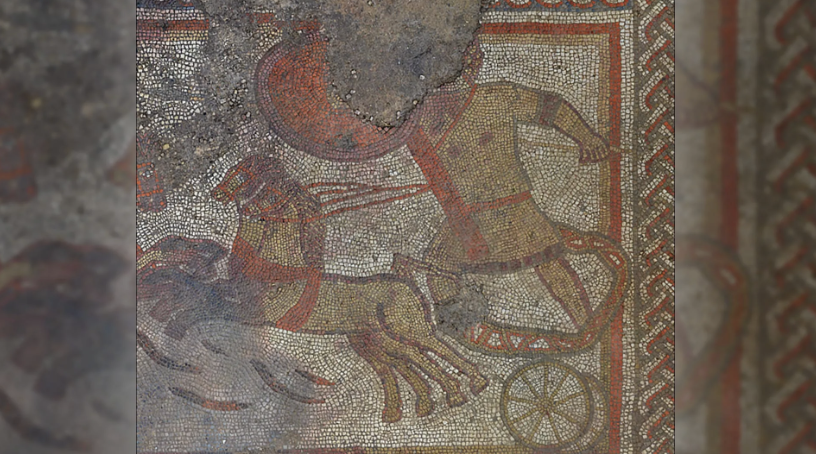
The research further reveals that the mosaic’s decorative motifs draw from artistic traditions spanning Greece, Turkey, and Gaul across many centuries. This suggests that craftspeople in Roman Britain were far from culturally isolated – they were actively connected to the broader Mediterranean artistic world. The findings offer a richer, more cosmopolitan picture of life in Roman Britain, showing how myth, art, and culture flowed freely across the ancient world.
Read more: Roman mosaic in Britain reveals a 2,000 year old Trojan War secret