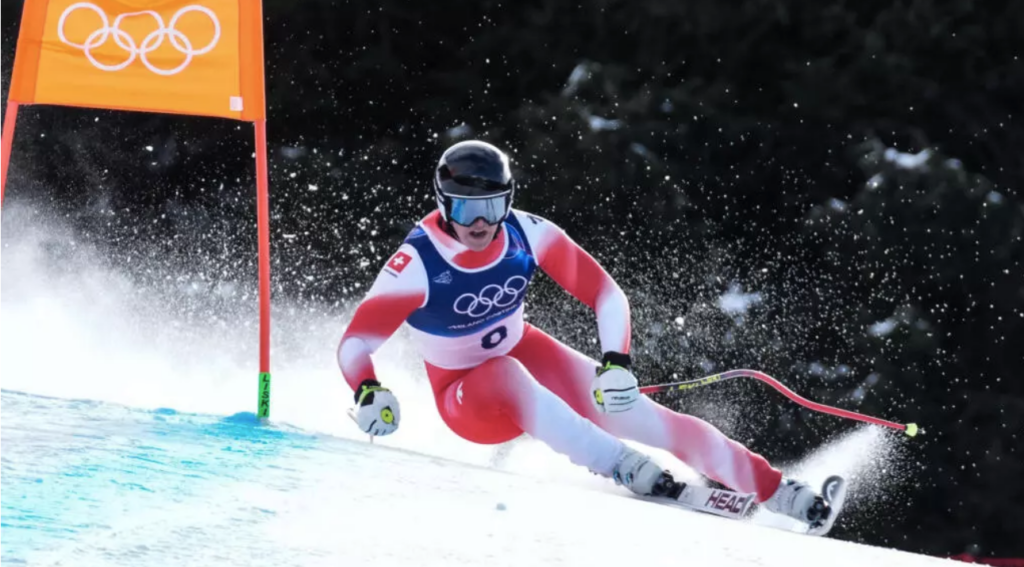
In February 2026, the world is turning its attention to northern Italy as Milano-Cortina hosts the Winter Olympic Games. Across alpine slopes, ice rinks, and frozen tracks, athletes are competing under some of the most physiologically demanding conditions in elite sport – carving through snow, stabilizing on ice, and accelerating down courses at remarkable speed.
What audiences experience as winter beauty is, at its core, a display of human biology under environmental stress. Winter Olympic disciplines unfold in cold, often high-altitude environments where temperature, oxygen availability, and mechanical load directly influence biological function. In locations such as Cortina d’Ampezzo and the surrounding Dolomites, cold is not a backdrop – it is an active variable shaping performance.

Cold as a biological stressor
Exposure to low temperatures triggers coordinated physiological responses aimed at preserving core body temperature. Peripheral blood vessels constrict to reduce heat loss, while internal heat production increases through metabolic pathways. A key contributor to this process is brown adipose tissue (BAT), which generates heat via non-shivering thermogenesis by uncoupling mitochondrial respiration. For endurance-intensive sports such as cross-country skiing or biathlon, thermal regulation is tightly linked to energy metabolism and muscle efficiency.
Even in disciplines defined by control and timing – such as figure skating – cold affects muscle stiffness, reaction speed, and neuromuscular coordination. Performance in winter sports is therefore not only a matter of skill or training. It is a continuous biological negotiation with the environment.
Balance, motion, and neural integration
Winter sports place exceptional demands on the nervous system. Maintaining balance on low-friction surfaces requires rapid integration of sensory information from vision, proprioception, and the vestibular system. The brain must translate these signals into precise motor output within milliseconds. This is why winter Olympic movement often resembles performance art. What appears fluid on ice or snow reflects tightly synchronized biological systems – neurons, muscles, connective tissue, and metabolic processes operating as a single, adaptive unit.
Context matters in human biology
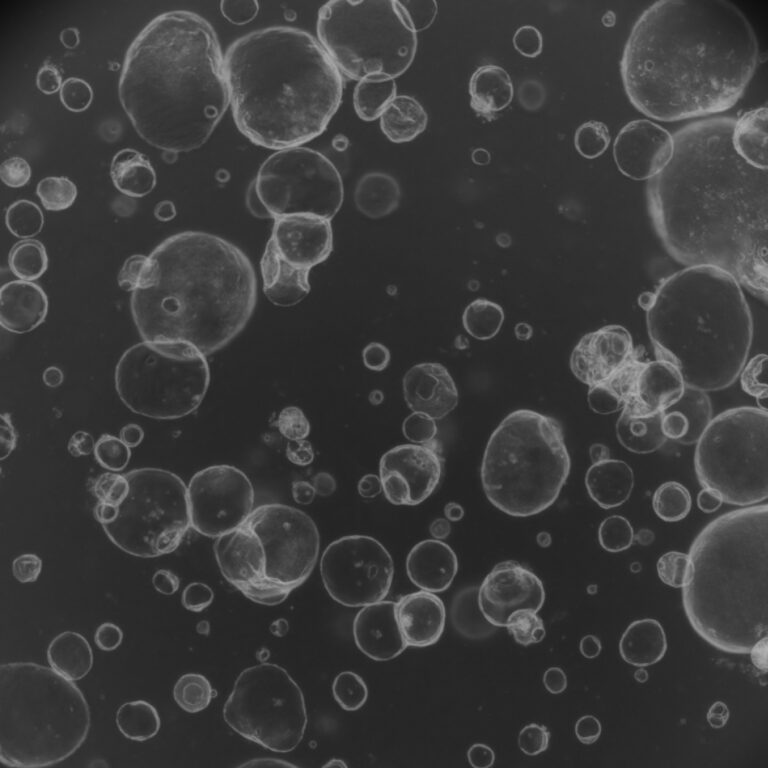
The Winter Olympics offer a clear reminder that human biology is context-dependent. Temperature, oxygen levels, mechanical forces, and time all shape how tissues and cells behave. Yet many experimental models simplify or exclude these variables. In biotechnology, this limitation has driven growing interest in human-relevant systems, including organoids. Organoids are three-dimensional, self-organized structures derived from human cells that capture key aspects of tissue architecture and function. While they cannot replicate the complexity of a whole organism, they allow researchers to study human-specific biological responses under controlled conditions.
The conceptual link is important: both elite performance and human-relevant models reflect the same principle – biology is dynamic, adaptive, and shaped by its environment. At Milano–Cortina 2026, winter beauty is visible in motion – in edges cut into snow and trajectories traced on ice. Beneath these moments lies a deeper story of cellular energy balance, neural precision, and tissue resilience. Understanding these processes is not only relevant to sports science. It is fundamental to biotechnology, medicine, and the development of experimental systems that more accurately reflect human biology.
Winter, then, becomes more than a season or a spectacle. It becomes a lens – revealing how living systems respond, adapt, and perform when conditions are at their most demanding.
Read more: