Price | 1784€+ |
Organism | Human |
Product Type | Tissue derived organoid |
Tissue | Breast |
Disease | Breast cancer |
Applications
Toxicity
Small molecules
mRNA
Antibody
Cancer vaccine
Immune Cells
Immuno Oncology with TME
Cytotoxic T cell
TIL (Tumor infiltrating lymphocytes)
Regulatory T cell
Macrophage
CAF (Cancer associate fibroblast)


Breast cancer is one of the most commonly diagnosed cancers among women worldwide. It is a complex and heterogeneous disease, with its progression and treatment response varying significantly depending on...
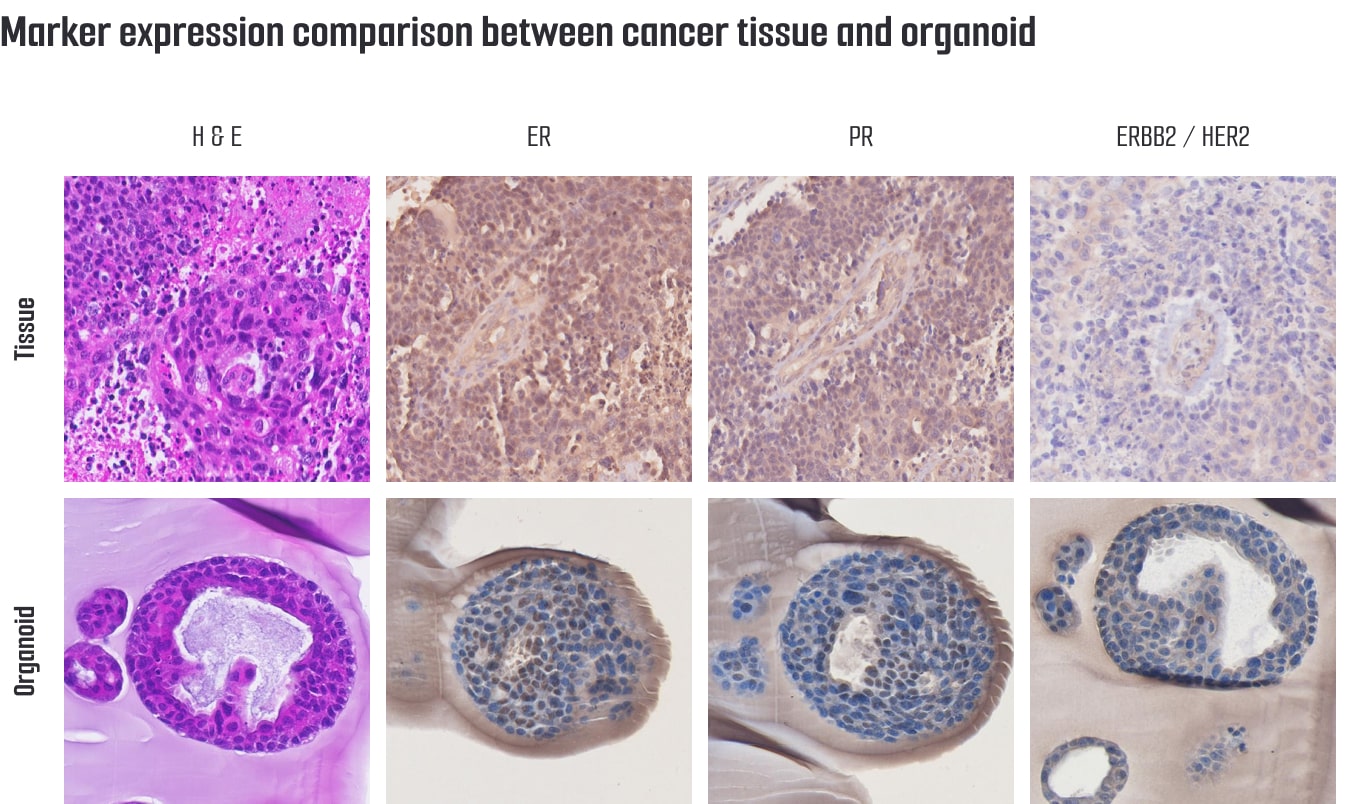
Our breast cancer organoids exhibit a high degree of pathological similarity to patient-derived tumor tissues, expressing key breast cancer markers such as estrogen receptor (ER), progesterone receptor (PR), and human epidermal growth factor receptor 2 (HER2).
Immunohistochemistry (IHC) analyses confirm that these markers are expressed in the organoids in patterns consistent with those observed in primary tumors, accurately reflecting the differentiation status and histological characteristics of the original tissue.
These pathological marker analyses demonstrate that breast cancer organoids faithfully recapitulate the morphological and molecular features of patient tumors, establishing them as a reliable platform for cancer pathology research, drug development, and the evaluation of personalized therapeutic strategies.
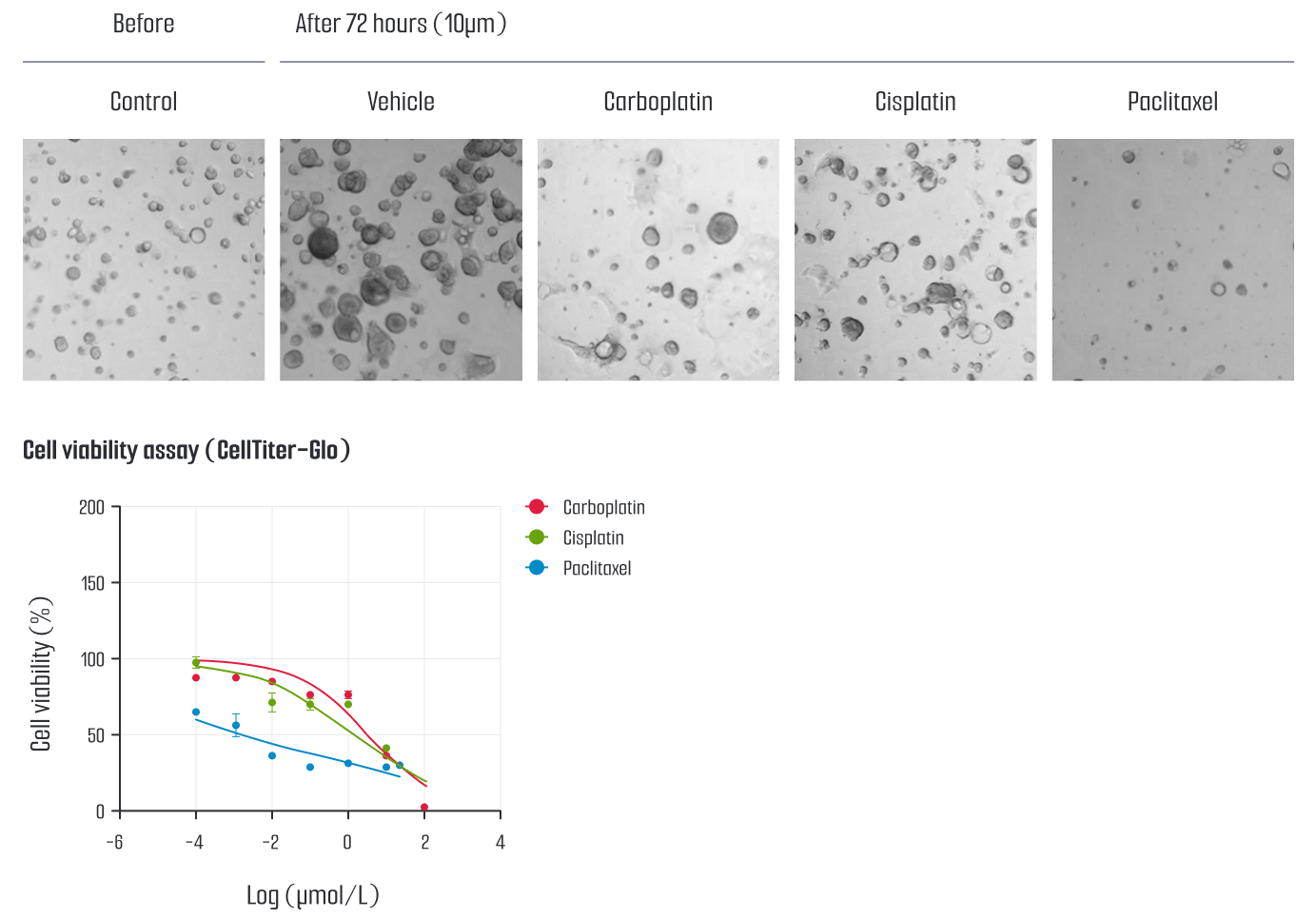
A tailored solution for evaluating the efficacy and resistance of new drugs is available using an established breast cancer (BC) organoid library.
By leveraging comprehensive drug sensitivity data, the most suitable organoid lines are selected based on the characteristics of the investigational drug, enabling precise and reliable drug testing.
Drug sensitivity tests have been conducted using Carboplatin, Cisplatin and Paclitaxel which are widely used in clinical cancer treatment, and drug response data from a subset of BC organoid models has been collected. This dataset continues to expand as additional testing is performed.
This organoid-based drug sensitivity testing platform enhances the efficiency and reliability of the drug development process and contributes to the advancement of personalized cancer treatment strategies.
Interested in bringing breast cancer organoids into your research?
Contact Lambda Biologics to discuss your project with our team.
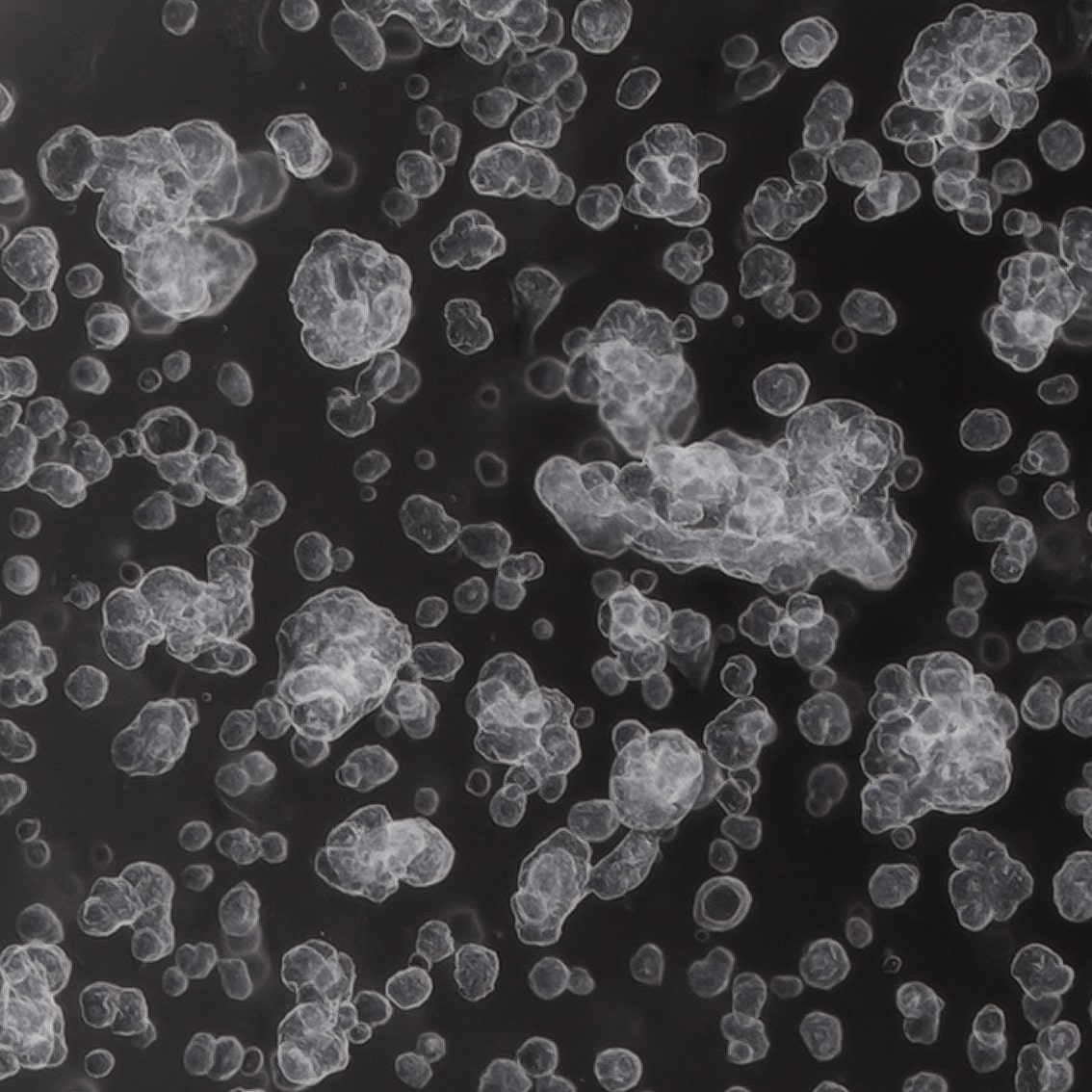
Breast cancer organoids are three-dimensional (3D) tumor models derived from patient breast cancer tissues or cell lines. These organoids replicate key biological features of the original tumor, including cellular heterogeneity, genetic mutations, and tumor architecture, making them valuable models for studying breast cancer biology and therapeutic responses.
Breast cancer organoids are typically generated by isolating tumor cells from surgical or biopsy samples, embedding them in a 3D extracellular matrix such as Matrigel, and culturing them in specialized media containing growth factors. The cells self-organize into organoid structures that mimic the characteristics of the original tumor.
Breast cancer organoids are widely used in preclinical drug screening and oncology research to evaluate the efficacy of anticancer drugs, targeted therapies, and combination treatments. Because they maintain patient-specific tumor features, they can provide more predictive insights into drug responses compared with conventional 2D cell culture models.
Breast cancer organoids enable researchers to test multiple therapies on patient-derived tumor models, helping identify treatments that may be most effective for individual patients. This approach supports the development of personalized treatment strategies and advances precision oncology research.
Simply contact Lambda Biologics team. Our scientists will review your project needs and provide the right options whether it’s technical guidance, a quote, or custom organoid development.



