SZT2 Dysfunction Drives mTORC1-Dependent Cortical Overgrowth in Brain Organoids
Journal: Scientific Reports
Author: Sato, E., Nakamura, Y., Fujimoto, M. et al., Japan
Using human brain organoids, this study shows that loss of SZT2 leads to hyperactivation of mTORC1, resulting in excessive production of outer radial glial cells in the subventricular zone. This expansion increases upper-layer neuron numbers and provides a mechanistic explanation for macrocephaly in SZT2-related neurodevelopmental disease.
Knowledge Connector Enables Scalable Multiomics Decision-Making in Precision Oncology
Journal: Nature Communications
Author: Hübschmann, D., Kreutzfeldt, S., Roth, B. et al., Germany
The Knowledge Connector is a decision support system designed to integrate multiomics and clinical data with curated biomedical knowledge to support molecular tumor board recommendations in precision oncology. By streamlining data interpretation, biomarker–drug association extraction, and cross-institutional knowledge sharing, it improves decision consistency and enables scalable, reproducible precision cancer care.
MicroRNAs in Cancer: Translational Progress Accelerated by AI
Journal: Nature Reviews Clinical Oncology
Author: Jurj, A., Dragomir, M.P., Li, Z. et al., USA / Germany
MicroRNAs play context-dependent roles in cancer as oncogenes or tumor suppressors and show strong potential as biomarkers and therapeutic targets, though clinical adoption has been limited by sensitivity and specificity challenges. Recent advances in AI and machine learning are enabling integrated multi-miRNA and multiomics analyses, improving cancer detection, subtyping, and therapeutic development while addressing key barriers to clinical translation.
High-Content Organoid Screening Uncovers Regulators of Pancreatic Acinar Differentiation
Journal: Cell Stem Cell
Author: Keshara, Rashmiparvathi et al.
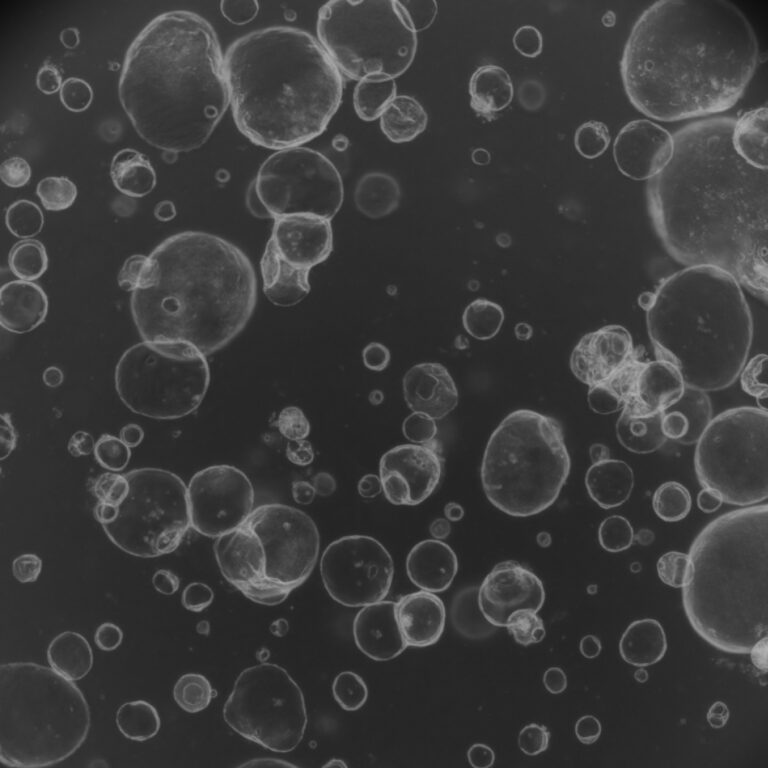
Using a high-content, image-based screen of pancreatic progenitor organoids, this study identified 54 compounds that alter organoid morphology or cell fate and established analysis methods robust to organoid heterogeneity. Inhibition of GSK3A/B via WNT signaling, combined with FGF repression, was shown to reversibly guide progenitors toward functional pancreatic acinar cell differentiation, providing a valuable human model for exocrine biology and cancer research.