For centuries, cultures around the world have intuitively understood the power of fermented foods – from Korean kimchi to Japanese miso, from European sauerkraut to Indian lassi. Our ancestors didn’t know about “probiotics” or “microbiomes,” but they knew these foods kept them healthy. Today, modern science is catching up with ancient wisdom, and the tools we’re using are nothing short of revolutionary.
Dr. Mi-young Son from the Korea Institute of Biological Sciences recently presented groundbreaking research that sits at the intersection of traditional wellness culture and cutting-edge biotechnology: using intestinal organoids to discover and develop probiotics.
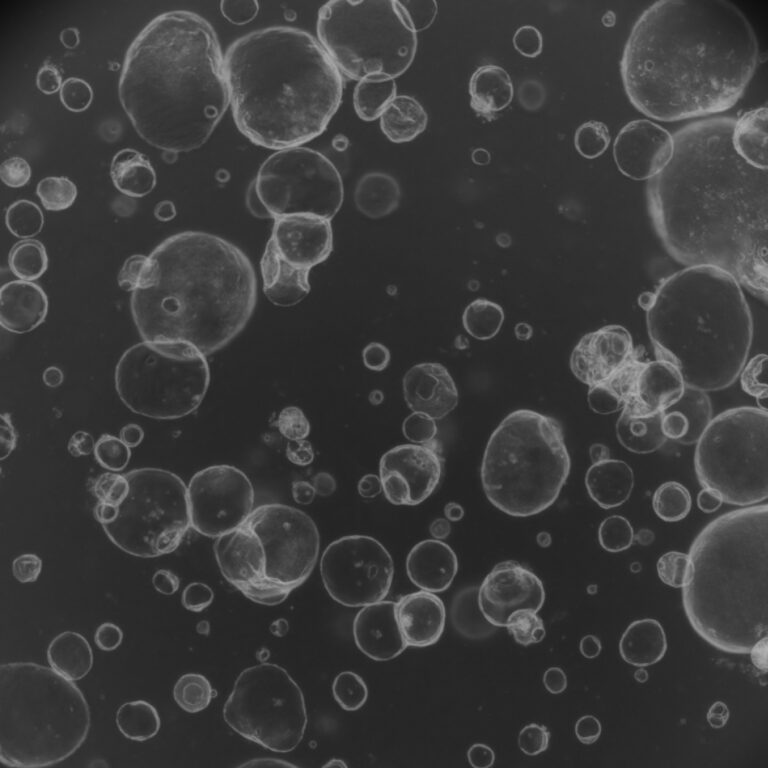
Organoids are three-dimensional mini-organs that closely mimic human tissue in their structure, cellular diversity, and functionality. Think of them as living laboratories – tiny replicas of our intestines that can help us understand how beneficial bacteria interact with our bodies, without relying on animal testing. This research represents more than just scientific progress; it reflects a profound cultural shift in how we approach health, ethics, and innovation:
The Ethics of Science
For nearly a century, animal models have been the standard for drug and food testing. But there’s growing recognition that what works in mice doesn’t always translate to humans – and that we need more humane alternatives. The U.S. FDA’s Modernisation Act now actively encourages alternatives to animal testing, marking a societal pivot toward ethical science.
The Probiotic Phenomenon
Probiotics have become a multi-billion dollar global market, second only to red ginseng in South Korea’s health functional food sector. But here’s something many don’t realize: not all “lactobacillus” products are true probiotics. A probiotic, by definition, is a living microorganism that provides health benefits when consumed in adequate amounts. This distinction matters as consumers become more educated about what they’re putting in their bodies.
The Science Behind the Gut Feeling
Dr. Son’s team focuses on the intestine – home to our body’s largest and most complex microbiome community. When gut bacteria maintain their balance, they interact harmoniously with human cells to keep us healthy. When that balance tips, disease can follow. Probiotics help restore and maintain that equilibrium.
Using advanced intestinal organoid models enhanced with interleukin-2 (a compound from human immune cells), the research team screened approximately 300 probiotic candidates. Their star discovery? “Lactobacillus reuteri” DS0384, which significantly promotes intestinal maturation and prevents inflammation.
From 3D Mini-Guts to Real-World Impact
The team has developed a comprehensive research pipeline including:
- 3D organoid models that replicate the intestine’s complex structure, complete with the mucus layer that real intestines have
- 2D intestinal models for testing how well probiotics attach to intestinal cells
- Techniques to isolate active components for understanding exactly what makes probiotics work
These aren’t just academic exercises. The research has practical applications: determining whether probiotic products will actually survive in your gut, attach to your intestinal lining, and deliver the promised health benefits.
What makes this work particularly fascinating is how it validates and refines traditional practices through modern technology. Fermented foods have been part of human culture for millennia, but now we can understand “why” they work and develop more effective probiotic products based on human biology, not guesswork. This research also represents Korea’s growing leadership in biotechnology. The team’s work, published in 2018 and recognized internationally, helped establish their institute as a technology leader in organoid science – culminating in hosting the Organoid Development Conference (ODC) in 2022.
The Future on Your Plate
As organoid technology advances, we’re moving toward a future where:
- Health functional foods are developed specifically for human biology
- Clinical trials are safer and more predictive of real-world results
- Consumers have access to scientifically validated wellness products
- The gap between traditional wisdom and modern medicine continues to narrow
The intestinal organoids used in this research are tiny – just 2-3 millimeters – but their impact could be enormous. They represent a new chapter in humanity’s long relationship with the microscopic life that shares our bodies, combining respect for traditional knowledge with the precision of modern science.
Next time you reach for that probiotic supplement or enjoy a bowl of fermented food, you’re participating in a tradition that spans cultures and centuries – now informed by some of the most sophisticated biological research available. The bacteria in your gut are having a conversation with your body, and for the first time in history, we’re learning to speak their language fluently.
This is where science, culture, and daily life converge: in understanding that we are not just individuals, but ecosystems – and that caring for the microscopic life within us is an act of self-care backed by both ancient practice and modern innovation.
Read more:
- Epigenetics and Healthy Eating Habits | Insights from ODC 2025
- Join ODC25 ASEAN – Premier Organoid & Biotechnology Conference: New Sciences, New Cultures